
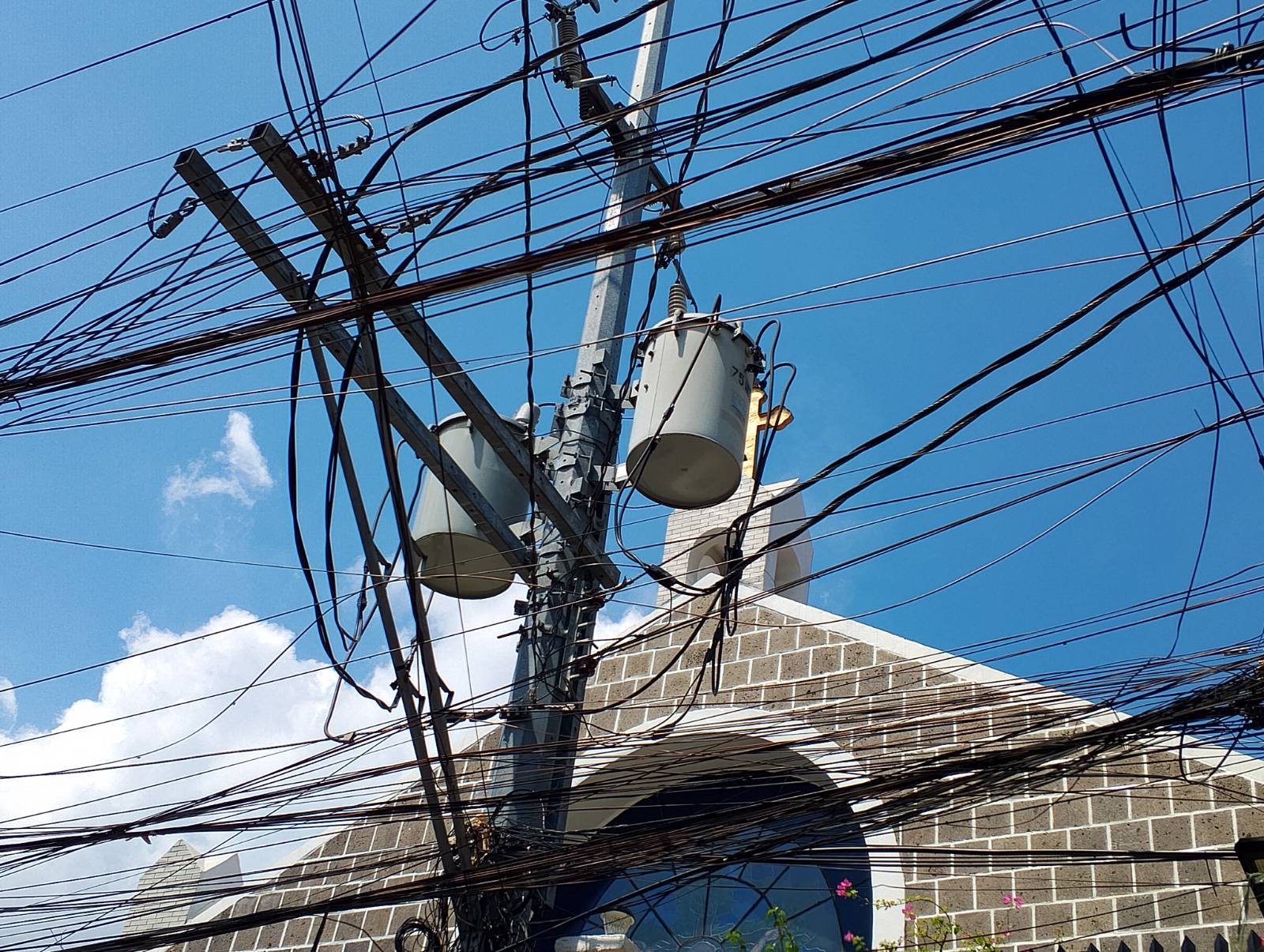
The energy crisis hit urban poor communities the hardest.
MANILA — Hundreds of thousands of consumers across the Luzon and Visayas grids faced severe rotational brownouts in the past weeks, after the National Grid Corporation of the Philippines (NGCP) and the Department of Energy (DOE) issued emergency supply warnings.
According to the institutions, intense dry season and unexpected power plant outages pushed both major grids into critical Red and Yellow Alert statuses. Local distribution utilities, including Meralco, implemented manual load dropping to prevent a complete grid collapse.
NGCP data highlight a critical power gap: Luzon’s 12,479 megawatts (MW) capacity falls short of its 12,595 MW peak demand. The deficit worsens in the Visayas, where available capacity (2,413 MW) trails behind a 2,541 MW peak.
For Advocates of Science and Technology for the People (AGHAM), the Electric Power Industry Reform Act (EPIRA) is to blame for the unsteady supply of electricity and expensive power rates.
The energy crisis hit urban poor communities the hardest. In an interview with Bulatlat, residents of Krus na Ligas (KNL) in Quezon City detailed their experiences amid the rotational brownouts.
Analyn Salinas, a 49-year-old housewife, described the agonizing heat that left young children crying and kept her working husband from sleeping before his 4:00 a.m. shift.
“You have to sacrifice and keep fanning them. You just don’t know what to do because they kept on crying. Luckily, my children are already grown up. I don’t have to worry about that anymore,” Salinas shared.
Despite the power interruptions, Salinas watched her monthly power bill skyrocketed from less than P1,900 ($31.09) to P5,000 ($81.80). This severely strained their family budget ahead of the school year.
The struggle extended heavily to the youth. Lara Francisco, Salinas’s 17-year-old daughter and youth activist from Kabataan Partylist KNL, explained that the power outages in their community usually occur from 11:00 p.m. to 5:00 a.m which affects the youth and those who work during those hours.
“Most of us are working from home, especially those in call centers. So they really had to leave their rented places because they needed a stable internet connection,” she said.
She added that the brownout forced sleepless families to sit outside of their homes.Francisco added that while there are digital announcements from the barangay, they failed to warn all affected areas accurately.
She said that if the brownouts continue, this may also affect her studies under the Department of Education’s full-day online requirements. Francisco noted that the weak mobile data and dying laptop batteries during brownouts may disrupt both synchronous and asynchronous activities. “It really acts as a barrier to quality education.”
EPIRA at the root of power service decline
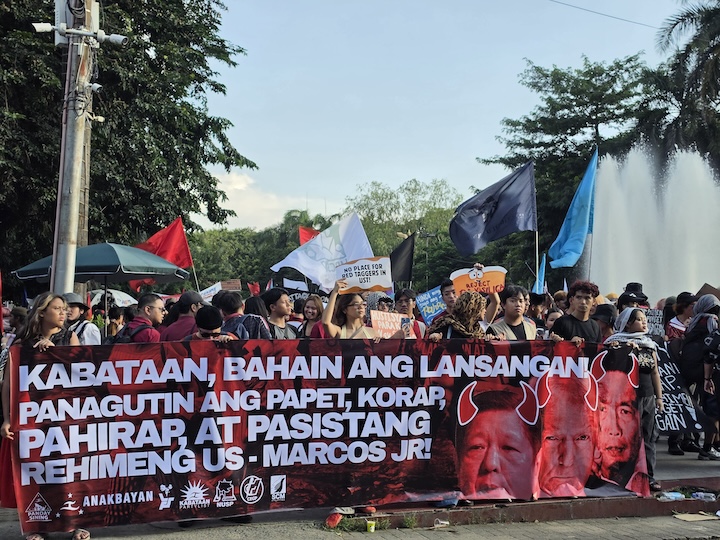
During the June 8 Electric Power Industry Reform Act (EPIRA) anniversary mobilisation, Cleng Julve of Advocates of Science and Technology for the People (AGHAM), pointed out that the crisis stemmed directly from the 25-year-old EPIRA.
EPIRA, or Republic Act No. 9136, was enacted in June 2001 under the administration of former president Gloria Macapagal Arroyo. It privatized and deregulated the Philippine power sector with the goal of fostering competition, with the promise of lowering electricity rates, and ensuring a reliable energy supply.
Read: Epira, the culprit behind high power rates
Read: Scientist group calls anew for scrapping of Epira, VAT amid the power rate hike
However, Julve argues that the law was a U.S.-dictated policy that privatized basic services and created a corporate cartel where only a few large corporations dominate the generation, transmission, and distribution of electricity.
“Under EPIRA, cross-ownership was permitted, which is why—as Ka Mimi mentioned earlier—from generation corporations to distribution utilities, practically the same companies are the ones profiting,” Julve said.
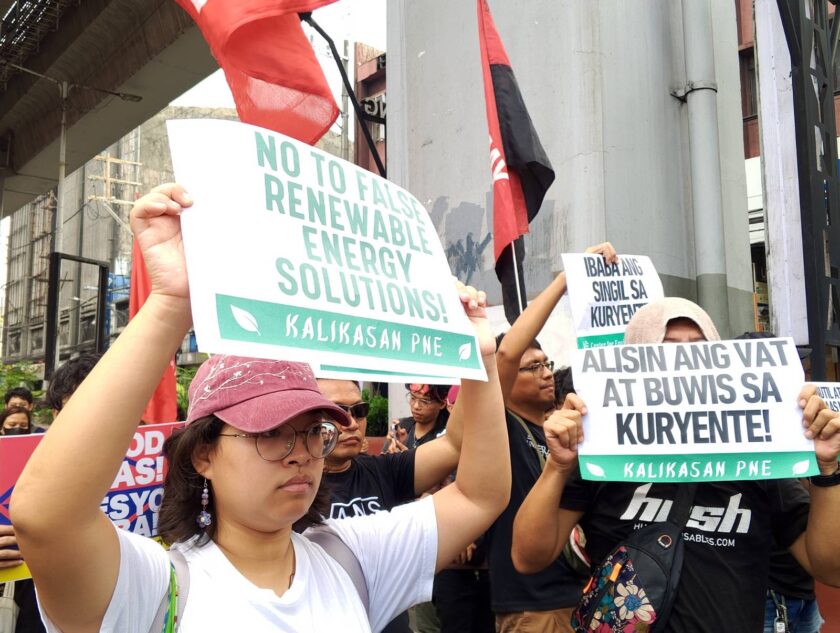
Julve also cited data from Agham and People Opposed to Warrantless Electricity Rates (POWER), which highlighted a long history of corporate overcharging. According to her, in 2003, Meralco’s overcharging reached P28 billion ($456.39 million), and the Supreme Court ordered it to be returned to the public. The National Association of Electricity Consumers for Reforms (NASECORE) reported that Meralco’s overcharging is estimated to have reached P160 billion ($2.62 billion).
False solutions vs people’s demands
For years, the government has framed renewable energy (RE) projects as the solution to the unsustainable and unclean energy sector in the country. Take, for example, the establishment of megadams and solar farms, which often displace communities, affect livelihoods, and damage the biodiversity in the area.
In a country that currently ranks in Asia as the second with the highest electricity rate, Julve argued that relying on these projects that are still being pushed by large-scale private corporations is not the answer.
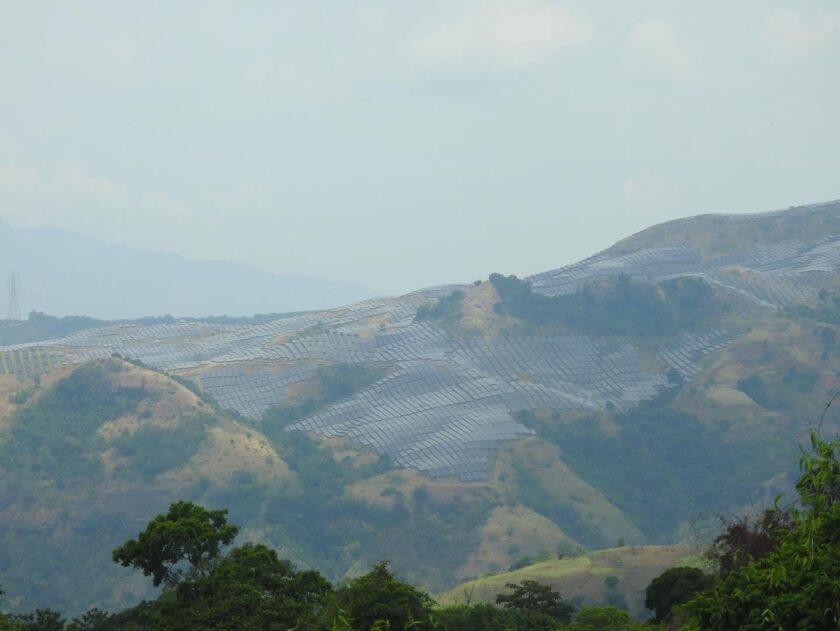
“Renewable energy is being promoted as the answer to the climate and energy crises. But under a privatized, oligarch-controlled power sector, whose interests are really being served?” referring to the Olongapo Solar Power Plant Project of Aboitiz Renewables where AGHAM and other Indigenous Peoples groups and scientists held a joint environmental investigative mission last May 29-31.
Julve also stressed that the country must support localized and sustainable electricity generation managed directly by the people, while demanding the repeal of EPIRA.
”Twenty-five years is more than enough as a test case and proof that EPIRA doesn’t work for the people, and it must be replaced by a policy that will create an electricity industry that is affordable, community-oriented, and nationalistic.”
Julve also proposed the development of local and indigenous energy sources while taking into account the environment and the rights of the people, as an alternative. She also added, “There must be a moratorium on renewable energy projects on farmlands, ancestral lands, and nature reserves.”
Meanwhile, Francisco called on her fellow youth to continue on speaking up about social issues like the privatization of basic public services.
For consumers like Salinas, a move toward state-subsidized power could bring immediate financial relief. “We would get some breathing room if electricity were free. Electricity rates are going up right now anyway, right? So that would be a major help to our budget. It could go toward our allowance, or as extra allowance for the kids’ school lunches.” (AMU, RVO)
 Save as PDF




0 Comments