
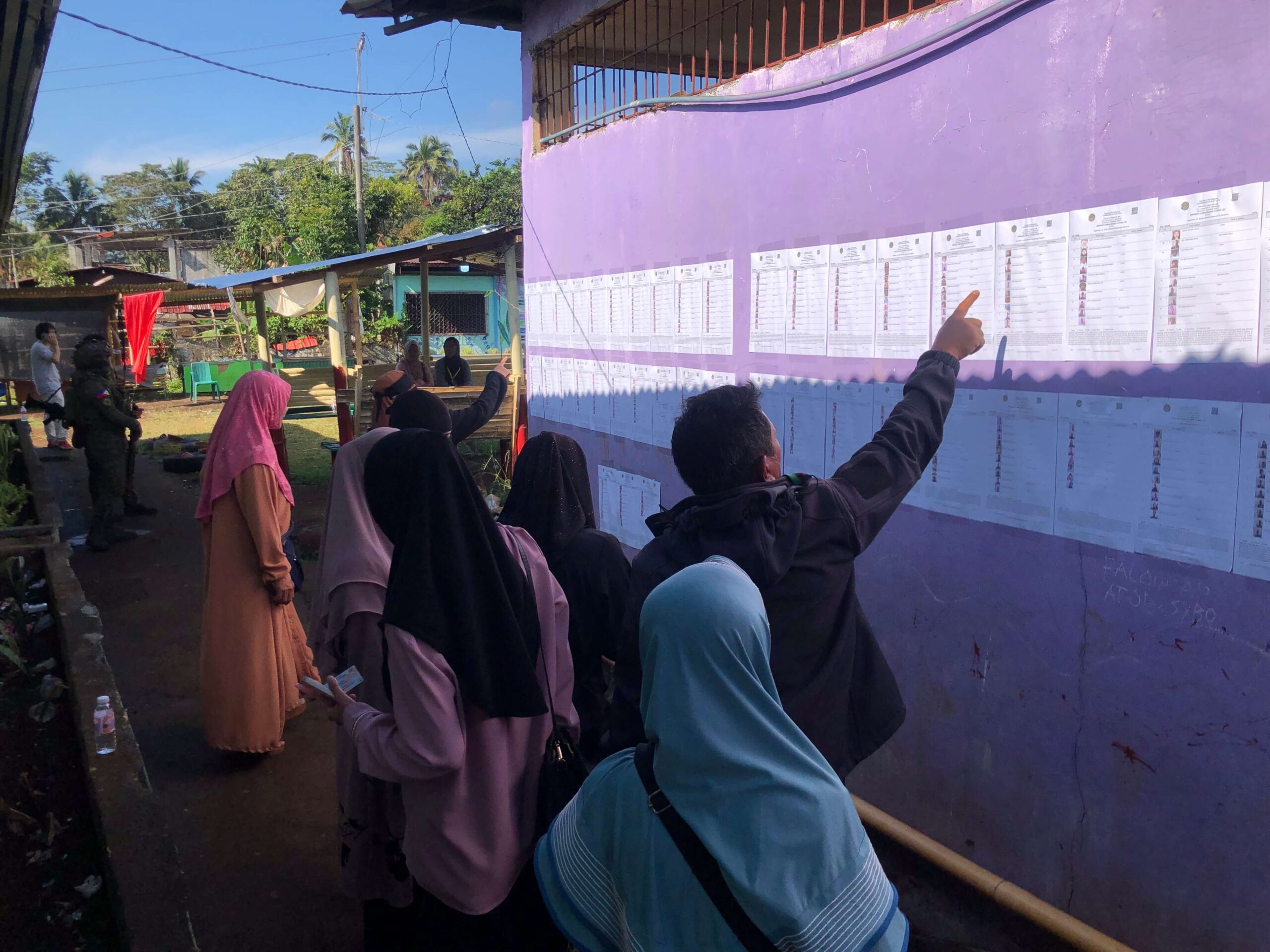
A highly militarized environment may create a “climate of fear” that could result in voter disenfranchisement.
MARANTAO, Lanao del Sur — Upon arriving at polling centers for the first-ever Bangsamoro Autonomous Region in Muslim Mindanao (BARMM) Parliamentary Elections on September 14, soldiers were seen guarding the entrances.
They were the ones allowing voters to enter.
Katungod Bangsamoro, an independent local observer accredited by the Commission on Elections (Comelec), recognized the need for the presence of state armed forces but legitimate concerns should be heard as a highly militarized environment may create a “climate of fear” that could result in voter disenfranchisement.
“Given the BARMM’s complex history of militarization, election authorities must assess whether the presence of security forces in and around polling precincts, however well-intentioned, undermines voters’ sense of safety and their genuine freedom of political choice,” the local observer said in its preliminary statement released on September 15.
Two military armored carriers were seen several meters away from an established entrance at Marawi City Pilot Elementary School. According to the Armed Forces of the Philippines (AFP), nearly 12,000 soldiers were deployed across the BARMM.
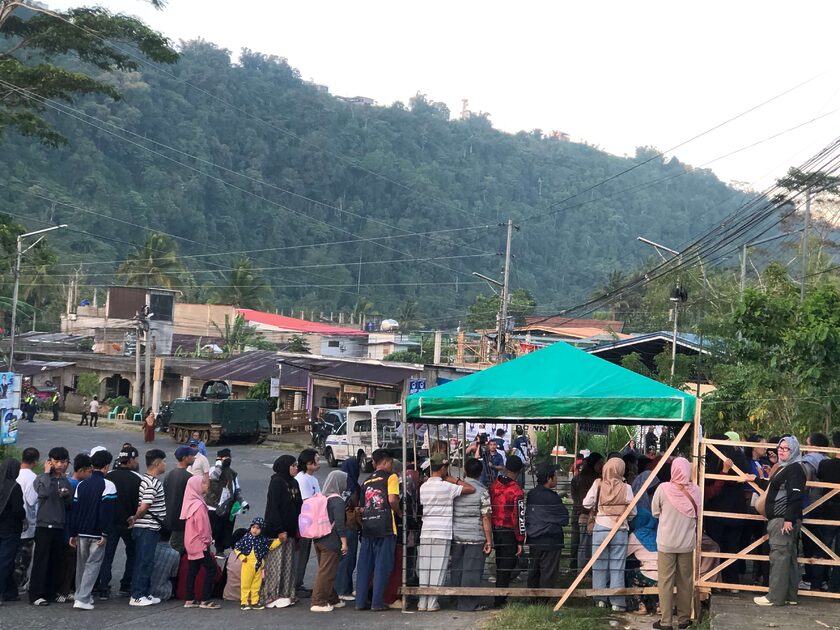
In Sultan Guro Central Elementary School (SGCES), one of the polling centers in Marantao, Lanao del Sur, there were no massive people roaming around the area, far different from the crowded situation in Daanaingud-Bacong Elementary School in the same municipality. Aside from allowing voters to enter the polling center per batch (10 persons only), soldiers stationed in SGCES roamed the area, asking those done casting their votes to exit the school premises.
Military personnel also guarded the polling precincts in SGCES after closing the polls at 7 p.m., preventing unauthorized individuals from entering or going near the precincts while electoral board members are processing the transmittal of election returns.
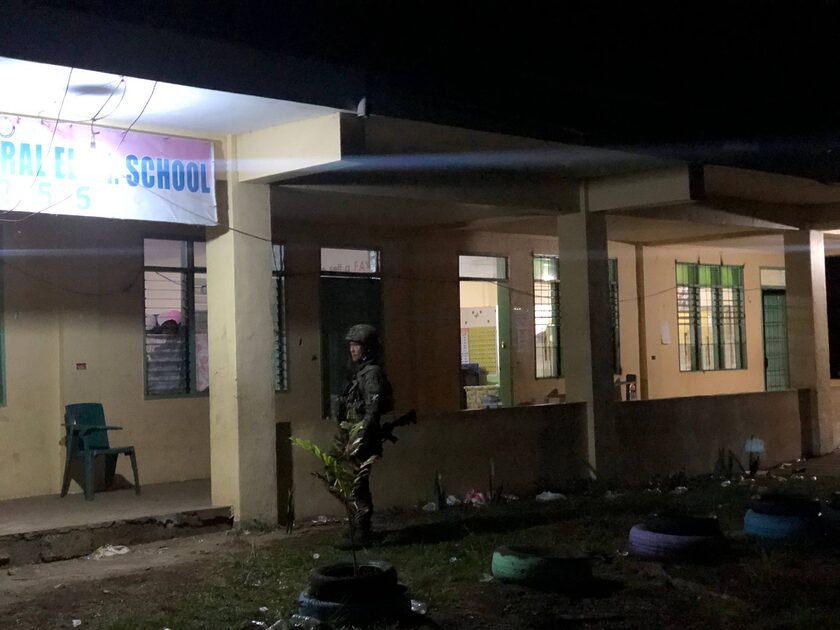
Moreover, Katungod Bangsamoro also noted the augmentation of Philippine National Police (PNP) personnel as part of the electoral boards. “[T]he psychological impact of having armed police officers inside polling centers must also be considered.”
PNP personnel served as “special electoral boards” following the reported withdrawal of around 800 teachers from their participation in the BARMM Parliamentary Elections. In Lanao del Sur alone, 71 teachers reportedly skipped their poll duties, the reasons for which are not yet known.
Irregularities were also observed. In SGCES, many voters who were on their way out after casting their votes did not have marks of indelible ink on their fingers. In fact, military personnel were the ones putting the ink to avoid multiple entry, contrary to Comelec rules.
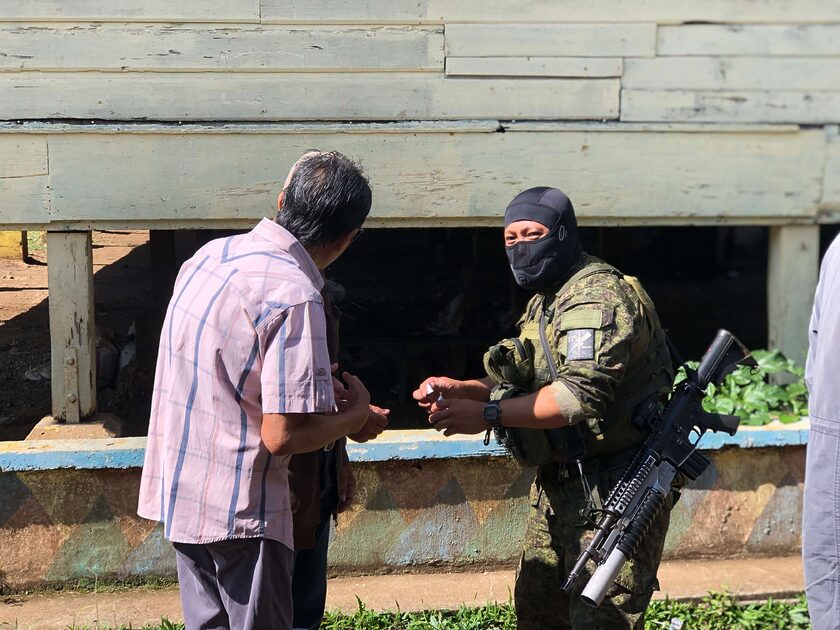
The absence of indelible ink on voters raised suspicions as this is first checked by the chair of the electoral board before handing the ballot to avoid multiple voting. The chair must also be the one to apply the indelible ink on the forefinger nail of the voter, or any other nail.
Moreover, under Comelec rules, the ballot of a voter shall be rendered as spoiled if he or she refuses to have his or her fingernail stained with the ink.
An electoral board member told Bulatlat that many voters refused the ink to be applied on their fingers, citing religious prohibition. This response also raised questions considering that many voters did not refuse when the soldiers stained them with the indelible ink.
On the other hand, in a polling precinct at SGCES, an automated counting machine (ACM) was reportedly overheating, with an electoral board member continuing to feed a ballot without the presence of the voter which is also contrary to the rules. The explanation was that voters could no longer wait.


Contributed photos
The location of the same ACM also raised questions since it was placed in a position where no one could view from the back of an electoral board member feeding the ballot. It was reportedly positioned that way due to unstable internet connection.
The same scenario was observed by Katungod Bangsamoro observers in several polling precincts in Datu Saudi Ampatuan, Maguindanao del Sur, saying that voters already left because the machines were slow. They also noted the power outage in Matanog, Maguindanao del Norte, which prevented voters from verifying the accuracy of their votes.
Tirmizy Abdullah, a history professor at Mindanao State University (MSU) Marawi City, said that his cousin was unable to vote because the latter’s vote had been allegedly cast.

On election day, the Comelec placed two areas under its control following the series of explosions in Cotabato City and the signs of pre-shaded ballots in Maluso town in Basilan.
The observers’ group said that the voting was disrupted by gunfire, recounting an incident at Nabundas Central Elementary School in Shariff Saydona Mustapha, Maguindanao del Sur, where voters left around 11 a.m. due to armed confrontations that lasted until afternoon.
As of this writing, at least five individuals were reportedly killed in election-related incidents in Cotabato City.
“For these reasons, Katungod Bangsamoro cannot accept an unqualified description of the elections as ‘generally peaceful’ if such a characterization risks trivializing the deaths, injuries, fear, and trauma experienced during the electoral process,” the group said. (DAA)
 Save as PDF




0 Comments