
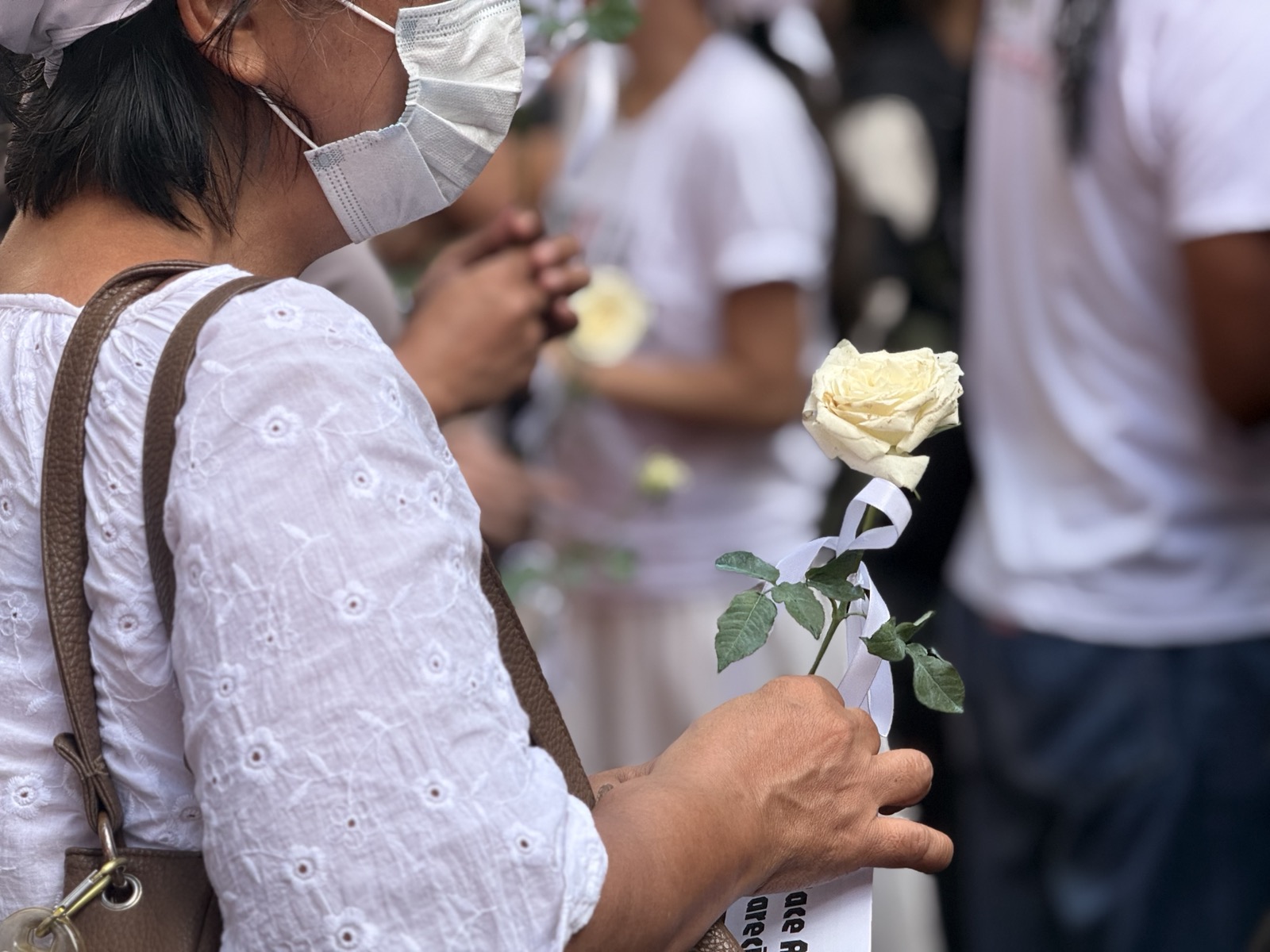
No grave, no body, no justice.
The commemoration of All Souls Day may be different for the loved ones of enforced disappearance victims (desaparecidos) but their annual gathering is a symbol of determination in their continuous search.
“We gather here together because we don’t have a grave to mourn at,” said Edith Burgos, vice chairperson of Karapatan and president of International Coalition Against Enforced Disappearances (ICAED).
Burgos is the mother of Jonas Burgos, a farmer-activist who was forcibly disappeared on April 28, 2007 at Ever Gotesco Mall, Quezon City. For almost two decades, she has been active in campaigning to surface Jonas and other desaparecidos.
“It might not be now, but I am sure that we will see justice. That even just a few of our loved ones will finally surface. There is zero success (rate) in searching for the disappeared here in the Philippines. Our hope remains,” Burgos said.
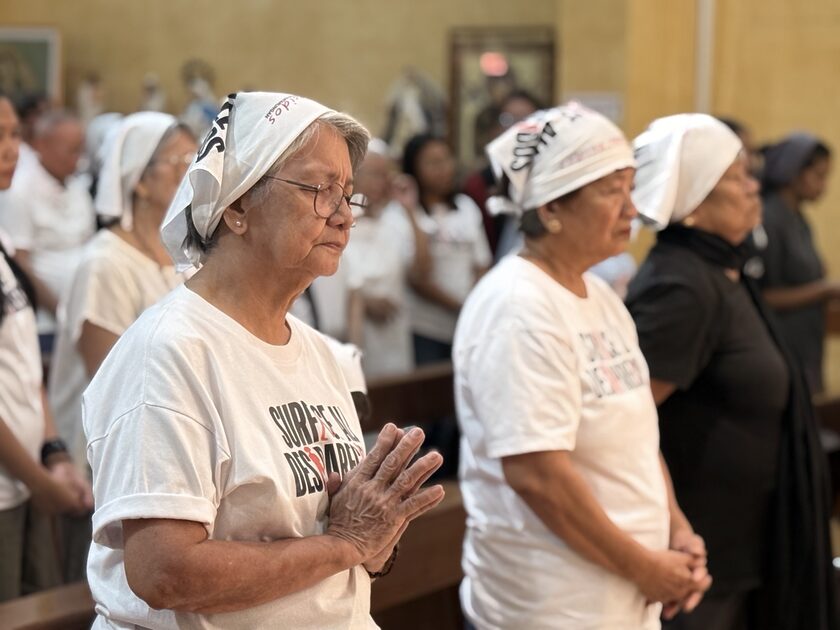
Some of the families have been searching for more than four decades, since the dictatorship of Ferdinand Marcos Sr., father of the current president Ferdinand Marcos Jr.
“My parents and my siblings died without seeing the body of my brother (Levi), without justice,” said Xcy Ybañez, brother of Cebu-based activist Rolando “Levi” Ybañez who was forcibly disappeared on July 11, 1985. On that same day, Redemptorist priest Fr. Rosaleo “Rudy” Romano was also forcibly disappeared by military agents.
Spanning administrations from Marcos Sr. to Marcos Jr., Karapatan and Desaparecidos documented at least 1,900 victims who had never surfaced as of this writing. While there is a law that criminalizes enforced disappearance, there has been no successful prosecution.
“Grieving is the processing of the loss of our loved ones,” said Ligaya Portajada, wife of labor activist Armando Portajada Sr. who was forcibly disappeared on July 14, 1988. “But for us in Desaparecidos, our grief and sorrow are never-ending, not until the surfacing of our loved ones. I wish for this crime to stop. Our loved ones are not criminals, they are only helping the marginalized people.”
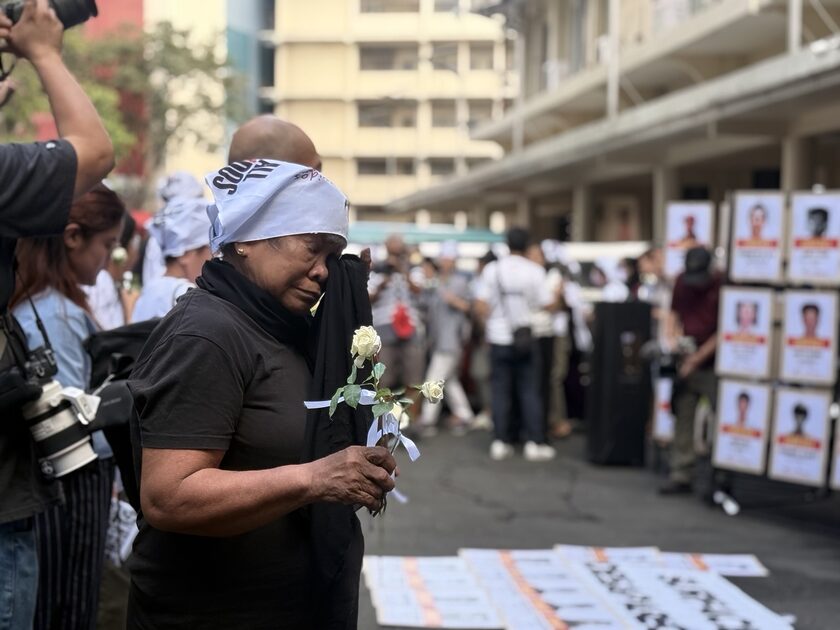
Portajada Sr. was the Coca-Cola workers’ union president when he was abducted. Human rights defenders like him are often the target of enforced disappearance, affecting not only their families but also the communities they serve.
“Dad loves his family and friends. But most of all, he loves the people of Cordillera,” said Gabrielle Chuwaley Capuyan, daughter of indigenous rights activist Dexter Capuyan who was forcibly disappeared together with Gene Roz Jamil “Bazoo” De Jesus on April 28, 2023. “He chose to offer his strength to serve the indigenous peoples and farmers of Cordillera.”
Capuyan recalled that the communities they visited to find her father’s whereabouts is the reason to hold on to hope: Dexter was described as youthful, always ready to help, finding comfort in watching sitcoms, laughing amusely, with a dimple and posture resembling a certain actor from the series Boys Over Flowers. “It never fails to make us smile.”
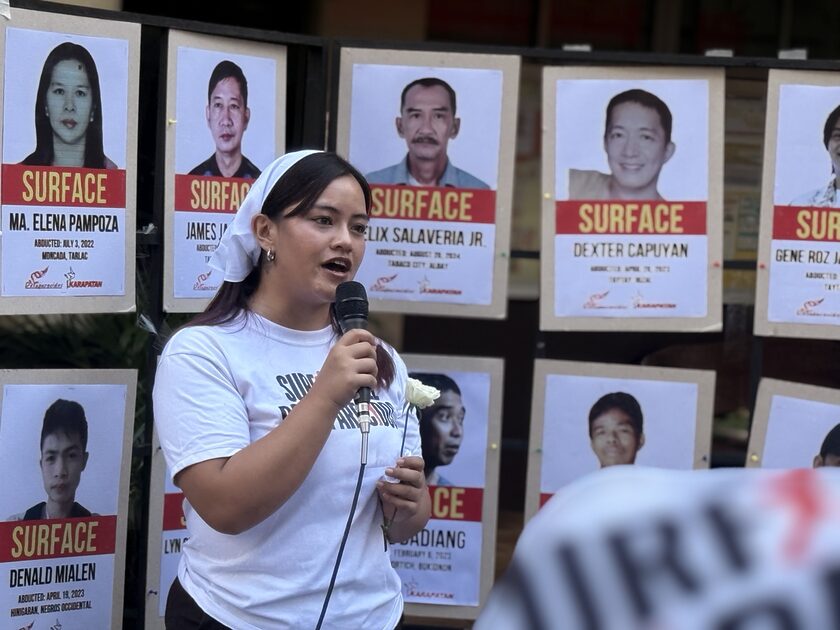
Dexter and Bazoo were among the recent victims under the current administration. A year after, two other activists disappeared, namely veteran labor organizer James Jazmines and environmental activist Felix Salaveria Jr.
Their families filed petitions for writ of amparo and habeas data. On August 12, 2025, the Court of Appeals (CA) declared Dexter and Bazoo as victims of enforced disappearance, contrary to the outcome of the police investigation. Similarly, writs of amparo were also issued to Jazmines and Salaveria last year
Desaparecidos Philippines wrote to the Supreme Court (SC) to review the writs of amparo and habeas data for its “persistent ineffectiveness” for nearly two decades, without a single success story.
Read: Not one surfaced despite court orders, families demand review of legal remedies
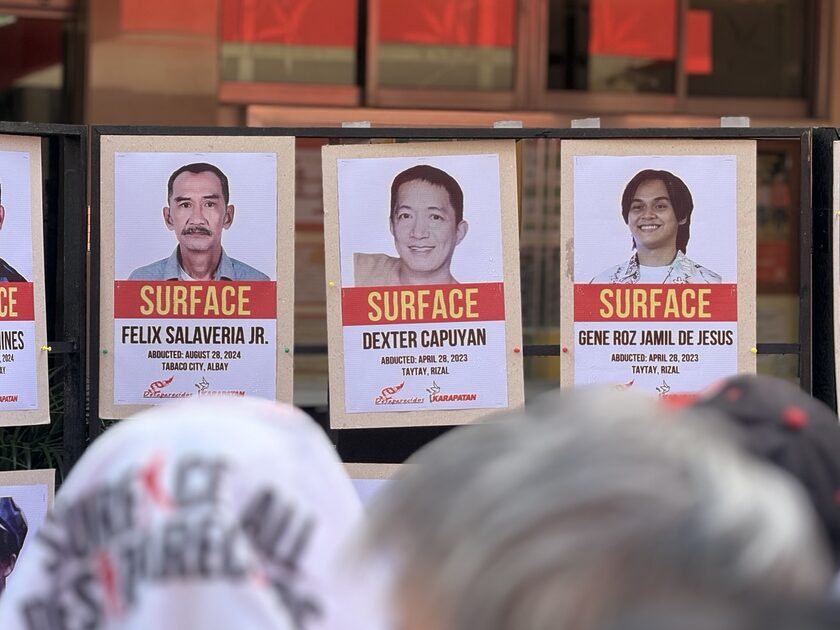
“The government agencies, who were supposed to find our father, had shown us their apathy and incompetence. It is as if not a single life is at stake,” said Salaveria’s eldest daughter Felicia Ferrer. “Is there value to the decision of the Courts, if until now, my father has not yet surfaced? When justice remains elusive for all our fathers, mothers, children, and loved ones?”
Since the court orders did not result in the surfacing of their loved ones, Burgos earlier flagged that the process is long when it’s supposed to be a “swift” remedy. She said that state forces are uncooperative and hostile to the families and that there is no thorough investigation despite orders from the court. She added that no one is cited in contempt for not following.
More than 100 families, friends, and advocates gathered during the mass, followed by a short symbolic program to honor the desaparecidos as white roses were tied to the portraits of the victims and their names were recited.
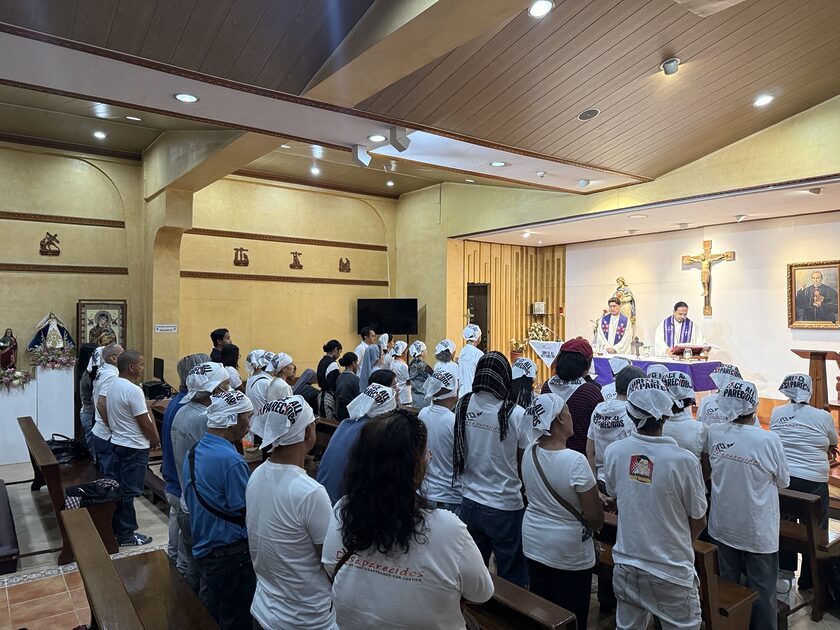
“They frequently told us to move on and accept it as it is,” said Desaparecidos chairperson JL Burgos, filmmaker and brother of Jonas. “But how can we accept it if our questions remain unanswered, our loved ones remain missing, and without justice?”
While enforced disappearance is defined as a state-perpetrated or state-sanctioned crime, JL said that perpetrators are shielded by an impenetrable shroud of impunity. It is this impunity, he said, that is behind the fact that enforced disappearances continue to this day.
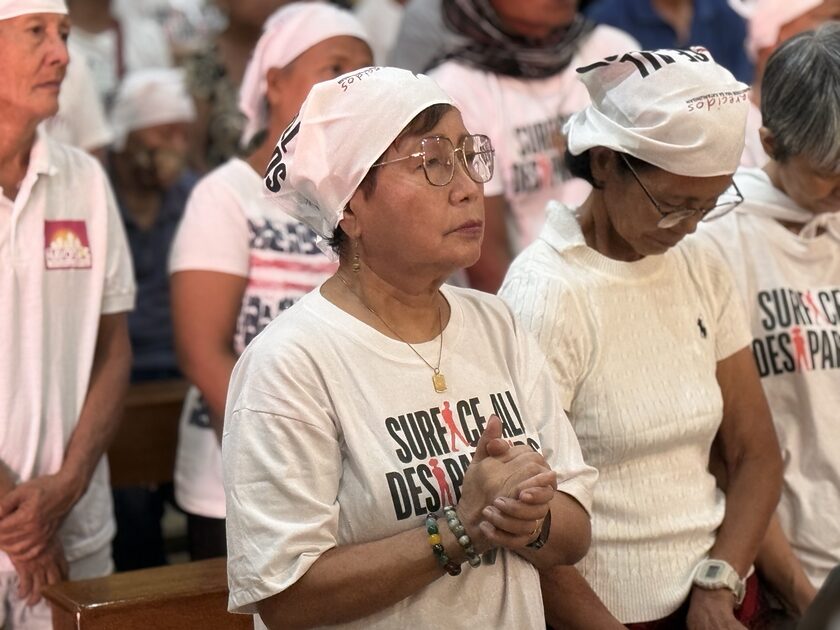
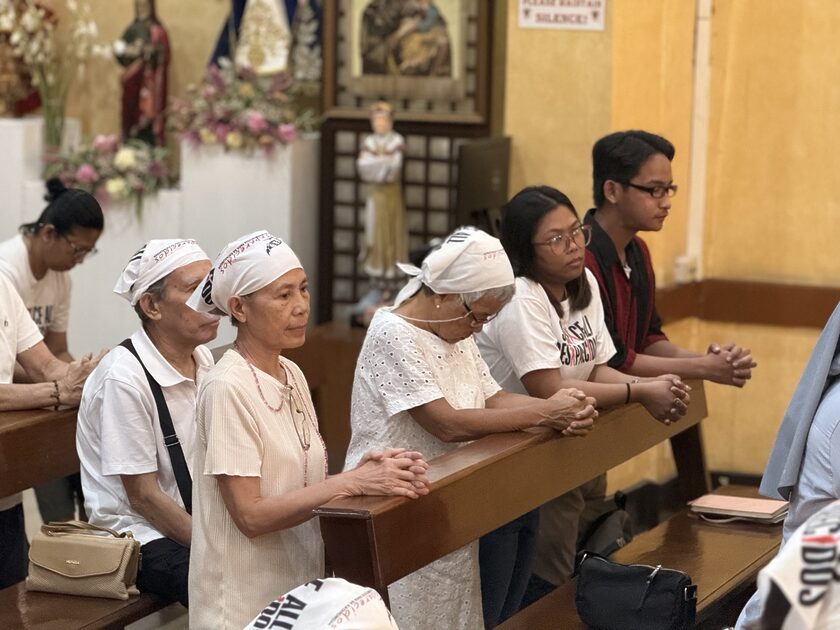
He called on the Philippine government to enforce the Anti-Enforced Disappearance Law. He also urged for the ratification of the International Convention for the Protection of All Persons from Enforced Disappearance, the only core international human rights treaty that the Philippines has not yet ratified.
“With the government dead set on denying us the truth, the November 2 gathering is ultimately an act of defiance,” JL said. “We declare that we have not forgotten our missing loved ones, we have not stopped searching for the truth behind their disappearance and calling for them to be surfaced, and we will not yield to the state’s attempts to threaten, harass or intimidate us.” (RTS, DAA)
 Save as PDF




0 Comments