
In the first five years, the Philippines was nowhere near the projected economic gains from WTO. In agriculture, not only did production dipped but the trade balance worsened.
By 1997, the agricultural sector registered US$764 million in trade deficit, from a high of US$585 million in 1991, when the GATT-UR was still in negotiation. For several crops such as palay and corn, and even livestock, the government has become dependent on importation to augment production shortages. But in reality, importation grew under the WTO and worsened the manipulation of traders and landlords in several sectors. More imporantly, liberalization also worsened age-old problems of landlessness, high productivity, low technology and productivity.
Liberalization also failed in creating half a million of jobs in agriculture as projected. Since 1994, fewer jobs are being added, while in 1997, the sector lost 191,000 jobs. In 2000, about two million rural farm workers lost their jobs.
Local industries meanwhile are faring even worse. Unable to expand production as a result of undue foreign competition, many companies lost market shares and incurred substantial losses, forcing them to downsize and even close shop. Everyday from 2000 to 2003, at least eight local establishments either closed down or retrench workers, translating to 196 workers displaced daily.
Poor countries fight back
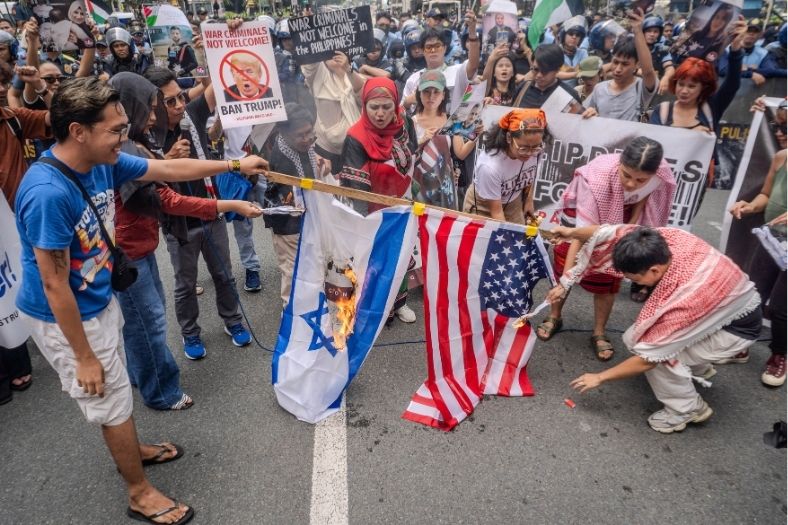
The Philippine experience is shared by many Third World countries in Asia, Africa and Latin America. The harmful impact of WTO agreements have led various sectoral groups and people’s organizations to launch a wide spectrum of campaigns from calls to democratize WTO proceedings to more radical approaches urging poor countries to opt out of the WTO.
In 1999, Third World countries called for a review of the GATT-UR agreements but rich countries wanted to expand negotiations in these agreements and opened up new ones in the Singapore issues (investment, government procurement, trade facilitation and competition policy).
At the Seattle Ministerial in November 1999, rich countries insisted on another comprehensive round of negotiations similar to the Uruguay Round. But talks broke down, as a result in large part of people’s protests.
More than 50,000 people from around the world poured into the streets of Seattle to campaign against WTO policies. From union workers and environmentalists, to students and even religious groups, citizens formed street blockades despite physical assaults by police forces.
The people’s resistance showed in Seattle successfully delayed the drafting of expanded agreements that would have further burdened the economies of poor countries.
By the 2001 Ministerial in Doha, the EU dubbed the negotiations as the “Development Round” in an attempt to romanticize proceedings as rich countries continue to aggressively push their corporate agenda of expanding trade to whatever sector is left in Third World markets.
Through Green Room meetings and other maneuvers, rich countries were able to force a draft decision on the implementation of the four Singapore issues set to be achieved by the Fifth Ministerial in Cancun.
After Doha, the undemocratic maneuvers within the WTO continued. For instance, the practice of committee chairs to write and submit texts “under their own responsibility” became widespread.
By September 2003 at the Cancun Ministerial, poor countries decided to form alliances and seriously challenge the manipulation being done by their powerful counterparts.
While Cancun was supposed to be the venue for the acceleration of negotiations for the four Singapore issues, it became the battleground for the issue of agricultural subsidies of the US and EU to their farmers despite the disastrous impact it has dealt on the livelihoods of small-scale farmers in Third World countries.
 Save as PDF


0 Comments