
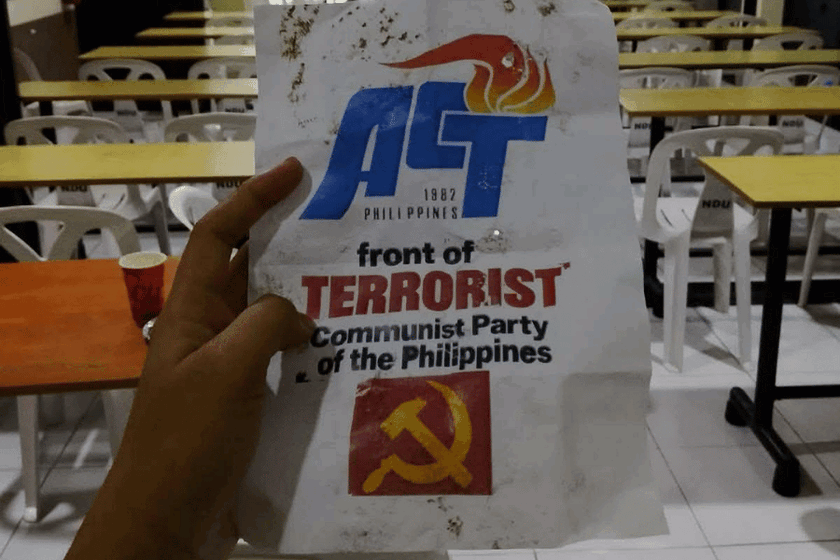
Internally, insurgency is still the major security concern – Communist Party of the Philippines-New People’s Army (CPP-NPA) and the Mindanao separatist and terrorist groups. The communist insurgency is tied to political and economic realities that continue to fuel popular discontent compounded by government neglect and military abuse. On the other hand, the Muslim groups are now linked with other Islamic fundamentalist groups in the region thus broadening the problem. The military approach to the insurgency has been described as a “conflict trap” with “the rebels too weak to defeat the AFP and the AFP too inept to defeat the rebels”.5 To get out of this trap, the AFP has to break out of its Martial Law/Cold War mentality with its outmoded approaches. Against the left for example, the Anti-Subversion Law has been repealed and the left organizations have entered mainstream politics with party-list groups in Congress. The military should now learn to deal with them in a different way, one which does not violate its own code of ethics “not to stifle dissent or label principled critique and/or cause-oriented groups as threats to national security and/or enemies of the state as dissent and opposition are important features to ensure a healthy and dynamic democracy”. (Art III, Section 2.20 of the AFP Code of Ethics)
Instead of alienating the insurgents, the government should reach out and engage them, understand their plight, initiate confidence- and trust-building measures and resolve the matter peacefully. The approach must be holistic as a major factor in insurgency is the absence of government in the remote areas where the rebels are strong. All government agencies should be involved in delivering basic services to the people. However, in my experience, there is this “plan-implementation gap” and government services are non-existent or not felt very much in the countryside. The military alone is not capable and its main task is to contain the violence and make the area peaceful and secure so that government can deliver the services to the people.
Externally, global economic integration has changed the rules of international politics and diplomacy and is creating a new international security order between those who are connected to the globalization process and those who are not. Inter-state conflicts have given way to non-state actors, organizations and individuals engaging in terrorism and asymmetric warfare.6 With the U.S. as the only superpower, the bipolar structure of the cold war is gone and a more “intrusive America” is expected.7 In Asia, China’s emergence as an economic and military power alongside Japan is changing the regional security landscape. Likewise, old flashpoints still exist – territorial claims, tensions in the Taiwan straits and Korean peninsula. Erstwhile security concerns like maritime piracy, trafficking of drugs and humans and money laundering have become more sophisticated because of global interconnections and new technologies.
In this new environment, the armed forces should rethink its strategy and outlook of defense-military alliances. We should perhaps explore closer defense and military links with emerging powers such as China and India and strengthen relations with neighboring countries in Southeast Asia. These alliances will provide the first line of defense and give us breathing space as we rebuild our national defense. We should likewise develop a self-reliant defense posture to design strategies and indigenous military technology so we can defend ourselves using our limited resources and also maintain our national self-respect by not depending too much on other countries for our defense requirements.
This twin challenge of rebuilding and dealing with security concerns will take a lot of the AFP’s organizational strength. Change will question age-old perceptions and established norms. It will pit people against one another with regard to ideas, concepts and approaches. There will be tremendous resistance to change. The existing command structure and social order will be disrupted and challenged. However, with the right combination of commitment, organization, leadership and management, the challenge can be met. The armed forces must hold firm, stay united and keep its eyes on the objectives in order to accomplish the mission to change.
CONCLUSION
We pride ourselves as a democratic nation. But our democracy is a sham as politicians manipulate the system to perpetuate themselves in power. How can we even think that we have a democracy when elections, the very soul of democracy, is being perverted by the very public officials who should protect the sanctity of the ballot. Democracy is also not just all about having elections or a Constitution. It is also about having the active and sustained participation of the people through democratic institutions like barangay assemblies, people’s organizations, trade unions and political parties. The armed forces can play a constructive role by safeguarding the elections from fraud and by promoting peoples organizations rather than spying on them.
Democracy is also not just the freedom to vote or the freedom of speech or religious freedom. It is also about being able to live with pride and dignity. It is also about economic freedom enabling the practice of these rights. How can one vote if he cannot afford to go to the polling station? How can one practice his religion when he cannot afford to go to church or has to commit sin to feed his family? How can one practice free speech if he cannot even read the newspaper? The government must be able to improve people’s lives so they can exercise their freedoms. The armed forces can play a constructive role in preserving these freedoms by educating the people of their rights and responsibilities as citizens for nation building and engaging in developmental activities to support the national program for economic development.
Ngayon, nagtitimbang na naman ang mamamayan. Hindi natin alam kung saan talaga tutungo ngunit nararamdaman natin na kailangang magbago ng landas para sa kapakanan na ating bayan. Alam din natin na hindi nararapat ang mga tiwaling pinuno sa pamahalaan, na kapag hinayaan natin sila ay wala tayong matatanaw na magandang kinabukasan. Alam natin na kailangan ng ating bayan ng mga pinuno na magaling, matatag at mapagkakatiwalaan. Subalit hindi na tayo nakakasiguro kung sino sa mga pinuno ngayon ang nararapat. (Now, the people are weighing their options. We do not know where this will lead but we feel that there is a need to change the direction for the welfare of the country. We also know that corrupt leaders should not be in government, and that if we allow them to stay in power we will not have a bright future. We know that country needs leaders who are competent, strong and trustworthy. But we are uncertain as to the who among the leaders are deserving.)
In this period of uncertainty, it is time for the armed forces, as the protector and defender of the people, to play a constructive role so that the nation can alter course with the right leaders and build a true democratic society so the people may have a firm hope in the future.
(This paper was delivered at a meeting of the Philippine Constitutional Association [Philconsa] last June 21 at the Manila Polo Club. A former Philippine Army officer who served as Special Assistant to the Secretary of National Defense, the author is now working abroad as an executive for a conglomerate.)
Notes:
1. Jarque, Jose Rene, “Metamorphosis of Idealism”, Army Journal, June 1991.
2. Bernas, Joaquin, in a speech entitled “Supremacy of Law and Mark of Sovereignty”, delivered during the Annual Convention and General Membership Meeting of the Philippine Military Academy Alumni Association on 22 Jan 2005. Published in The Cavalier, March-April 2005.
3. David, Randy in a speech, “The Philippine Army Through the Years” delivered during the Philippine Army Senior Leaders Conference, March 2005.
4. Cited in “Frankly Speaking”, Philippine Graphic, Dec 29, 2003 – January 5, 2004, Vol. 14, Nr 29/30
5. Morales, Ricardo Col., “Transforming, not Reforming the AFP”, Opinion/Columns, INQ7.net, 27 Oct 04
6. Barnett, Thomas P.M., The Pentagon’s New Map: War and Peace in the 21st Century, Berkley Books, New York: 2004.
7. Almonte, Jose, former National Security Adviser, speaking at the Asia-Pacific Security Conference, as reported in the Philippine Star, Feb 24, 2004.
 Save as PDF



0 Comments