
Jocelyn Dulnuan may be dead. But her spirit lives on in the hearts and minds of her compatriots in Canada and in the efforts of community leaders and coalition members of the Jocelyn Dulnuan Support Committee whose calls for policy changes and continuing search for justice are echoing in various memorial services across Ontario. She may be gone forever but her bloodied footprints cry out for changes in the policies enslaving caregivers from third world countries.
BY EDWIN C. MERCURIO
MIGRANT WATCH
Contributed to Bulatlat
Vol. VII, No. 40, November 11-17, 2007
Two months after Jocelyn Dulnuan, a 29 year old caregiver was murdered inside her employer’s palatial home in Mississauga, mystery still surrounds her death. No suspects have been found, her stab wounds had been covered with plaster and her body had been repatriated to her hometown in Ifugao, Ilocus Sur, Philippines. Information from Peel Region Police remains sketchy and the media frenzy and police investigation surrounding the suspicious circumstances of her death have faded from the limelight.
The unsolved murder aggravated by delays and initial reluctance of Philippine consular officials to extend financial assistance in Toronto (for lack of funds) to repatriate her body gave birth to a growing coalition of community organizations in the Filipino community called “The Jocelyn Dulnuan Support Committee” (JDSC). Dulnuan left behind a four year old daughter in the care of her husband in Ifugao, Philippines.
Dulnuan like most caregivers from the Philippines and other countries who dream of a better life in Canada holds a professional degree. She was a B.S. Criminology graduate from University of Baguio, the summer capital of the Asian nation. She is known to have studied martial arts during her school days.
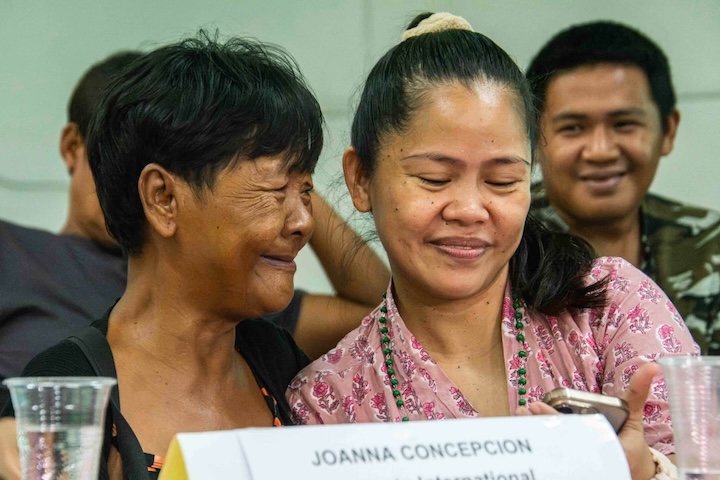
In a memorial service attended by federal and provincial legislators, community and labor leaders, two church ministers and a catholic nun, relatives of the slain caregiver called on the congregation to stand firm in the continuing search for justice and demanded that Canadian government authorities pay attention to the workplace health and safety of caregivers. The victim’s aunt and a member of a tribal association of the Ifugao tribe spoke and voiced out hopes that revenge killings, an age-old practice of tribal tit-for-tat to avenge the death of a tribal member, will not be resorted to by the Ifugao warriors from the victim’s village. Dulnuan belongs to the Ifugao tribe, one of the fiercest warrior tribes in the highlands of the Philippines.
At the memorial service last November 4 commemorating the first month of the unsolved murder, there were no lighted candles. Neither were there any loud beating of ancient brass gongs normally heard across the hills and valleys of the ancestral homes of Ifugaos whenever native elders and shamans are summoned to calls for war or bodong tribal peace pacts. The tribal group lives in their ancestral lands around the famous rice terraces known globally as one of the “eight wonders of the world.”
Instead, the Membership Hall of Ontario Provincial Service Employees Union (OPSEU) Regional Office at 31 Wellesley Street in Toronto came alive with original songs from ballader and composer Levy Abad’s “We should always remember, we should never forget the struggles of our brothers and sisters” and the muffled racing heartbeats of speakers calling for changes to the live-in caregiver requirements of the LCP and the search for justice in the slaying of the Filipina caregiver.
But there were thunderous claps from the audience when Member of Parliament Peggy Nash (NDP) pledged to pass a private member’s bill to look into the health and safety conditions of LCP participants in their workplace. Another round of applause was heard when Province of Ontario Member of Parliament Cheri diNovo (NDP) promised to call for an inquiry into the death of Dulnuan.
Jocelyn Dulnuan may be dead. But her spirit lives on in the hearts and minds of her compatriots in Canada and in the efforts of community leaders and coalition members of the Jocelyn Dulnuan Support Committee whose calls for policy changes and continuing search for justice are echoing in various memorial services across Ontario. She may be gone forever but her bloodied footprints cry out for changes in the policies enslaving caregivers from third world countries. A delegation composed of various community organizations spearheaded by the JDSC, Migrante and the Community Alliance for Social Justice (CASJ) is slated to meet with Canadian government officials and the Philippine consular officials in Toronto.
The Live-in Caregiver Program
The Live-in Caregiver Program (LCP) is a federal program where caregivers, mostly women from the Philippines, are allowed to work as caregivers on a temporary visa in Canada. These individuals frequently have families – husbands and children – left behind while they labour in Canada.
Beside the long years of separation from their families, caregivers tied to the live-in requirement report cases of exploitation, abuse and rape. Unable to upgrade their credentials and professional skills, nurses, engineers, accountants and teachers are typically de-skilled after the three-year live-in requirement.
A study revealed that two thirds of women who work as housekeepers or home support workers in Canada have a university degree. Those present in the memorial service for Anita also confirmed that violence against women which is tied to the LCP is on the rise.
One of the questions raised during the gathering was whether the stringent rules of the LCP played a part in Jocelyn’s untimely death. If so, there is a greater and urgent need for the community, labor unions and migrant workers to join hands to effect changes in the federal government’s rules of engagement and work together in abolishing the slave-like live-in requirements of the LCP.
In the words of CASJ’s Pura Velasco, “It is time for the Filipino community to learn how to fight for their rights. This is about labor and human rights and our agenda is to protect workers’ rights.” Contributed to (Bulatlat.com)
 Save as PDF



0 Comments