
Amid the warming climate and the looming impacts of large-scale extractive mining projects, women like Peralez, Millomeda, and Decena, from fishing, farming, and religious backgrounds across Mati City have come together to protect one of the most ecologically critical areas in their town.
By Michelle Mikiko Pagaran
Along the coast of Balete Bay, women farmers, fisherfolk, advocates, and church workers across Mati, Davao Oriental are coming together and turning to collective action and organic farming to protect their coasts, and adapt to extreme weather impacts of climate change.
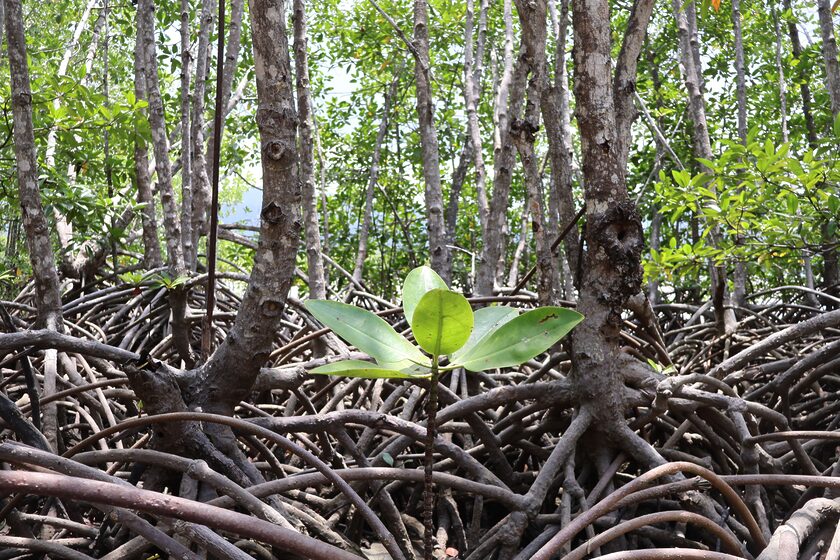
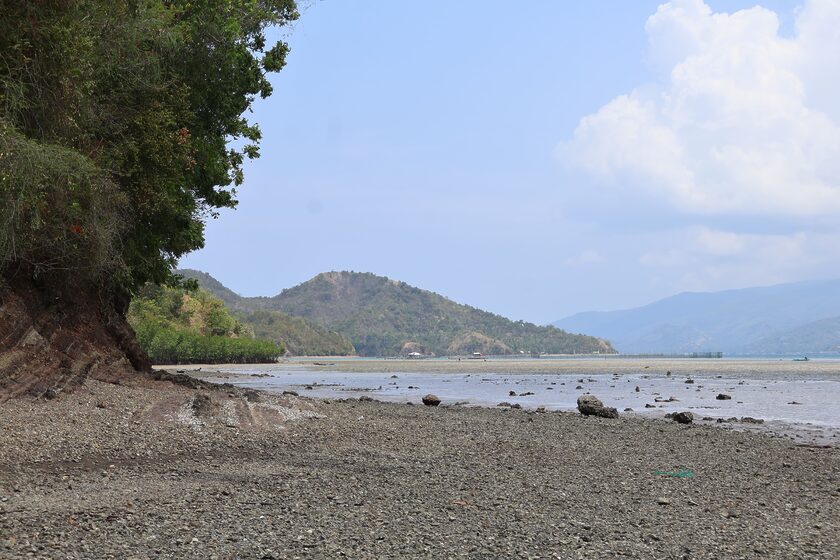
Tucked quietly along the coast of Mati, Davao Oriental is Balete Bay, a small inlet along the southern border of the province. Known as a breeding ground for various fish species, reef species and lobsters, the bay is of great ecological significance. A marine inlet, its cove-like structure hosts seagrass beds, diverse reef fisheries, and abundant mangroves.
A sanctuary of corals, mangroves, and commercially vital fisheries, the bay is important for local fisherfolk who depend on it for their livelihood. It serves as a breeding ground for shellfish and wild lobster fry.
In 1994, it was declared a NIPAS protected area as part of the 20,873.43 hectare Pujada Bay Protected Landscape and Seascape, through Presidential Proclamation 431. It is an inlet of the larger Pujada Bay which was declared one of the Most Beautiful Bays in the World in 2020.
Amidst its ecological importance, locals in Mati near the coast and further upland experience the growing impacts of climate change amid a backdrop of looming impacts from extractive industries surrounding the area.
Mangroves and Marine Resources Crucial to Local Fisherfolk
Christine Peralez recalled her fondest memory of the bay.
“My fondest memory of the bay is playing among the mangroves when we were children. We would play amongst its roots. The mangrove was our playground. We would play pretend. We gathered shells that cling to the roots, collected them, and those were what we pretended to sell”, she said in an interview with Bulatlat.
Peralez was born in Bigue. She recounted her childhood growing up in a fishing community in sitio Bigue, one of the communities along Balete Bay. She would help her parents catch fish and play amongst the mangroves in the coast of the bay.
Their house before was right by the sea. Whenever there was high tide, the sea would go under their house.
“As kids we would bathe right under our house every time it was high tide. That’s why my hair was always bleached yellow,” she said.
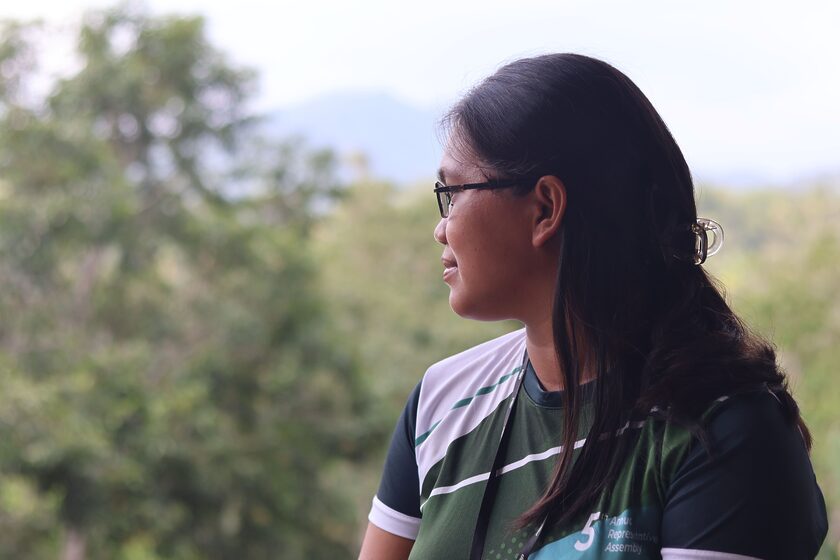
“Before, we hardly felt how difficult life was, thanks to our parents’ hard work. My father was a fisherman. Mostly gathering shellfish and sea cucumbers. He was the go-to person for people looking to order shellfish and sea cucumbers, or what we call bat. Sometimes when he couldn’t go diving, he would go line fishing or spear fishing. That’s really how we survived. Through his fishing,” Peralez said.
She recounted that her father would catch fish for their own consumption. Her father’s catch was also enough for selling at the market to provide for their daily needs.
She speaks about her childhood with fondness, recalling how the bay, teeming with fish, gave their father a livelihood and provided their family with food on the table.
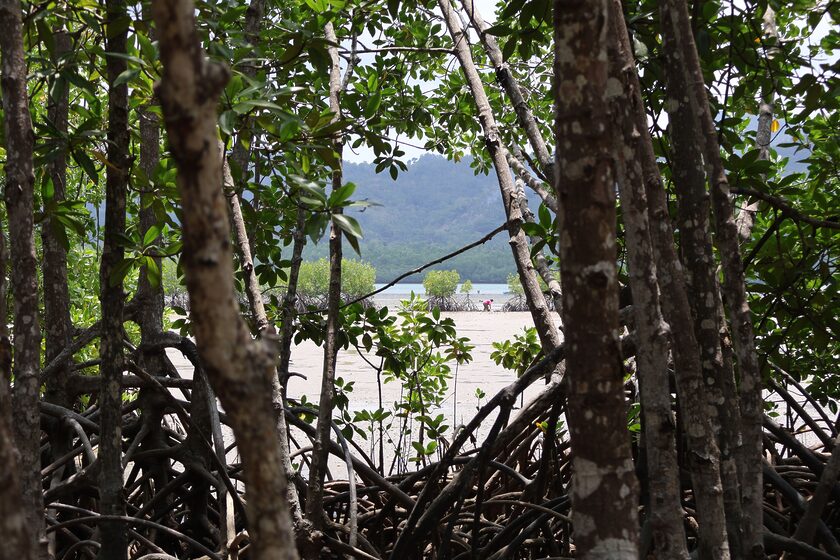
“I used to join in net fishing back then so that the catch was strictly ours to share, without having to divide it with other people. I heard stories from the old days that before, fish would almost swim up to you. Because they were so abundant, fish back then would reach right up to the shore,” Peralez said.
But times have changed since then. Fishing has been harder, especially amid the rising heat.
She said that back then, her father did not have to go far to gather shellfish. She recalled how easily her father could get shellfish across their house in Bigue.
“Today my father can no longer fish right across from our house. He has to go far to get to more abundant areas of shellfish.” Peralez said, adding that other fishers who go net fishing in Bigue have to travel far away for about three to five days before they can return home.
Rising temperatures, dwindling catch
The changes in weather patterns and the warming temperatures have affected the livelihood of fisherfolk in the bay. These days, Peralez’s father has stopped fishing regularly due to fewer and fewer catches.
“With the recent heavy rains, mud has piled up there. The fish are no longer the same. Fishermen have to go farther out and under the extreme heat. It’s already too hot. The catch keeps getting smaller”, Peralez said.
Fisherfolk have noted the differences in catch amid the warming temperatures over time. Rising global temperatures due to climate change are further exacerbated by the “super” El Niño this year that is seen to stretch out until 2027.
“It’s really different from before. Like now, we go for long periods without rain and the temperatures are very hot. Fishermen catch less. It’s been two months with no rain here. That’s why the fish really need a cooler area”, says Danny, a senior resident and former fisherman, who says long dry spells have hurt their catch.
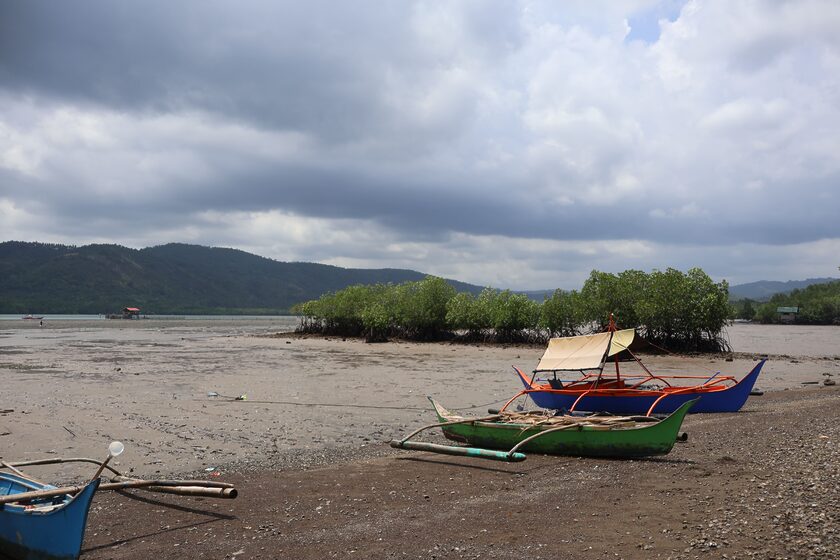
The World Meteorological Organization has forecasted that the established El Niño in 2026 will continue to strengthen with and last until February 2027. Driven by exceptionally warm ocean conditions, some climate observers have called it a “Super El Niño” as it is forecasted to be one of the strongest El Niño on record, expected to cause shifts in rainfall patterns, drought, floods, and other weather extremes.
El Niño is a naturally occurring climate phase that brings warmer weather throughout the globe. This increases the risk of extreme weather and global temperatures that are already rising due to human-induced climate change.
While discussion is ongoing in the scientific community, studies published by scientific journal Nature suggest that global heating may be leading to stronger El Niño events. Other studies predict extreme El Niño events to double over the next century because of faster surface warming of the eastern Pacific Ocean due to global temperature rise.
In September, the Philippine Atmospheric, Geophysical and Astronomical Services Administration (PAGASA) issued a similar climate advisory to the public warning of a “Very Strong” El Niño. They highlight that this phenomenon may bring prolonged lack of rainfall and drought along with short-term heavy rainfall, affecting food security, water resources, and water supply along with impacts on public health and the economy.
The impacts of the El Niño are already being felt by locals in Davao Oriental like Danny and Christine Peralez.
To cope with the warming waters and dwindling catch, sometimes fisherfolk are forced to take on loans during difficult seasons, which they pay off when the fishing season returns. Other fishermen shift to other sources of livelihood, as miners, drivers, or other odd jobs especially during off season.
The rising temperatures have brought on harder times for women like Peralez. Now a mother with two young children of her own, she carries the added responsibility of making sure that her children’s needs are met.
Like many mothers, she not only takes on household work, but also finds different ways to make ends meet.
“I ensure the budget for the household. I really get bothered when I have no money, especially because I have children who depend on me. Daily expenses are intense. My budgeting is strict. I prioritize needs over wants,” Peralez said.
She also takes some side hustle to gain income to sustain her family’s needs.
“I make ice candy, I cook peanuts, I sell dried fish (bulad) on credit. I book flights, I process passports online, stuff like that. That’s just how it is. It’s hard, but we persevere”, Peralez said.
Women in the household are among the most affected by climate change. According to estimates by UN Women, by 2030, about 10.8 million adult women in the Philippines could face food insecurity and 1.9 million could live in extreme poverty (below $2.15 a day) if the current climate path continues.
El Niño Impacts from the coast to the mountains
Fisherfolk in the Balete Bay are not alone in facing the impacts of the El Niño. Many of the farmers of the upland areas surrounding the Bay have been stretching their resources to cope with the impacts of the “super El Niño”.
For Tina Millomeda, Chairwoman of the local chapter of Farmers Advocates for Sustainable Agriculture and Development (FASAD), the El Niño has proven to be challenging with her crops slowly dying due to extreme heat and lack of water.
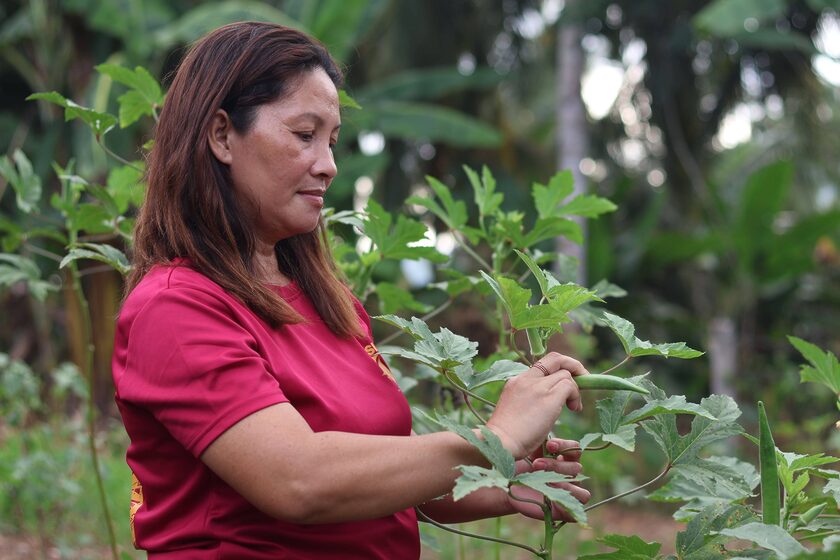
“Before, when we farmed, there was a routine. There were months for harvesting, and months for planting. Now it’s different. There has been no rain for several months. The corn grows with no kernels. The bananas easily topple over”, Millomeda said.
Coping with the impacts of the El Niño comes at a high cost for farmers like Millomeda who now have to take on additional costs to fetch water from far-off sources along with the cost of gasoline for transportation.
“It’s costly. I have to scoop water for the plants. It costs P20 (less than $1) per container. Some now use a carwash machine to pump water from the creek, which costs a lot too. In addition, you need at least four rolls of hose. I have many plans for the farm, but there’s no water.”
For her small backyard garden of organic vegetables, Millomeda uses an estimate of 5 containers at P20 per container or about P100 (less than $2) per day just to keep her plants alive. As months go by without rain, the cost of keeping her crops alive adds to the burden of an already limited household budget.
As a mother of two children, Tina has come up with unique ways to cope with the El Niño while saving up on household costs. For one, she said the water used for laundry is saved up to be used for watering plants in her garden.
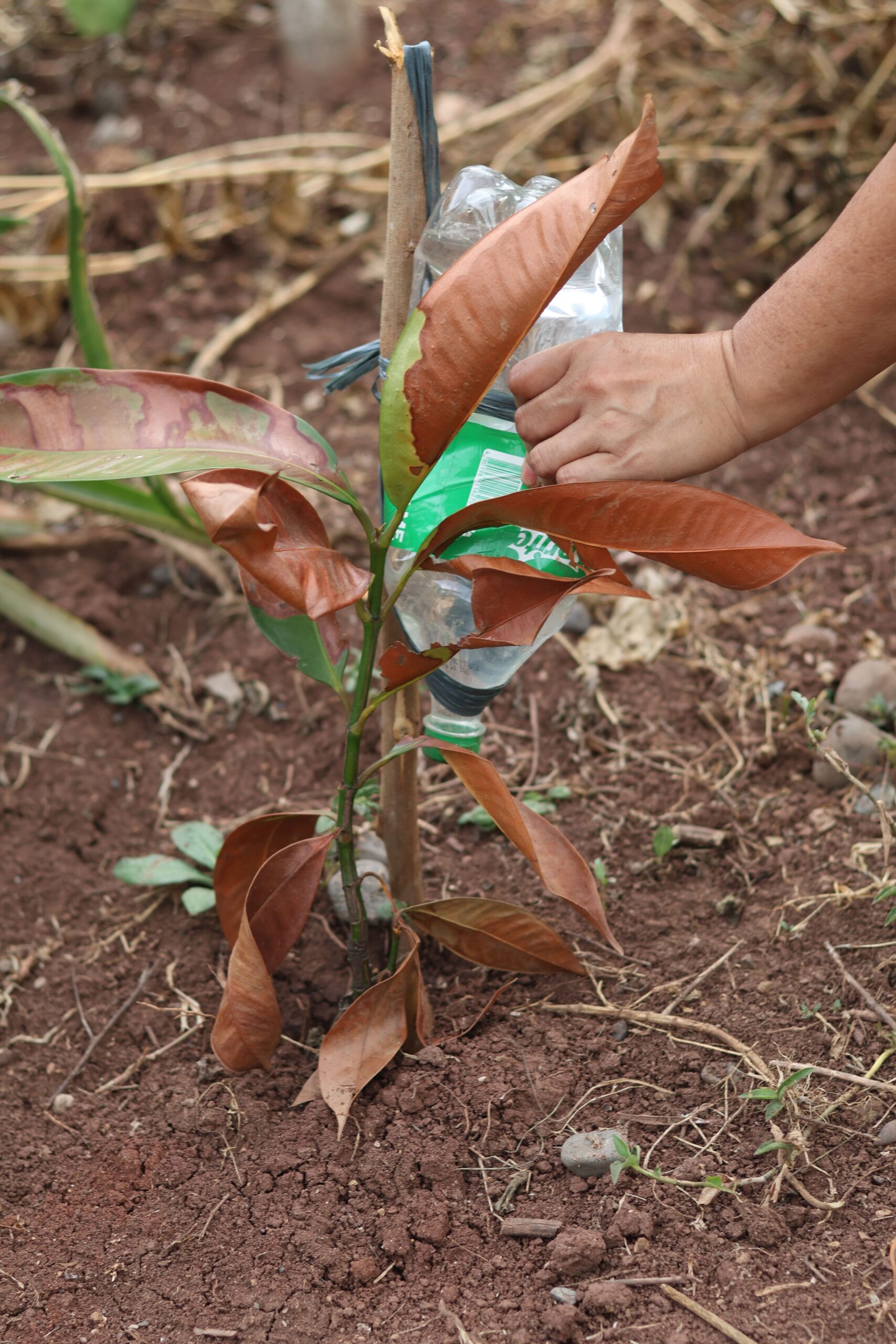
Due to the extremely dry weather and heat, the leaves of her fruit tree seedlings have dried up. To cope, she puts a make-shift device fashioned from old plastic bottles that drips water slowly all day to make sure her tree seedlings stay alive.
Across Mindanao, an estimated 5,950 people are affected by the El Nino in farming and fishing communities, according to the National Disaster Risk Reduction and Management Council (NDRRMC) El Niño report.
An estimated P540 million ($8.47 million) in agricultural losses has been recorded, with the highest loss recorded in Davao Region at P410 million ($6.44 million) Nationwide, agricultural losses and damage is estimated at P6.54 billion ($102.62 million USD), according to the report.
Millomeda, along with other women farmers of FASAD, cope with the changing climate hand-in-hand with the women fisherfolk of Balete Bay through collective efforts like seed-sharing, exchanging of best organic farming practices, and mutual aid in environmental protection efforts through mangrove planting activities by the bay.
A history of resistance
Winceslao “Wenie” Mapa of the Farmers Advocates for Sustainable Agriculture and Development (FASAD), a local organization of farmers and advocates across different barangays in Mati. said they have been planting mangroves in Sitio Bigue, Balete Bay since the early 2000’s.
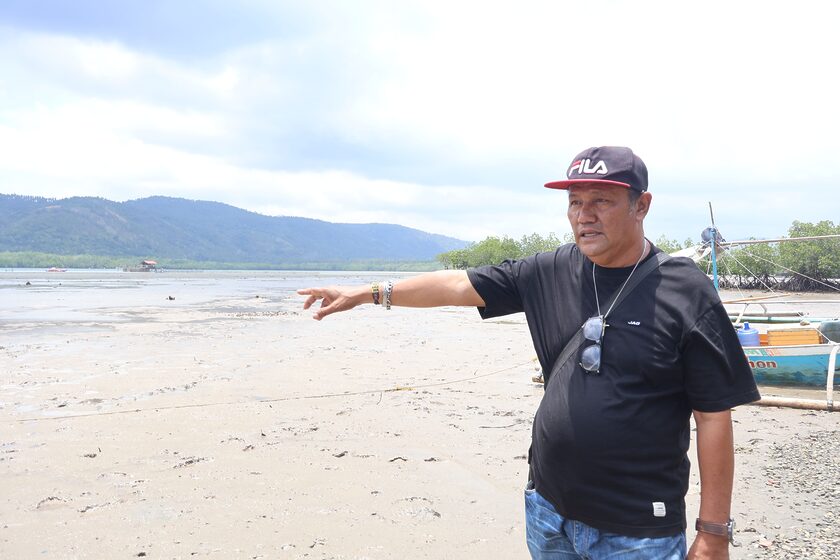
Maps is a long-time environmental defender and has seen the highs and lows of the bay. He can also trace back the history of resistance and climate action from the coast to the upland farms.
He recounted how, in 1998, local residents successfully came together to halt the operations of Holcim Philippines, Inc. which planned to conduct mining operations in Mati, upstream along the right border of the bay, facing the open sea.
Davao Oriental is rich in mineral resources including nickel, gold, silver, copper, limestone. Out of 568,000 hectares of the province’s total land area, 449,335.84 hectares or close to 80% of the province’s total land area is covered by mining permit applications, according to data published by the Mines and Geosciences Bureau (MGB). The demand for Nickel, in particular, continues to grow globally, especially amid the transition to renewable energy technologies.
Gregoria Decena, a 70 year-old retired school principal and member of the Nagkahiusaing Kababayen-an sa Kalambuan ug Kalinaw (NKKK), bore witness to the historic struggle and triumph of resisting the attempted entry of mining operations in their community in the 1990’s.
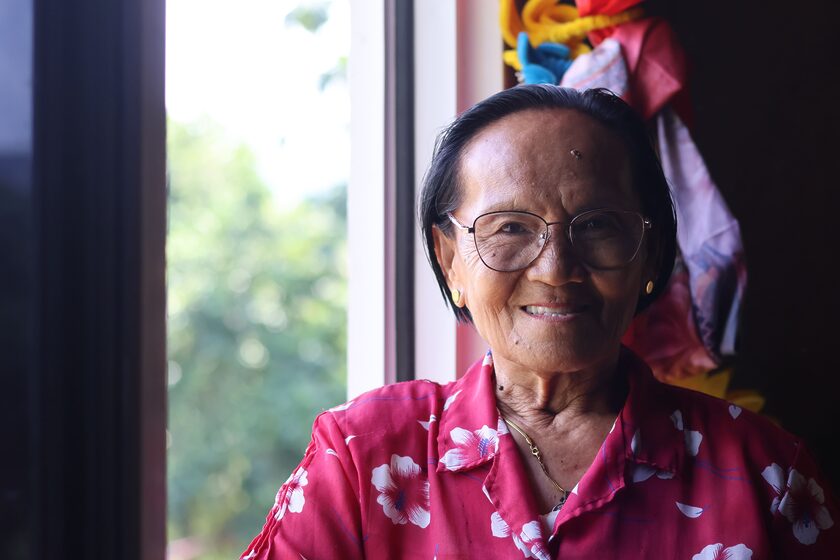
“Our barangay would have seen the same fate. There are 16 springs. It would have been mined,” Decena said, recalling how their community came together to protect their local water sources.
“We wondered why the machinery that arrived was so new. They said the machinery was for road widening, which wasn’t really a priority,” Decena said.
“They were really building a road toward the mining area. And there were springs there. If those were touched, what would become of them? So we called an assembly. We made a resolution addressed to the governor and the mayor, and it was approved: San Isidro says no to mining. Their operation was stopped,” she added.
Until today, residents remember that important victory made by the community, thankful that their mountains continue to stand tall amid news of landslides in neighboring mining areas.
“That’s why, after the landslide in Davao de Oro, people now say: Ma’am, if you hadn’t acted back then, what would have become of us now? We’d be gone by now,” Decena said.
In February 2024, a landslide in Barangay Masara, Maco, in the nearby province of Davao de Oro, a gold-mining community, killed at least 98 people. The Mines and Geosciences Bureau (MGB) attributed it to natural causes, including persistent rain and the area’s long-mapped landslide risk.
Environmental groups have questioned whether the mining company and regulators did enough to prevent it. For Decena, the disaster showed what could have happened in her barangay.
While the impacts of upstream mining activities are not immediately felt in Balete Bay today, environmental defenders like Mapa and Decena fear the risk of siltation and heavy metal contamination posed by upstream mining activities if they are allowed to continue. They fear that this in turn would lead to damage to the marine life and ecological integrity of the bay downstream, affecting their lives and livelihood.
Rivers in neighboring areas have seen such consequences play out. In 2022, siltation seeped into two rivers, the Mapagba and Pintatagan Rivers in Banaybanay town, Davao Oriental. The rivers turned orange after heavy rainfall attributed to mining activities upstream. DENR Davao issued a cease-and-desist order to Riverbend Consolidated Mining Corporation after investigation found that rain pushed overburden materials that contributed to the overflowing of their silt pond that drained into the rivers.
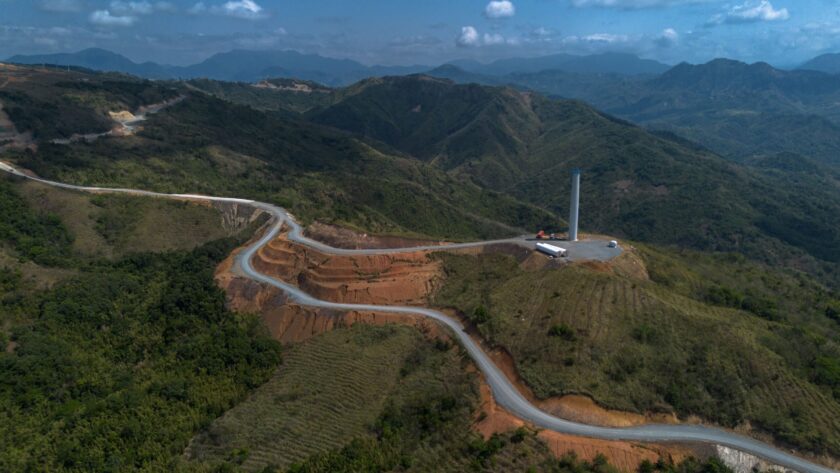
Today at least two mining companies, which include Hallmark Mining Corporation and Austral-Asia Link Mining Corporation, hold Mineral Production Sharing Agreements (MPSA) covering about 10,000 hectares in Barangays Macambol and Cabuaya, according to the MGB. Mati’s environment office puts the site about four kilometers from the Pujada Bay protected seascape boundary. Balete Bay is an inlet of Pujada Bay.
Hallmark Mining Corporation says nickel ore from its operations in Mati was shipped to China and Indonesia between 2022 and 2025, where it is processed for use in electric vehicle batteries, company spokesperson Jose Butch Sebua said, as reported by the Manila Bulletin on January 5, 2026.
Locals are not without hope. Learning from experiences of the past and from the mining impacts in neighboring provinces, public sentiment has been translated into policy initiatives.
In 2019, the House Bill 8815, which sought to declare Davao Oriental as a mining-free zone was passed on third and final reading in the 17th Congress of the House of Representative. However, there was no counterpart bill in the Senate to be able to pass into law.
On January 28, 2026, the Sangguniang Panlalawigan issued Resolution No. 18-24-01-2026, which sought to rescind, revoke, and cancel the body’s previous endorsement and declaration of feasibility and tree-cutting permit application of Austral-Asia Link Mining Corporation and Hallmark Mining Corporation.
Beyond policy efforts, locals are taking climate adaptation and mitigation efforts into their own hands. At 70 years, Decena, a retired school principal, continues her environmental protection advocacy through teaching and learning along with other women like Christine Peralez and Tina Millomeda. She keeps herself busy by practicing organic farming in her small lot and by actively participating in the mangrove planting efforts along the bay.
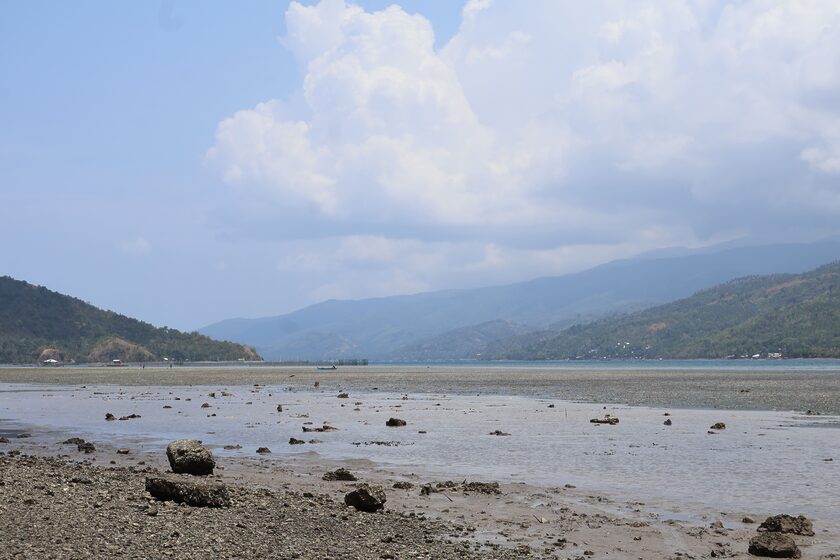
Women Nurturing Mangroves for to Adapt to Climate Change
“The aim is really to be protected from typhoons. The seashore won’t be damaged as much. Also, the fish will have a home”. Ma’am Decena explains why she joined in the mangrove planting efforts along the Balete Bay.
To adapt to the impacts of a changing climate, and continuing effort to continue protecting the environment, FASAD and the Nagkahiusaing Kababayen-an sa Kalambuan ug Kalinaw (NKKK), a women’s organization of farmers, fisherfolk, and advocates in Mati, Davao Oriental, have turned to repopulating mangroves along the bay.
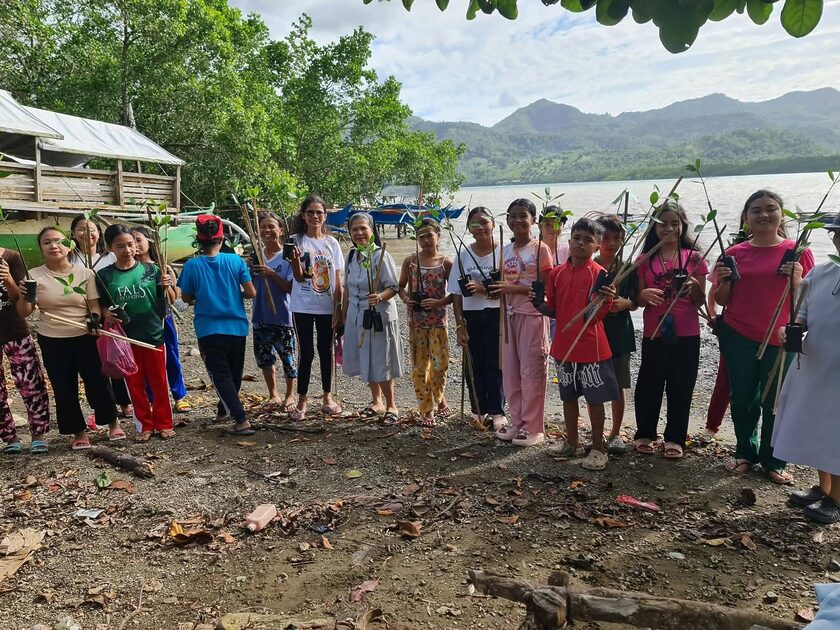
On March 8, 2026, women farmers, fisherfolk, and advocates planted mangroves along the coast of Balete Bay to mark International Women’s Day, according to organizers from FASAD, MASIPAG-Mindanao, and the Benedictine Sisters.
The group, led by women farmers, fisherfolk, and organic farming advocates, planted at least 50 mangrove seedlings provided by the DENR, along with more sourced from mature mangroves in the bay, organizers said. Before planting, a short discussion on the importance of mangroves was given by MASIPAG-Mindanao (Magsasaka at Siyentipiko para sa Pag-unlad ng Agrikultura), a farmer-scientist network that works with FASAD.
According to Benedictine nun Sr. Claudia Sampal, one of the co-organizers of the event, the activity is part of a long-time and ongoing effort of local fishers, farmers, and advocates to populate the bay with mangroves. For many of the attendees, the activity also served as a space for learning and cross-sector solidarity for adaptation and mitigation amid the climate crisis.
Farmers and fisherfolk, especially women and youth, who bear the brunt of climate change impacts were brought together to learn about the causes of rising global temperatures and what can be done about it.
After planting, the seedlings are looked after by youth scholars who live by the bay. Part of their community service commitments is to nurture and ensure that the seedlings stay alive.
Amid the warming climate and the looming impacts of large-scale extractive mining projects, women like Peralez, Millomeda, and Decena, from fishing, farming, and religious backgrounds across Mati City have come together to protect one of the most ecologically critical areas in their town.
The collective efforts of the local women’s organization in environmental protection not only transform the bay, it also transforms the women as well.
“Little by little, the culture of silence begins to fade. They grow more courageous,” Sampal said.
Throughout her work with local farming and fishing communities, she observed that discussions and training help local women find their voice and gain confidence in their leadership.
Across sectors and across generations
For Peralez and Millomeda, the need for immediate support for their livelihoods and families is urgent. Foremost among their calls: livelihood support and access to water amid the super El Niño.
“It would be good to have livelihood programs, especially for beneficiaries who are women. Because in our community, there is really no livelihood. It would be good to have livelihoods that can be permanent.”
For Millomeda, support and access to water is crucial for farmers like her: “Farmers should be supported with water. Water sources should be increased, because the water now is slow and not enough for everyone. We really need support for water.”
Even more importantly, they underscore the need for mutual support between different organizations and among different sectors.
“For me, if we do it alone, it leads nowhere. It’s better to reach out to your community, unite, and make plans for the environment, or work with other organizations that value climate change work. It’s better to communicate, because if it’s just you, it leads nowhere”, says Peralez. Now she joins different women farmers and advocates through the local chapter of their farmers’ organization, FASAD.
“It’s good for farmers and fisherfolk to work together to protect the environment from abuse by big companies. One way is planting mangroves and cleaning up. Who else will help each other? It’s only us in the community” Millomeda said.
For the women of Balete Bay, that describes what they say needs to be protected: water, secure livelihoods, and resources in the mountains and the bay.
Beyond support between farmer and fisherfolk sectors, Ma’am Decena calls on the youth to support the continuing struggle for environmental protection in Balete Bay and in the upland areas of Davao Oriental.
“I hope and pray that the young generation will realize we have an obligation to care for the environment, to produce safe food, to support organic farming, and to help care for the environment.” (AMU, RVO)
Disclaimer: This story was produced through a grant from Oxfam Pilipinas’ Patas na Bukas Media Fellowship.
 Save as PDF







0 Comments