
By Karrie Cabatas, Sam Cuizon, Angelica Colonia, Yza Empleo, Claire Enad
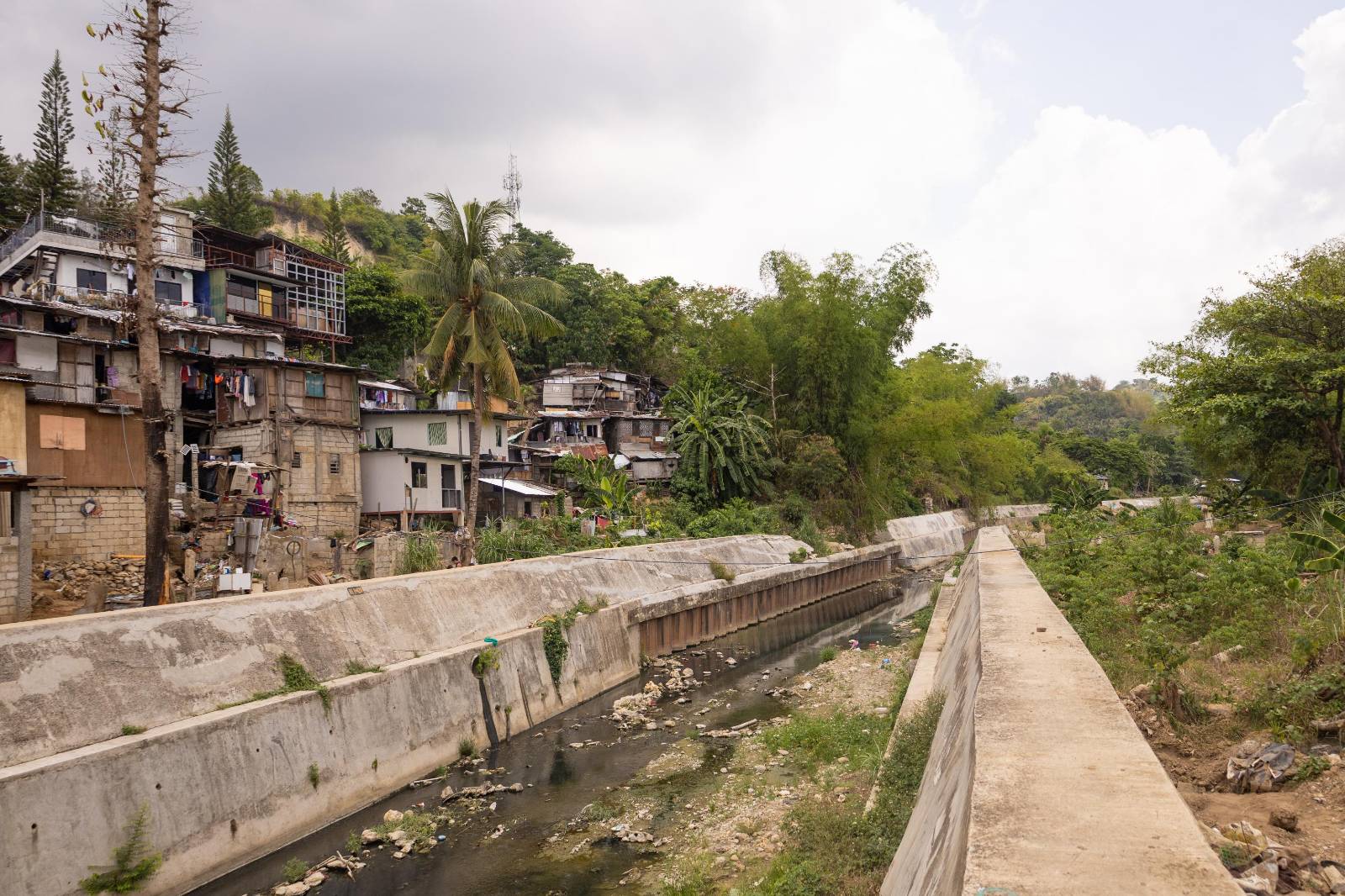
CEBU CITY – One cannot immediately recover after catastrophic events, especially when they come in the form of a typhoon, altering the way the community lives even five months after it struck. This has been the case for residents living along the Butuanon River in Bacayan, where the river was once viewed as a source of sustenance and an essential part of their culture. Locals recall a time when children used to swim in its waters, and men would hunt for fish long before the worsening climate crisis and pollution.
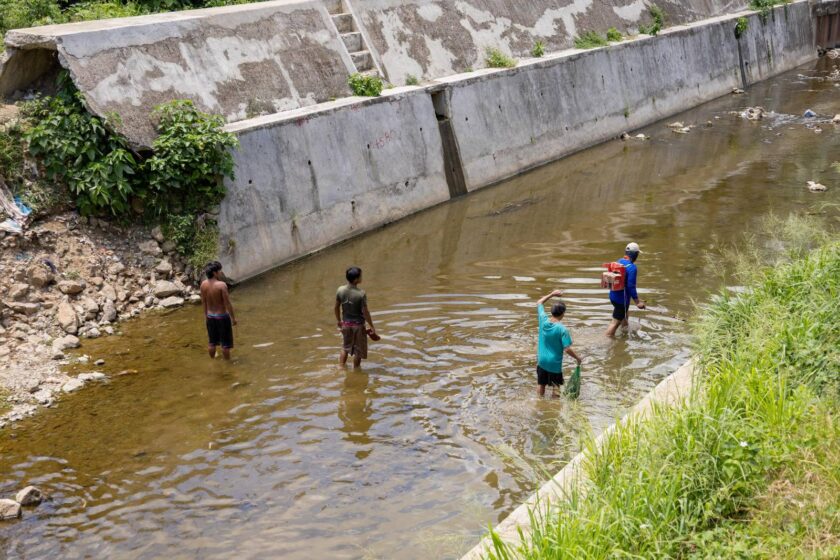
Now, stories of the Butuanon River are filled with dread, as residents remember how the same river that once gave them life also took life away from them.
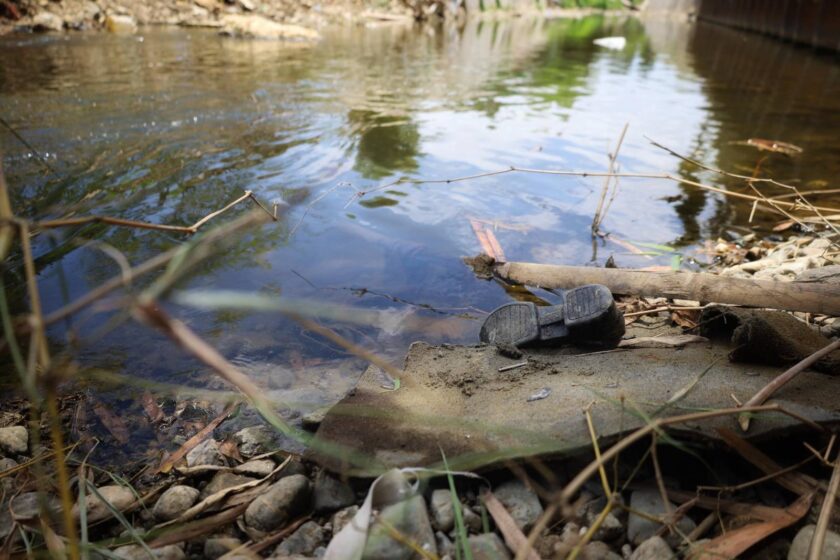
On November 4, 2025, tropical storm Tino (international name Kalmaegi) hit the Philippines, bringing heavy rains and strong winds, which caused floods in several parts of the country, including Cebu. The lives of 96 individuals were taken, and a large number of properties were damaged by the flash floods, including areas that are located near the Butuanon River.
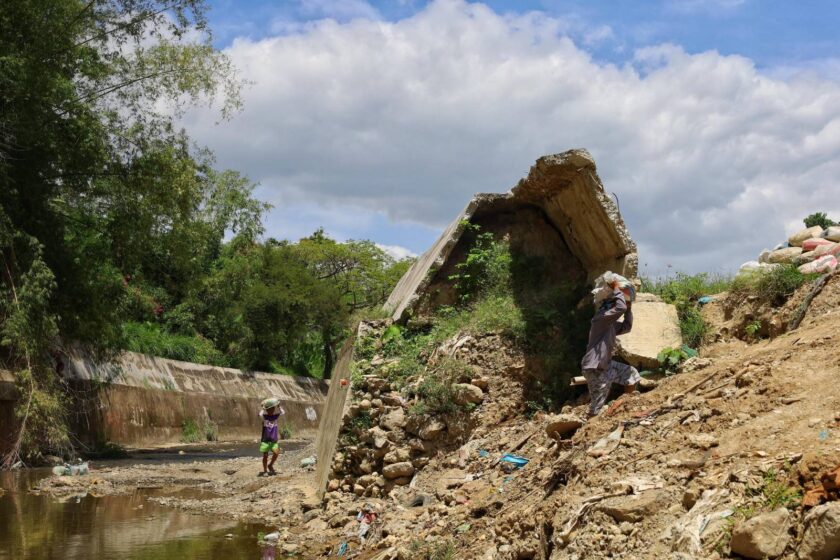
The typhoon exposed budget anomalies, particularly on substandard flood control projects that could have spared residents from Typhoon Tino’s destruction. In particular, the flood control project along the Butuanon River in Barangay Bacayan was worth P144 million (8,283,240.00 USD); yet, multiple damages were sustained, resulting in fatalities.
A closer look
In Sitio Common, Barangay Bacayan, 39-year-old Merlyn Luviano believed that the water had always been something to watch, not something to fear, but that changed the night Typhoon Tino came.
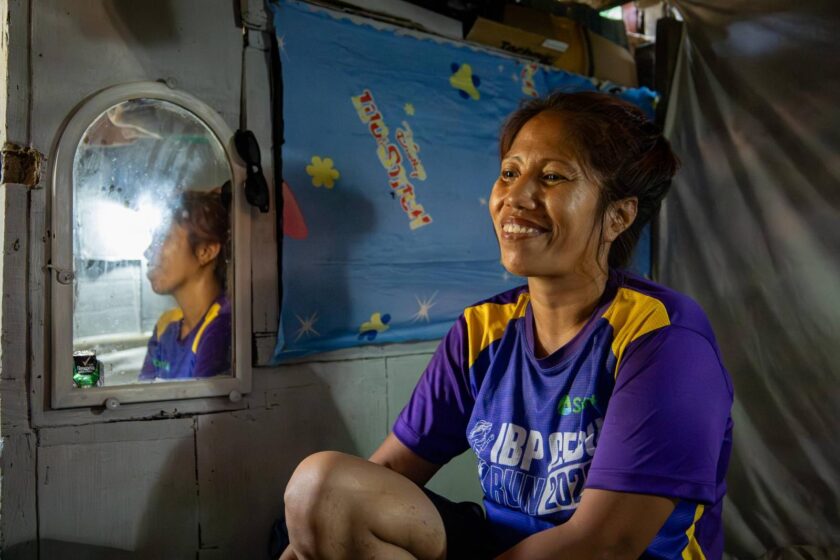
Living only five meters away from the riprap, Merlyn remembers the fear of being trapped inside their house as the floodwaters forced the door inward, making it difficult for them to escape.
“We were still here inside. We watched to see if the river would rise. The water had not risen that much yet, but it had already reached our house, and we could no longer open the door. We forced it open because if we hadn’t, we would have been trapped here,” she said in the vernacular.
Merlyn, together with her partner, her brother, and her sister-in-law, immediately rushed to higher ground after forcing the door open, carrying only her old phone.
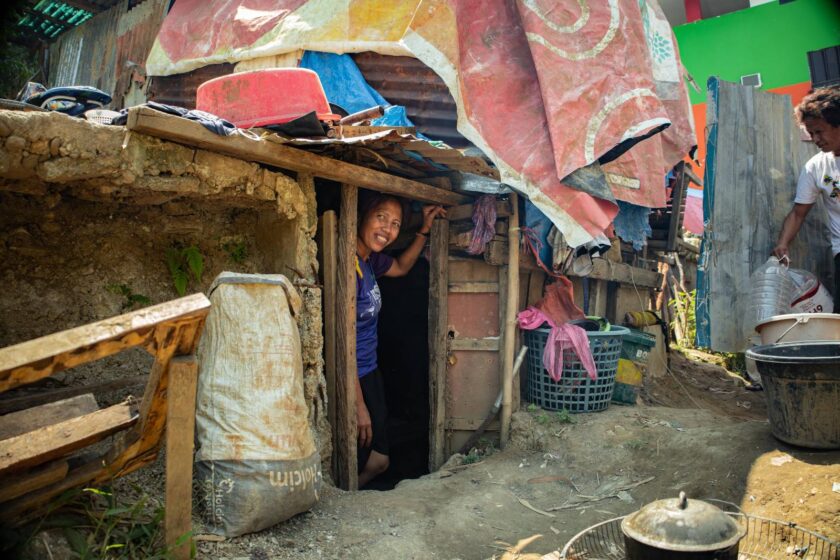
When recalling the event, Merlyn did not first think of the strong winds or the heavy rain. Beyond her own fears, what she remembers clearly are the voices and shouts of her neighbors from inside a two-storey house that once stood tall, calling for help as the water rose faster than anyone expected.
“Their mother was my friend. They kept calling for help, but nothing could be done anymore; the river had already become too large and dangerous,” Merlyn recalled.
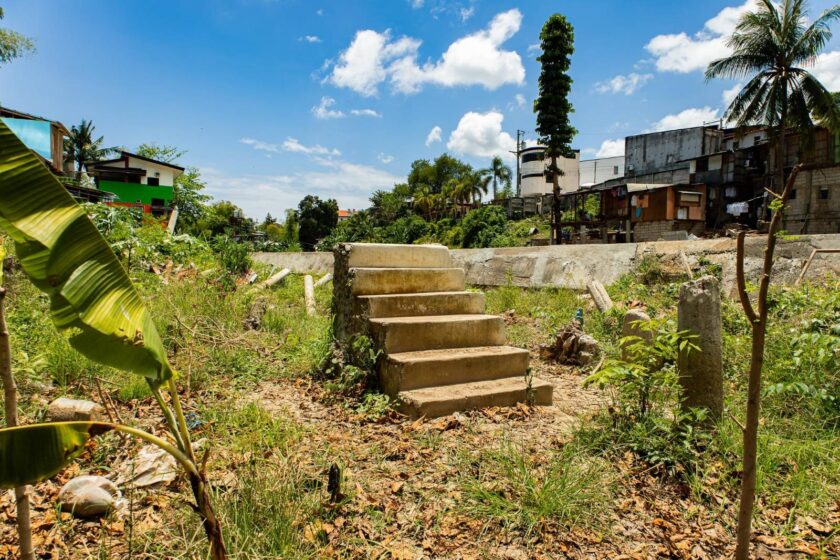
Their house tilted, then gave way. By morning, only posts remained where two homes once stood. Until now, one of the younger children has still not been found. Her friend’s family was among the 13 members of two related families who lost their lives when flash floods engulfed their home.
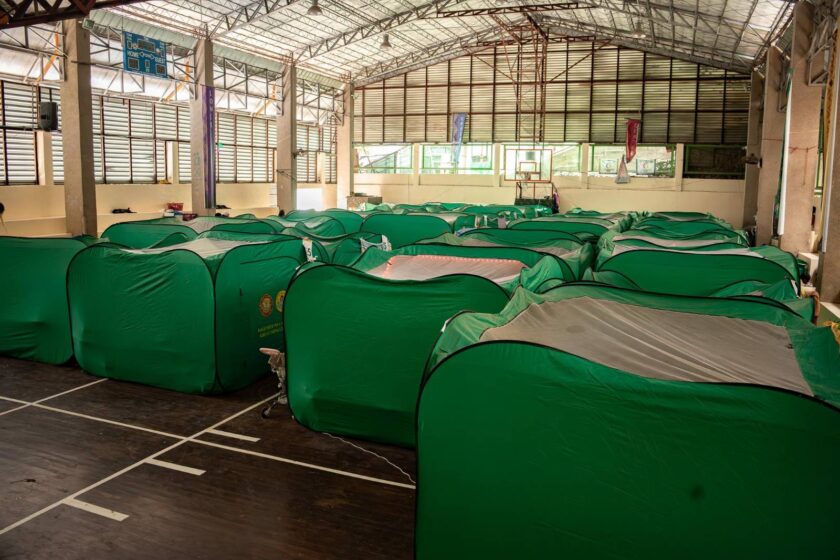
The aftermath of the typhoon revealed another layer of struggle, not just loss, but what residents deem as government incompetence and uncertainty. Merlyn and her neighbors were moved to the Bacayan gymnasium as the community’s evacuation center, where over 300 families shared the space.
As of last May 2026, families still reside in the Bacayan gymnasium, with no definite relocation plans and minimal government updates.
For Merlyn, who depends on waking early to sell puto maya and hot cocoa, the environment makes it difficult to continue working. After more than a month, they left and returned along the Butuanon River, rebuilding makeshift shelters from what was left of their home.
“We’re actually not allowed to stay here because they said construction is no longer allowed within six meters from the riprap. But they haven’t provided relocation sites yet, so where are they expecting us to live?” she said.
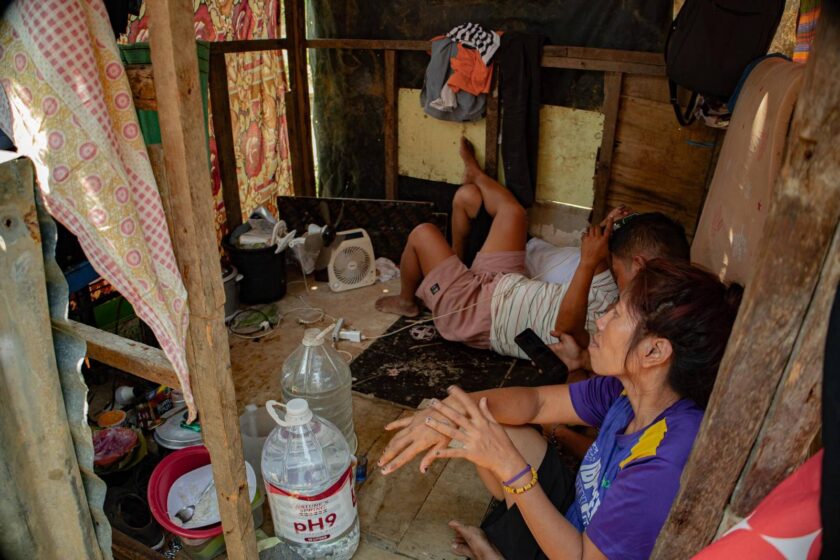
Merlyn said that there have been promises of financial aid and construction materials, but most have not materialized. What arrived instead came from customers who overpaid and neighbors who shared what they could.
“My regular customers gave us so many things — clothes, this mattress, money. They feel sorry for us. They would buy rice cake, they would give me 500 [pesos], and they would no longer ask for their change,” she said.
The Division for the Welfare of the Urban Poor (DWOP) has ultimately allowed them to rebuild while they await relocation plans, although no concrete details have been provided regarding when the relocation would take place.
According to the residents, Barangay Pardo has been identified as a possible relocation site, located approximately 16 kilometers from Barangay Bacayan. Merlyn finds this an impossible adjustment for someone whose livelihood depends on proximity to the city center.
“I’ll just stay here. Why? It’s very far from my source of livelihood, and how much would the fare cost? It would take two rides,” she said.
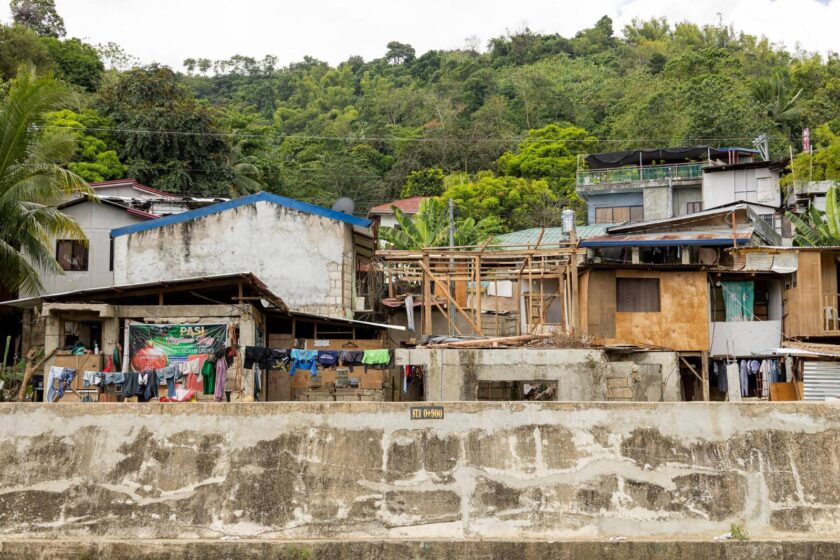
On the other side of the Butuanon river, just uphill, 55-year-old Saturnino “Turning” Bacolod, a retired security guard, watched the same river from a different vantage point. His house did not wash away, but the water came close enough to redraw his sense of safety.
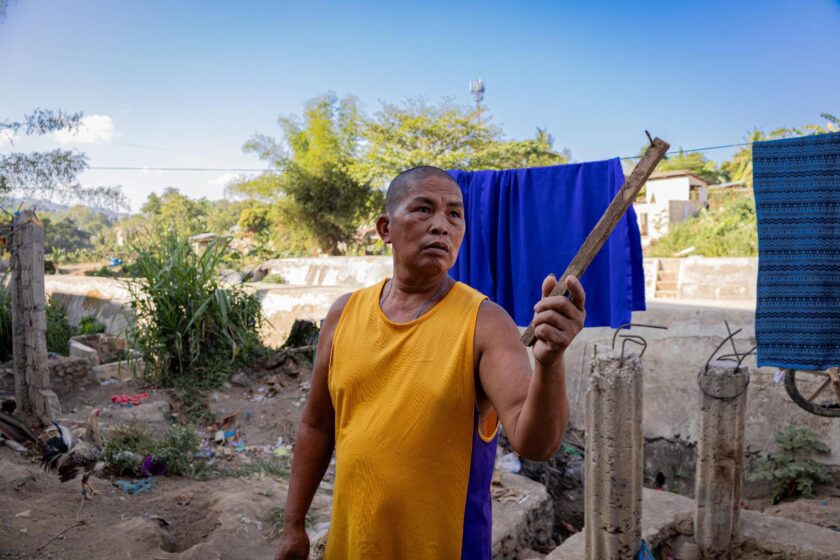
“Before, I would have to bend down to look at the river, but during Tino, I would almost have to look up at the water. Who would expect that the water down below would reach all the way to your place?” he recalled.
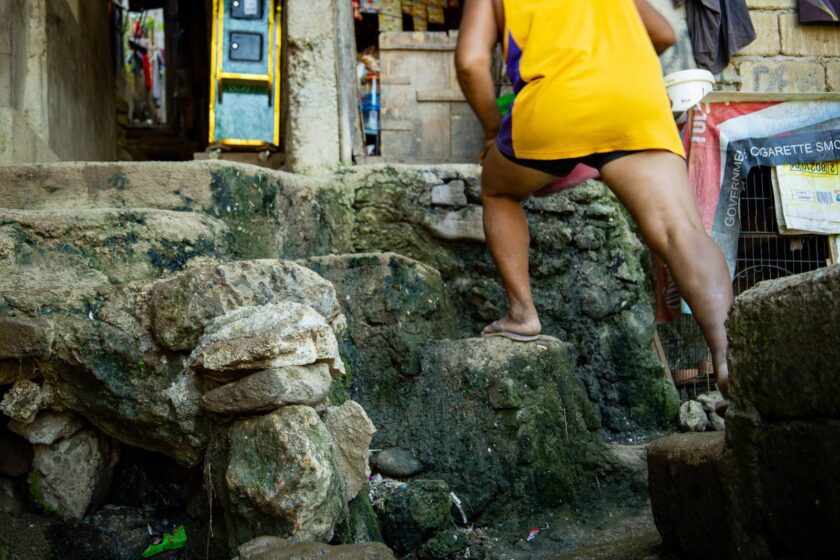
Turning lives with his wife, his mother-in-law, and his wife’s two nieces and nephews. During the typhoon, they did not evacuate. Like many others, they stayed, measuring the water’s rise in real time, ready to retreat if it crossed a line only they could define. That line has shifted since then.
Even now, Turning admits the fear lingers physically, his legs sometimes trembling without warning, especially after witnessing firsthand the two houses swept away by the strong water, the same houses and families Merlyn had spoken about.
Turning echoed the experiences of his neighbors, with 13 houses in the lower area being abandoned after the storm. Some residents chose to move away due to the trauma inflicted by the experience. However, many have chosen to stay and to rebuild their homes for financial and feasibility reasons, despite their fear.
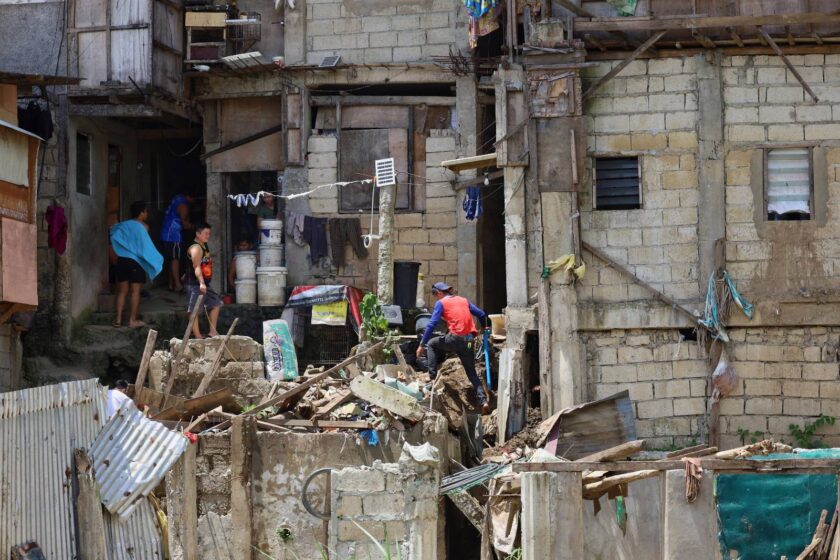
Turning expressed relief, sharing that they only recently moved to the upper hill and had originally been residing in the lower area a year ago.
“We were still down there at that time, but if we had stayed there, we would have already been floating then. I just prayed to Sto Niño, “You take care of us,” because we really couldn’t do anything,” he said.
Life beyond Tino
For both Merlyn and Turning, Typhoon Tino has reshaped their lives and way of living.
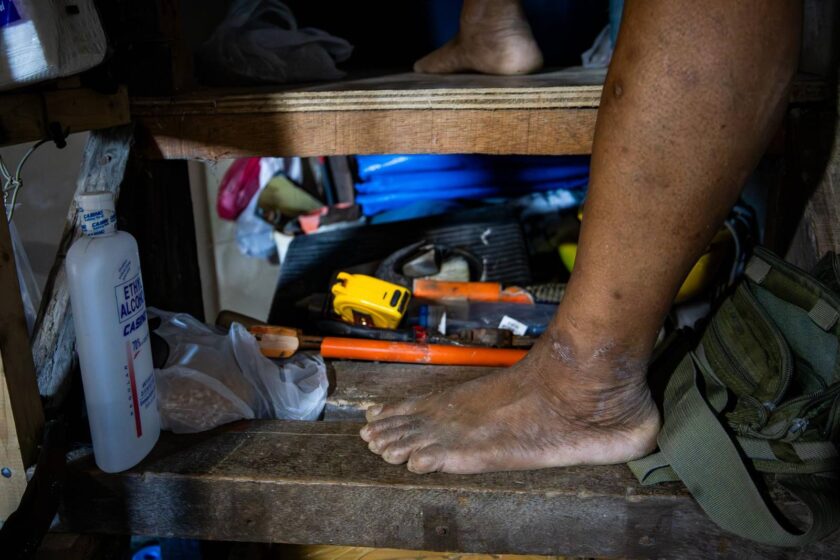
For them, the catastrophic event did not stop them from carrying on, as the floodwaters did not wash away their spirit and perseverance to move forward. After the horrifying life-or-death situation brought by the typhoon, their lives slowly went back to their usual routine.
On the right side of the Butuanon River, where Merlyn’s makeshift house stood, her life has returned to a daily routine that begins before dawn, as early as 4 a.m.
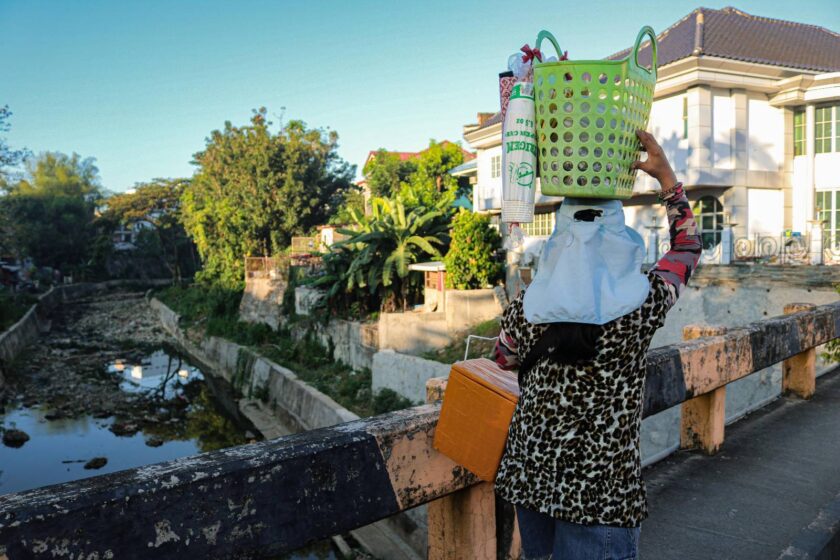
She wakes up early to sell puto maya and hot cocoa, which she imports from her neighbor, roving around Nasipit, Balamban, until all her goods are sold. This routine takes place every single day, with earnings increasing by at least P200 on weekends. For more than 20 years, this livelihood has served as Merlyn and her family’s primary source of income.
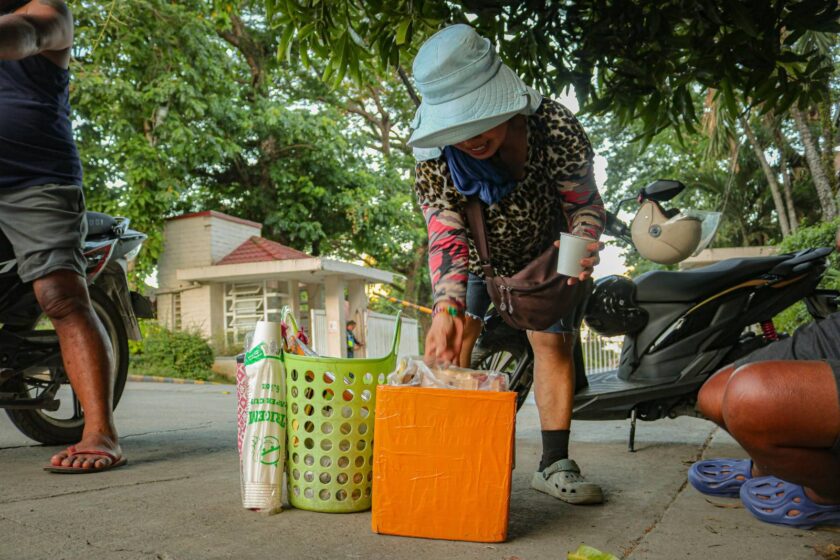
Merlyn’s day does not end upon returning home at around 9 a.m. After taking a short rest, she is left with household responsibilities for the rest of the day before sleeping at 9 or 10 in the evening, recharging to repeat the same routine the next day. For Merlyn, her livelihood is a means to keep going; as she puts it, idleness is not an option that would take her anywhere.
“The only investment needed is hard work. If you’re idle, nothing will really come out of it,” she emphasized.
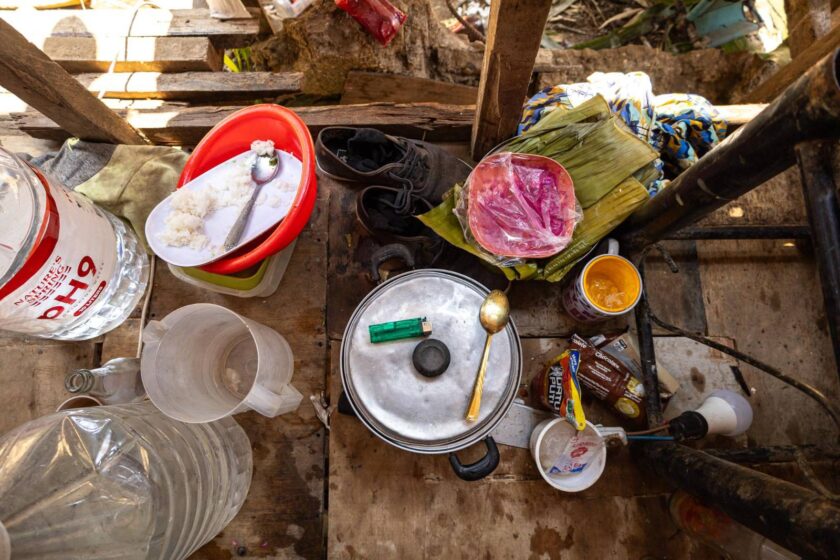
The same perseverance is embodied by Turning, who, in order to sustain his family’s needs after the typhoon, has started doing on-call carpentry, electrical work, and household maintenance.
Turning worked as a carpenter for one of his neighbors, who began rebuilding their house on March 22, 2026. Due to insufficient materials, only the upper portion of the house was completed after three days of work.
“The house will eventually be finished as long as there is enough money,” Turning said, a reality faced by many of his neighbors, who had hoped to rebuild their homes according to DWOP’s standards but rely largely on donated materials to do so.
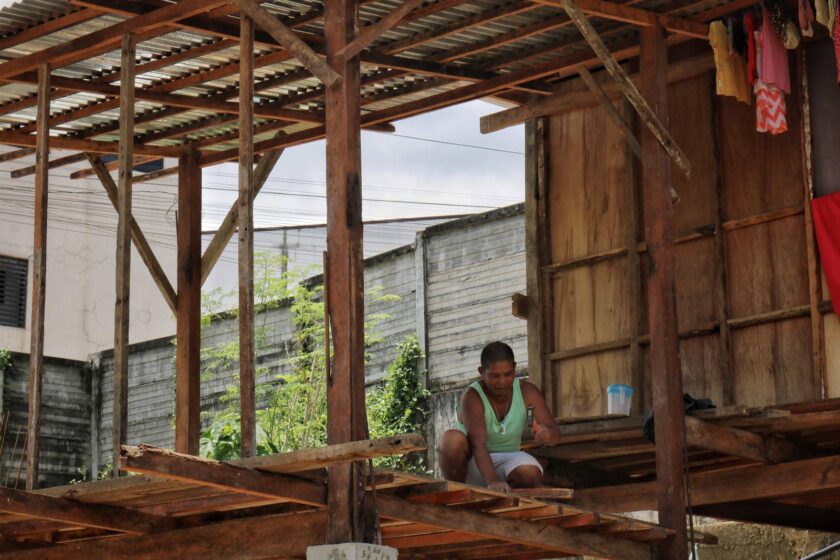
Turning helped in the rebuilding of his neighbor’s house, located six meters away from the river. All materials used for the construction were donated by the families’ friends. Photo by Yza Empleo
Turning has worked in physical labor, especially carpentry, since he was 18, but has long dreamed of becoming an architect. Due to financial constraints, he, instead, became a security guard for 13 years before his license expired. He eventually returned to carpentry and maintenance work, which now serves as his main livelihood.
Whenever a client calls for work, Turning immediately prepares to go to the site and complete the necessary repairs. On days without clients, he enjoys selling ice candies, ice waters, and ice pops as extra income, which he himself makes and manages.
“Of course, we should try to do what we can for ourselves,” Turning expressed.
He also tends to his animals first thing in the morning: four dogs, two rabbits, two cats, several chicks, and his own school of fish. Not having children of their own has led Turning and his wife to devote much of their affection to these animals instead. The same care goes into the plants he waters and tends to every afternoon.
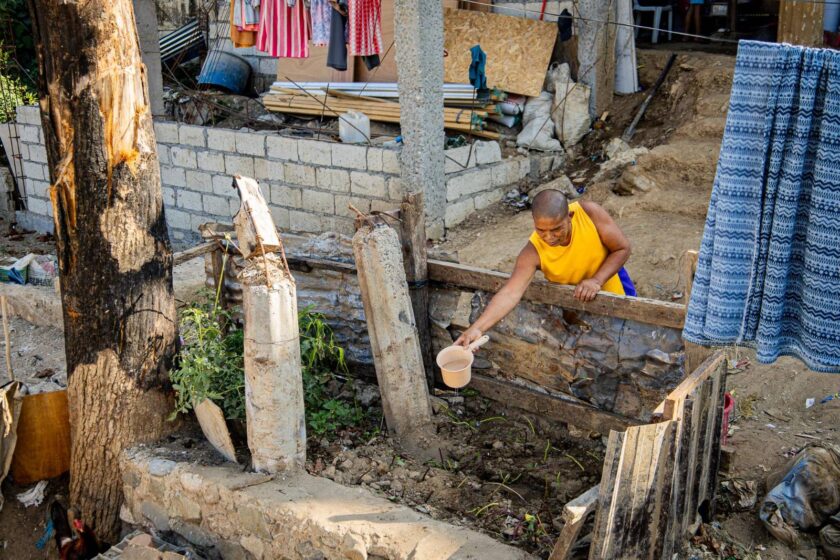
When asked whether the number of pets he owned made him fear the floodwaters entering their household, Turning kept a positive outlook and expressed his strong faith in God.
“I wasn’t really scared, because in the end, only God truly knows,” he responded assuredly.
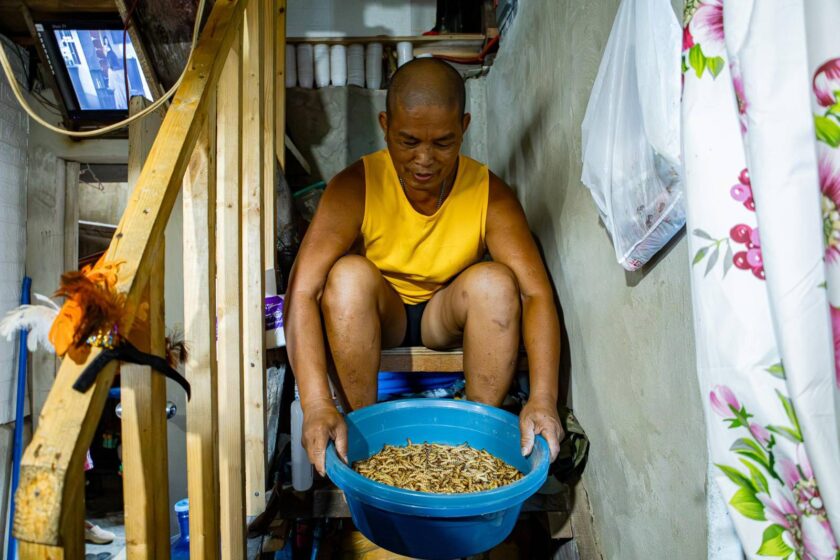
Beyond their shared hardships as households living near the Butuanon River, what Merlyn and Turning also have in common is their unyielding faith, which remains steadfast — if not even stronger — after the typhoon. The same unwavering faith is also reflected in their respective communities, as evidenced by the chapel being among the first structures to be rebuilt.
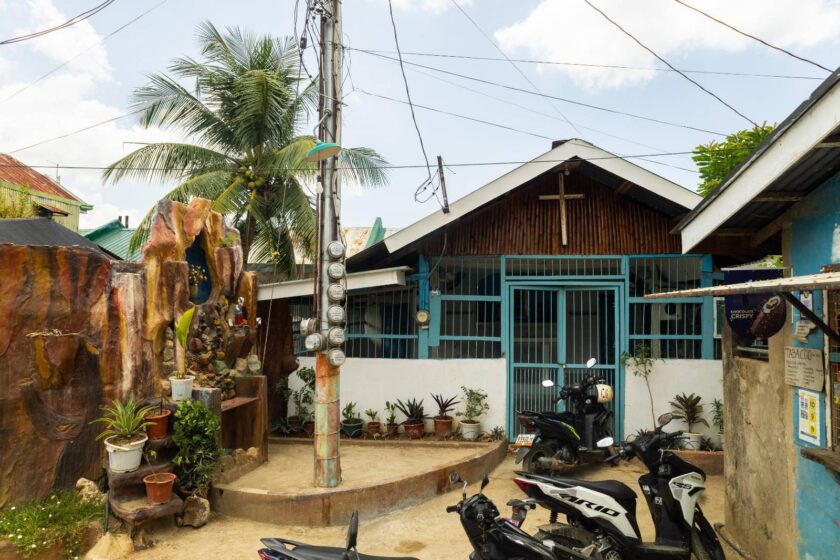
Merlyn and Turning’s home altars also stand as a testament to this faith and how it served as a steady force that has kept them moving forward.
“There is a God. There is someone guiding us. No matter how difficult times are or how hard our lives become, God will still be there,” Merlyn said, emphasizing that placing God at the center of her life allowed her to rise again after Typhoon Tino and the other hardships she had experienced.
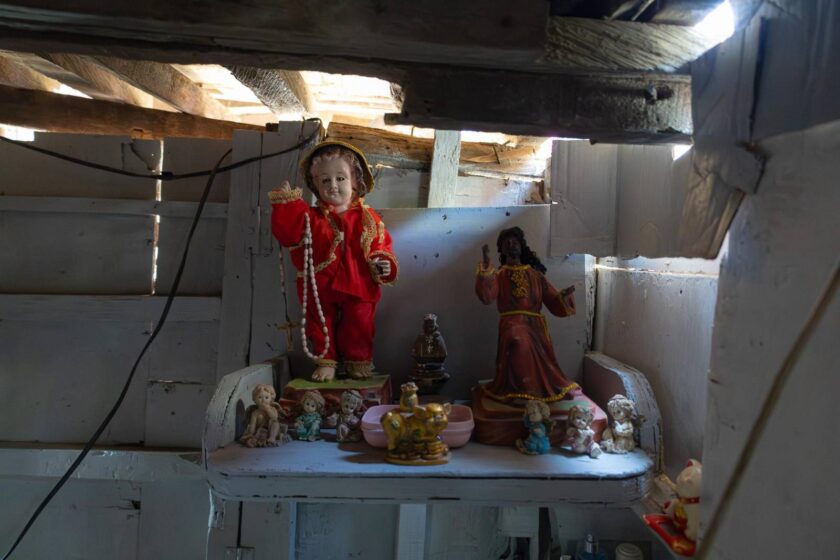
How Merlyn and Turning view the calamity may be a microcosm of their wider community, one that relies on faith and belief as a means of recovery and resilience. However, this strong faith should not be romanticized as the sole symbol of moving forward; rather, it only represents individual efforts people choose to practice and embody simply to continue their everyday lives.
On a larger scale, what the people need are real, tangible, and sustainable solutions, as faith and perseverance alone cannot ensure proper relocation plans or adequate housing materials. It cannot rebuild the riprap that has remained unrepaired, even five months after the disaster, nor can it undo the damage inflicted on the people forced to live beyond the struggle. (CAM, RVO)
 Save as PDF
0 Comments