
Villanueva, in an interview with Bulatlat, said CARP implementation particularly in sugar lands has not succeeded due unacceptable land valuations, erroneous identification of agrarian beneficiaries, and lack of support services for the beneficiaries and the landowners who offered their lands for sale to the government.
“For the past 15 years or so, land reform implementation in Negros has not been beneficial to both affected landowners and the farm workers themselves because of the basic failure of the government to clarify its policies and implementing guidelines, short-cutting of procedures by DAR personnel, and the absence of support services,” Villanueva said.
Villanueva also noted that in many cases, the DAR people, in cahoots with some “questionable” non-government organizations (NGOs), and sometimes with the backing of local police and the Regional Mobile Group (RMG) – a special strike force of the PNP – would install farmer-beneficiaries who are not from the hacienda, so violence would usually ensue.
Villanueva stressed that in terms of support services the government and the DAR has also failed them and the farmers. “The government thinks that their task is over after they have taken the lands from us and distributed them to the farm workers; what they failed to do is to ensure that the beneficiaries would have the capacity in terms of financial and technology to transform their lands into productive and profitable venture,” he charged.
Villanueva said the CLP is against the extension of CARP beyond 2008. But if it is ever continued by the government, he said, they would call for its comprehensive review first, especially its objective, content, procedures and policies through public consultations.
He said they would also call for the moratorium on the implementation of compulsory acquisition (CA), which he said, will give time for the government to review and correct its loopholes.
Sonny Coscolluela, mayor of Murcia, Negros Occidental echoed the sentiments of a number of big landowners and sugar producers, saying they are also for land reform but the government should do rectify some of its measures and “do things right.”
“Review CARP first”
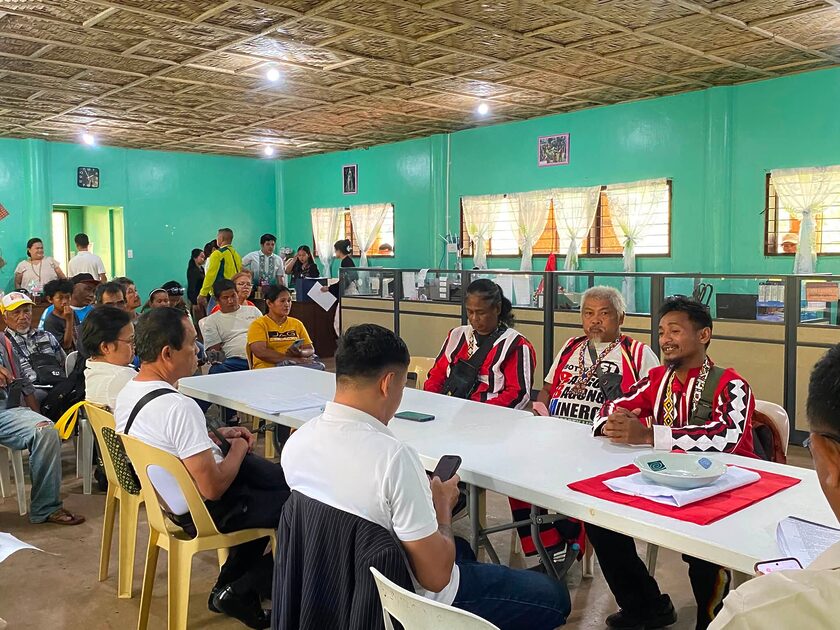
In a public consultation-hearing called by the House Committee on Agrarian Reform in coordination with the Philippine Legislators’ Committee on Population and Development Foundation (PLCPD) in Iloilo City last week, both foes and friends of the CARP in Western Visayas urged the government to conduct immediate and comprehensive assessment of its implementation and also the resolution of key issues before tackling whether to terminate or extend the program after it expires in 2008.
Despite the relatively positive assessment of achievements and challenges given by officials of DAR-Region 6, most of the over 250 multi-sectoral participants who attended the land reform and rural development policy consultation and public hearing believed that CARP is a gross failure.
Several farmers and landowners said that unless fully explained in a comprehensive performance audit or assessment, and given corresponding solutions, the problems for the past 16 years or so would keep on recurring and could breed more conflict.
Rep. Mario Aguja of Akbayan Citizens Party, a member of the House Committee on Agrarian Reform, said the public consultation and hearing are important in knowing the actual experiences, sentiments and proposals of various sectors: the agrarian reform beneficiaries, the landowners, and other stakeholders in the program.
Aguja, author of House Bill No. 5743 that calls for CARP extension without due date, stressed that before extension the program should first be “reviewed comprehensively” in order to correct serious orientational, administrative and operational components of the program.
On the other hand, HB 5698 authored by Rep. Abraham Mitra aims for the amendment of the CARP, calling for an additional P50-billion funding and an extension of only five years.
“CARP review OK, but address key issues”
Rep. Rafael Mariano of Anakpawis (Toilibg Masses) Partylist agreed with Aguja in calling for the comprehensive assessment first of CARP, addressing its numerous loopholes and problem areas, technicalities, before proceeding to the issue of extension or termination.
“There are so much issues to be tackled – among the most critical are how much land is really up for coverage because DAR targets keep on changing over time, and whether non-land distribution schemes such as the stock distribution option, leaseback scheme, and the joint venture agreement would still be allowed or not,” said Mariano.
Mariano said that beyond identification of legitimate agrarian beneficiaries, land valuation, and support services, the issues he mentioned are even more important because they are the conditions that breed evasion and conflict.
Rep. Ferjenel Biron of the Fourth District of Iloilo said political will is essential to the implementation of any law, including the CARP.
He said the reason CARP has been viewed as a failure is the fact that its key implementers seem to have been lacking in political will to truly enforce the law and make a difference in the lives of the marginal sectors.
DAR also pushes CARP extension
Still, as far as the DAR is concerned, there is no stopping agrarian reform despite its weaknesses, or all its achievements after 16 years of CARP implementation would only be squandered, and rising opportunities for the agrarian reform beneficiaries would be thrown away.
DAR 6 Regional Director Alexis Arsenal said that the department is for CARP extension, but added that they do not want “accelerating CARP for its completion” nor to simply complete it in five years; what they want, he said, is to accelerate it and make it truly sustainable.
Arsenal welcomed the demand of farmers and landowners to review the CARP provided the stakeholders agree on the parameters based on the law.
As of end-September 2006, Arsenal said, DAR 6 reported that CLOAs and EPs have been given to 219,810 agrarian reform beneficiaries, covering 349,404 has, and ensured the security of tenure of 77,033 beneficiaries in 89,430 has. through 85,721 leasehold contracts.
DAR disclosed it has accomplished 76 percent of its land distribution goals, or a total of 349,404 has. out of a 462,317-ha. working scope, and a balance of 24 percent or 112,913 has.
Of the provinces within the jurisdiction of DAR Region 6, Antique ranked no. 1 in land distribution accomplishments with 98 percent – followed by Aklan with 93 percent, Guimaras with 92 percent, Iloilo with 88 percent, Capiz with 85 percent, and Negros Occidental with 63 percent.
It also stated that it has resolved 65,781 agrarian cases, and extended loan assistance of P193 million to beneficiaries production and income-generating projects, and established 152 agrarian reform communities (ARCs) in 101 municipalities and 360 barangays (villages).(Bulatlat.com)
 Save as PDF




0 Comments