
Jun Reyes, 44, also lives in Upper Hinaplanon. Before Sendong, he worked as a security guard, but since the typhoon, he has been unemployed. He applied for the cash for work program. He said he was given P250 ($5.95) a day for 10 days. In the food for work program, he heard that people were give a half sack of rice for five days of work.
“That was the only catch — a person can only work once for the program and that was it. I suppose it’s a fair enough deal, but I’ve heard that the Iligan local government received so many cash donations so one can’t help but wonder where all the money has gone. I don’t think the local government could have used up billions and billions of donations in just a few months,” he said.
Audit donations for Iligan victims
Yamcey and June are not alone in wondering about what has happened to the donations that poured into Iligan in the wake of Sendong.

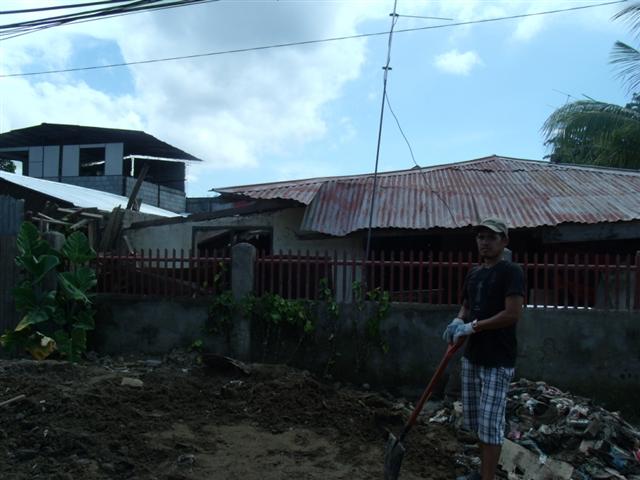
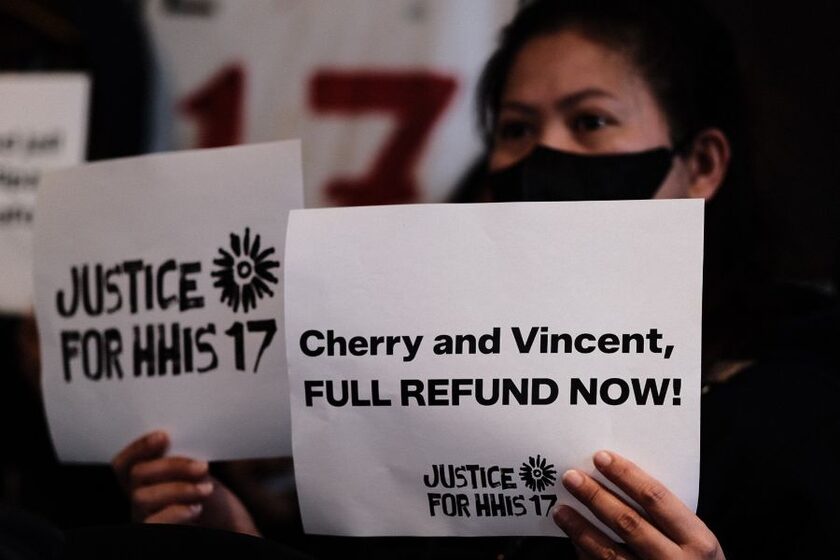
(Photos by Ina Alleco Silverio / bulatlat.com)
The media continues to report that various donations in cash and kind continue to pour in Iligan and Cagayan de Oro.
For instance, in a story also posted in the website of the PIA, it was stated that as of March 2, the Dumaguete City Disaster Advisory Council has approved more than P3.8 million ($90 thousand) in financial assistance for the typhoon victims. City Mayor Manuel Sagarbarria said the budget would come from the financial contribution of LGUs , private individuals and others.
Of the said amount, P1.940 million ($47 thousand) would be allocated to the 388 families whose houses were totally damaged. Each of the said family would receive P5,000 ($116) . Victims whose houses were partially damaged will receive P2,500 ($59.52) each. Total allotment for the said group was P1.845 million ($43,928), to be divided among 738 families.
In the meantime, the city government has collected about P6 million ($142,857) cash and check donations for Iligan.
As the media continues to divulge information on the funds that the affected provinces have received, the public, especially the affected residents are justified in wondering where the money is being used. In the areas frequented by volunteers of humanitarian and relief groups, both local and international, residents complain that they have yet to receive concrete help from the government. Most of the help they are getting, they said, come from the humanitarian groups.
In a report posted on the Iligan local government website, it was said that there were appeals from concerned groups that the Philippine Institute of Certified Public Accountants (PICPA) audit the Sendong” cash donations. The city’s auditor Gulam Sucor said they would first secure the consent of the Central Office of the Commission on Audit (COA), as even the outsourcing of audit services would normally need the consent of the agency.
“We want to assure the public that a tight audit is being done, and the public can check for themselves as we will post the information on the donations on the website of the CoA. We will also post the full audit report of all fund sources and statement of expenditures of the city of Iligan for 2011 until April 2012 when they’re completed,” Sucor said.
Currently the donations are said to amount to P242 million ($5.7 million) . The Iligan government said this will be used only in the building of houses, with P60 million ($1.428 million) going to the repair of damaged infrastructure; P14 million ($333,333) to the repair of water supply facilities; and the P11.87 million ($285 thousand) for cash for work program.
In a report was dated Feb. 27, Iligan officials planted 1,500 mahogany seedlings along Mandulog River in Barangay San Roque. Iligan City was said to have “observed the Iligan Love Month and the 26th anniversary of the People Power Revolution.” The city government launched the tree-planting/growing campaign it dubbed “Plant a Tree and Grow with Me” and officials said that the number of seedlings planted corresponded to the approximate 1,200 number of flooding casualties in Iligan. A memorial marker was also erected in honor of the victims.
Where are the DSWD’s funds for relief victims?
As for the national agencies, as early as December 29, 2011 or a few days after Sendong struck, reports already came out questioning their management of the funds.
In a story filed by Michael Punongbayan of the Philippine Star, it was revealed that as of December 2011, the Department of Social Welfare and Development (DSWD) had more than P193.6 million ($ 4.6 million) in donated funds which could have been used to help victims of Sendong.
Government auditors questioned why the money was ” lying idle in a government depository bank and is not being utilized for its intended purpose.”
In Punongbayan’s report, it was also revealed that the COA discovered how the DSWD has received over P314.7 million ($ 7.5 million) in donations for typhoon victims from various sources from 2004 to 2010. As of Dec. 31, 2010, over P193.6 million ($4.6 million) was unused.
“The donors may have thought that all their donations had provided relief to the beneficiaries and were used to rehabilitate the damage done by the calamities which struck the country in the past years,” COA said.“Although the government had earned corresponding interest from such deposits totaling P2,506,990.45 ($ 59,690) and P57,688.66 ($1,373) for local and foreign currency accounts respectively, as of year-end, it defeated the objectives for which the assistance was provided. The management’s failure to utilize foreign currency donations amounting to P36,316,984 ($ 864,690) also for victims of typhoons, resulted to foreign currency loss of P757,326 ($ 18,031).”
The COA also said that DSWD records state that funds were spent on the rental of warehouses, forklifts and the use of trucking services. Money was also spent on operations for the release of donated goods and food, as well as the delivery of electricity and water services.
The COA reacted to this, saying that expenses sourced from donated funds should directly benefit the beneficiaries. It also said that donations should not remain idle in banks waiting for another calamity to occur.
During last year’s budget deliberations, it was revealed that 80 percent of the DSWD’s P49.359 billion ($1.16 billion) budget has been allotted to the conditional cash transfer (CCT) program. The remaining P9.914 billion ($230 million) was supposed to be allotted for assistance to victims of disasters and natural calamities. In any case, the budget for disaster victims pegged at P48.043 million ($ 1.14 million) is less than one-tenth of one percent of the total DSWD budget. The DSWD’s Quick Reaction Fund is P662.5 million ($ 15.785 million) for 2012.
Water and safety issues
In any calamity, it is always the children and old people who are most vulnerable.
In the aftermath of Sendong, 38-year old mother of four children Norjannah Omar was desperate over more than the considerable damage to their house. The immediate environment of their house in Purok 12 flooded for almost a week and clean and potable water supplies were scarce.
 Save as PDF


0 Comments
Trackbacks/Pingbacks