
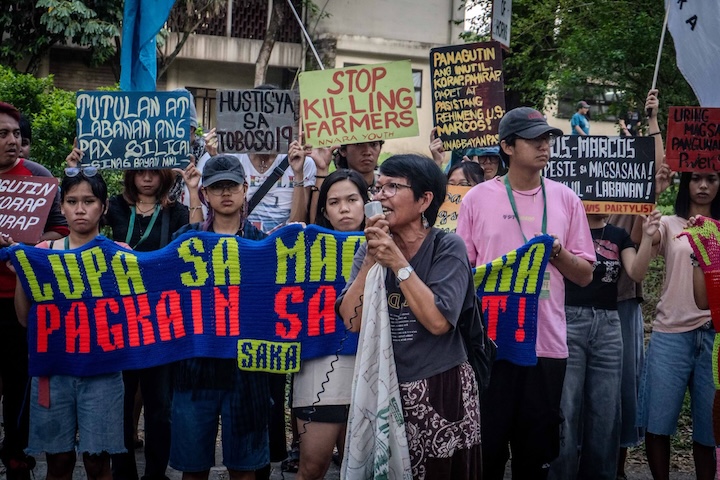
Across the Philippines, one of the world’s most disaster-prone countries, women are at the forefront of struggles to defend their communities against displacement, environmental destruction, and development aggression. From the mountains of Luzon to the coastal communities of the Visayas and Mindanao, they are fighting to protect the land and resources that make life possible.
Women tending the Kasibu barricades against large-scale mining
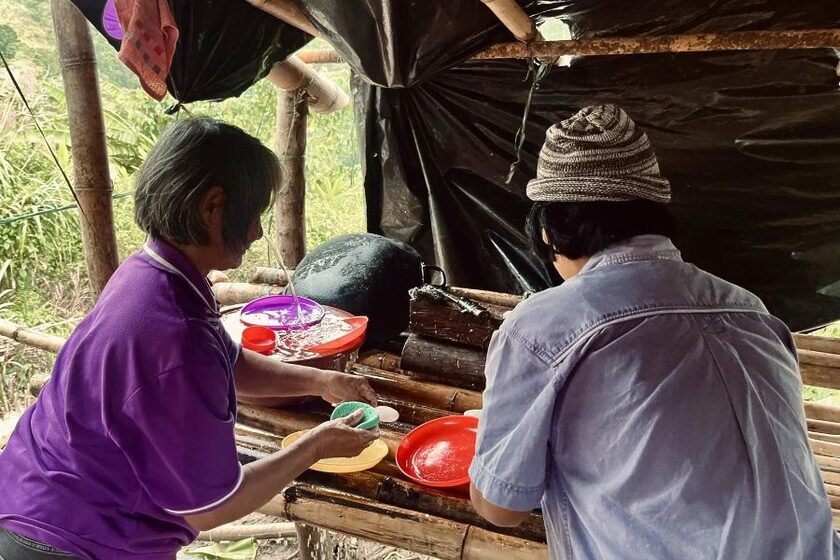
In Kasibu, Nueva Vizcaya, about 300 women are actively involved in a long-running struggle against large-scale mining. They help maintain six community barricades that have blocked mining operations since 2007. Among the companies seeking to operate in the area is North Luzon Mineral Resources Corporation (NLMRC), whose government-issued exploration permit covers 4,456 hectares of land, threatening farms and watersheds that sustain thousands of residents. Click here to read their story.
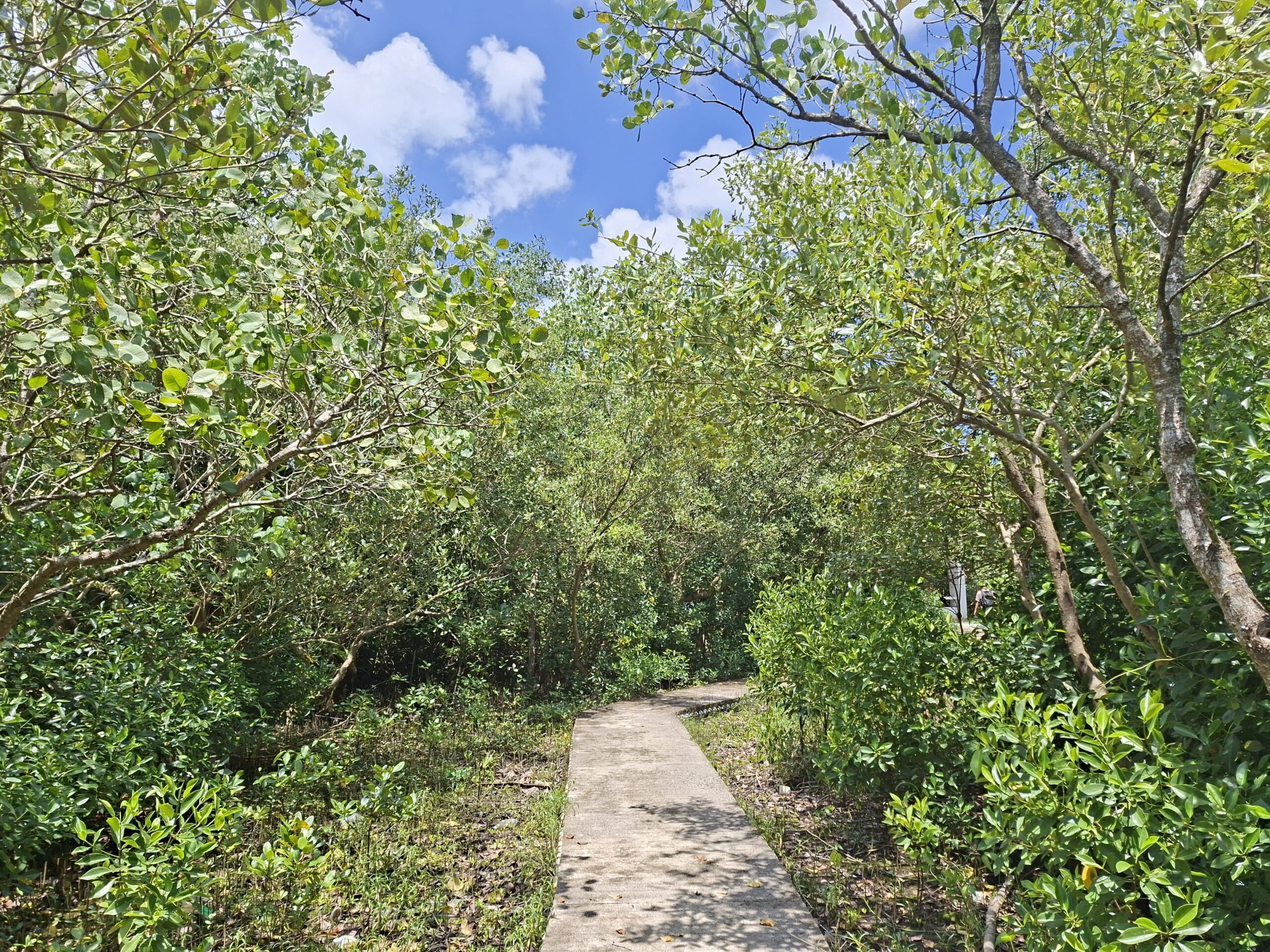
Protecting the mangrove paradise in Tacloban

Further south, the struggle takes a different form. In Tacloban, elderly women are protecting the coastal community they rebuilt after super typhoon Yolanda (international name: Haiyan) in 2013. The typhoon destroyed most of the area’s two-hectare mangrove forest, reducing it to just 2,000 square meters. Two months after Yolanda, they joined other residents in growing seedlings and restoring the mangroves of Cancabato Bay. Over the past decade, their efforts have helped the forest recover beyond its pre-Yolanda coverage, providing habitat for marine life and a natural buffer against storm surges.
Now, that recovery faces another threat. The multi-billion-peso Tacloban Causeway Project is a 2.55-kilometer road embankment and reclamation project intended to connect the airport to downtown Tacloban. Residents and environmental advocates have raised concerns about its effects on Cancabato Bay, particularly on water circulation, marine life, and livelihood. Click here to read the rest of the story.
The women of Davao Oriental protecting Balete Bay
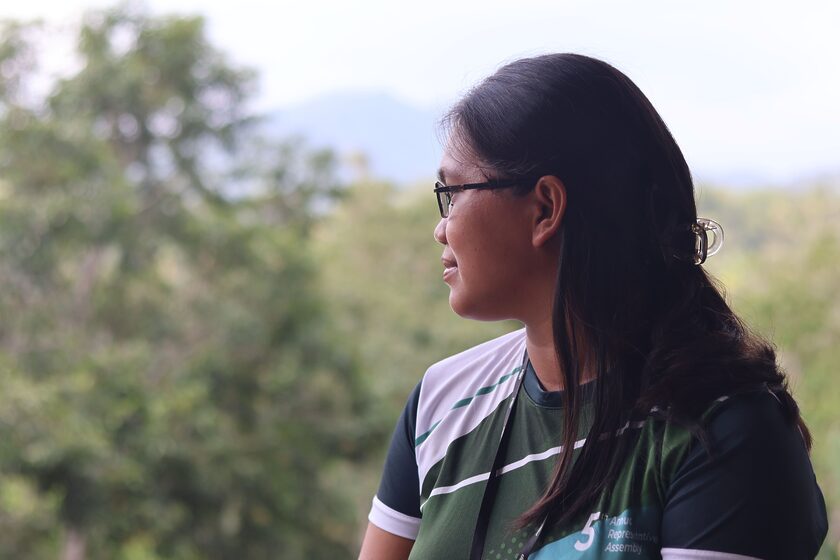
Down south of the Philippines, in Balete Bay, Davao Oriental, women fisherfolk and farmers are confronting growing threats to the waters and land that sustain their livelihoods. Climate change, prolonged droughts, and rising sea temperatures are affecting fish catches and crops, making it harder for families to sustain their livelihoods. These challenges are compounded by the threat of large-scale mining in a province where around 80 percent of the land is covered by mining permit applications. Read the rest of the story here.
For the women of Kasibu, Tacloban, and Balete Bay, staying means knowing what is at stake when the land and resources their communities depend on are threatened. It affects how families earn a living and whether communities can continue to sustain themselves.
Women often bear much of this burden, even as they take an active role in resisting the forces that threaten their homes and livelihoods. They know what it takes to stay because they have lived through these struggles and continue to fight for the right to shape their own future. (AMU, RVO)
Disclaimer: These articles were produced through a grant from Oxfam Pilipinas’ Patas na Bukas Media Fellowship.
 Save as PDF




0 Comments