
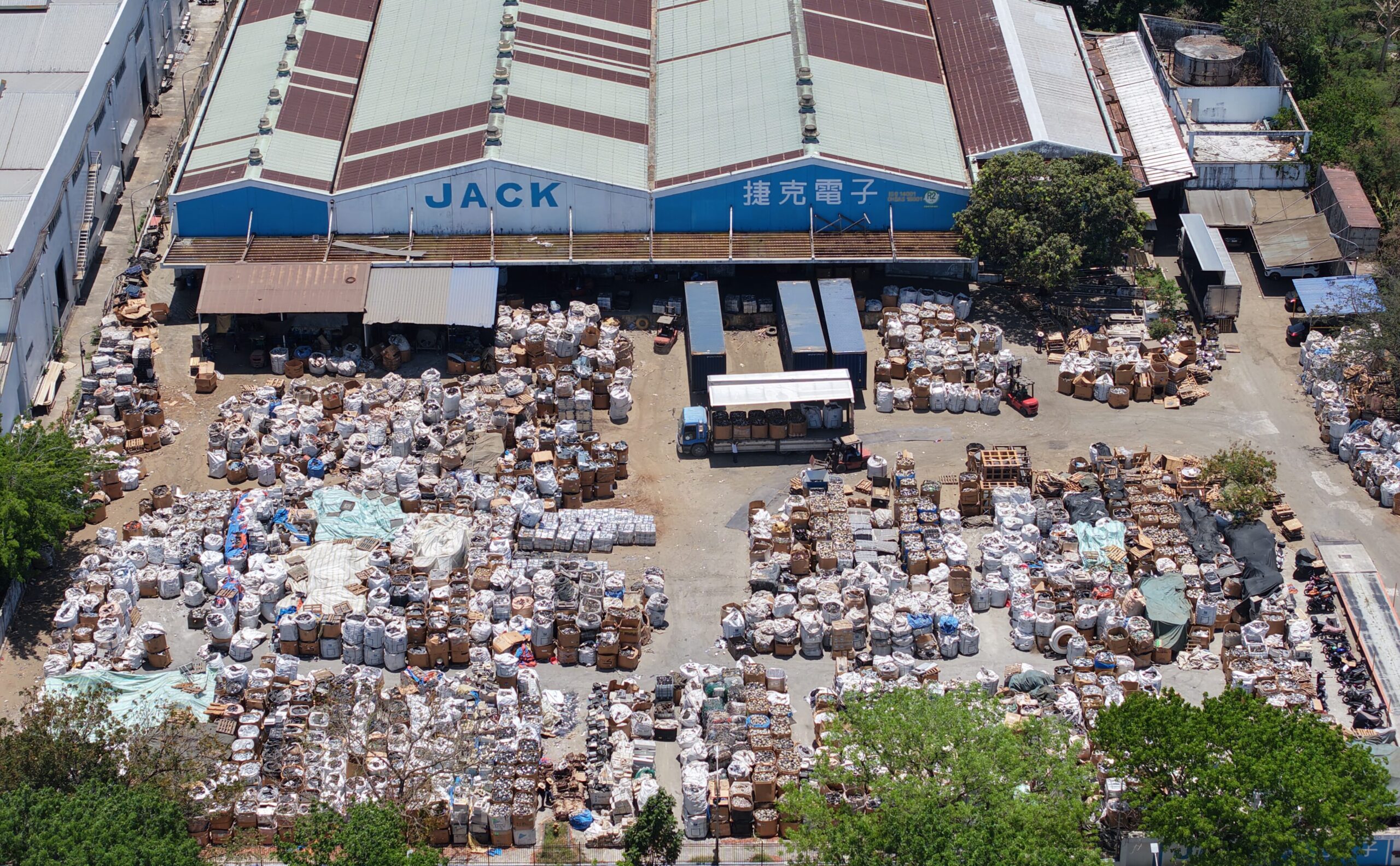
“The worst kind of trash is the government that surrenders Philippine sovereignty. They can’t even manage their own waste, yet why do they accept waste from foreigners?”
MANILA – “The Philippines is not your dumping ground!”
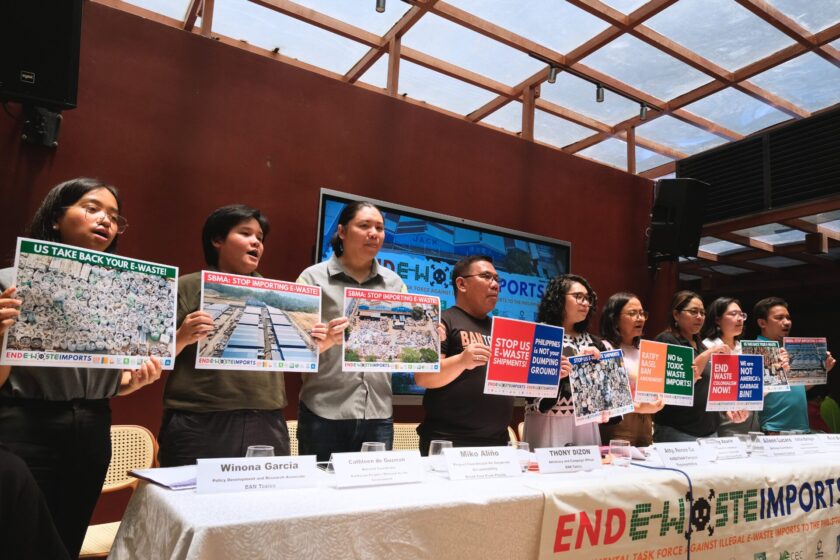
This is the response of the newly formed environmental task force consisting of environmental groups and advocates on Thursday, June 25, as it strongly opposed the reported year-long illegal dumping of the United States’ (US) electronic waste (e-waste) in the Philippines.
The Environmental Task Force Against Illegal E-Waste Imports to the Philippines (END E-WASTE IMPORTS) aims to raise awareness and put an end to illegal waste importation to the country, as it undermines the nation’s sovereignty, it causes environmental harm, and it exposes Filipinos to various health complications.
The Basel Action Network (BAN), an international waste trade watchdog, revealed that a total of 234 suspected containers of e-waste and one plastic waste from the US have been allegedly dumped in the country since March 2025.
Through BAN’s Operation Can Opener (OCO), a program that tracks intermodal containers carrying hazardous and problematic wastes, including e-waste, and sends alerts to destination countries, the group said they used GPS (global positioning system) tracking devices placed inside non-functional e-waste and available trade data to track the shipments.
According to BAN, some of the GPS tracking devices reportedly ended up in some factories in Subic, including ones linked to Jack Electronic Metal Incorporated and Enjoy Electronics Subic International Corporation.
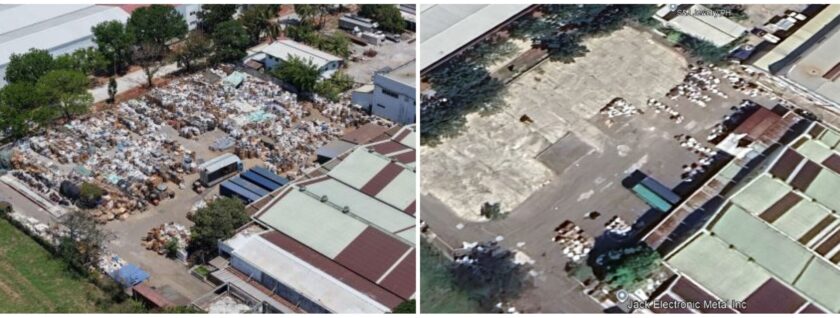
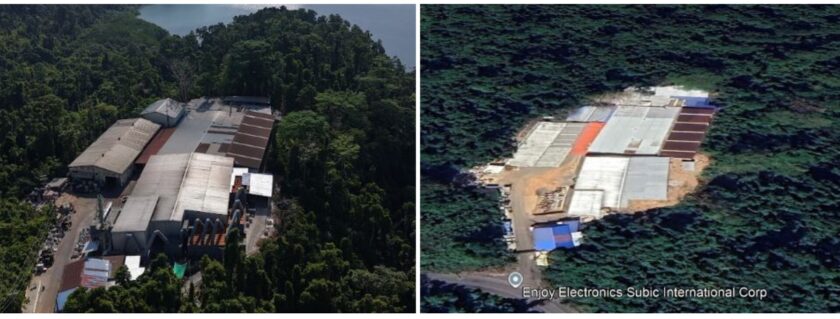
Both companies had faced controversies in the past. In 2022, Jack Electronic faced a criminal complaint for the alleged misdeclaration and unlawful importation of assorted goods, while the authorities had confiscated counterfeit television units from the alleged facility of Enjoy Electronics last year.
BAN had sent 14 OCO alerts to the Bureau of Customs (BOC), but the latter stated in its letter to BAN that it cannot intervene, citing the 2025 Manila Regional Trial Court (RTC) ruling that upheld the Subic Bay Freeport as a separate custom territory.
In a press conference, Thony Dizon, BAN Toxics advocacy and campaign officer, denounced the ruling, which was elevated to the Court of Appeals, as it may be interpreted that the Philippines is open to accepting waste importation even if it is illegal.
Article 4(5) of the Basel Convention states that hazardous wastes and other wastes shall not be allowed to be imported from a non-state party or to be exported to a non-state party.
The Philippines is a state party of the convention, while the U.S. is not.
However, Article 11(1) provides that a state party and a non-state party may enter into bilateral agreements as long as such deals “do not derogate from the environmentally sound management of hazardous wastes and other waste” as required by the convention.
There was no bilateral agreement regarding the matter that was made public, but BAN Executive Director Jim Puckett said in a video message that they have a source saying that the US and Philippine governments were allegedly in discussion to make the dumping of e-waste legal.
“You can’t carve out part of the Philippines that says Basel [convention] doesn’t apply there. So it’s completely against international law. And the bilaterals, if they pull that off, would be violating the Basel guarantee,” Puckett argued. “It would be a horrible precedent for the very first time the U.S. would assign a bilateral to a developing country to receive e-waste.”
Further probe
For Kabataan Party-list Representative Renee Co, there should be further investigation to identify the entities involved, and why they were bypassing an international convention.
“We don’t want to be the world’s dumping site; we don’t want to be the US’ dumping site. We also don’t want shipments that don’t go through the Bureau of Customs for clearances and end up in a free port zone of the Philippines without us checking them,” Co asserted.
Generating 540 million kilograms of e-waste in 2024, the Philippines was the third country in Southeast Asia after Indonesia (1,900 kg) and Thailand (750 kg) with the highest e-waste generation, according to the Global E-waste Monitor.
The same report noted the Philippines’ lack of disposal facilities, especially in rural areas, which limits the collection and disposal and results in illegal dumping of e-wastes in rivers, landfills, and other areas.
Co cited how Thailand handled the OCO reports they received from BAN and acted upon them by rejecting hazardous waste and implementing stricter protocols for waste importation.
From January 2025 up to the present, authorities in Thailand noted 203 violations, totaling more than 4,504 tons of illegal waste at the ports of Laem Chabang Port and Bangkok.
To further intensify the investigation of alleged illegal e-waste importation by the U.S., the Kabataan representative said that she and her colleagues in the Makabayan bloc are keen on filing a resolution at the House of Representatives.
From tech hub to e-waste
Cathleen de Guzman, national coordinator of Kalikasan People’s Network for the Environment, equates the reported illegal e-waste importation to other U.S. involvement in the country, including the Pax Silica initiative and the Enhanced Defense Cooperation Agreement (EDCA). She said these partnerships undermine the country’s sovereignty.
“The worst kind of trash is the government that surrenders Philippine sovereignty. They can’t even manage their own waste, yet why do they accept waste from foreigners?” De Guzman said.
On the other hand, she said recent issues of landfill tragedy in Cebu and Rodriguez, Rizal, exposed how the country lacks a well-functioning system in its domestic waste management.
Read: Binaliw landfill reopens amid unresolved issues after landslide
Read: Rodriguez, Rizal community calls for action over buried bodies at landfill
Mayang Azurin, deputy director of the Global Alliance for Incinerator Alternatives Asia Pacific, raised health concerns on workers directly working on e-waste. “It contains toxic substances that can contaminate air, water, and soil, and it threatens the health of the workers and surrounding communities.”
She also warned of the country’s involvement with the US-led Pax Silica that it might advertise e-waste consumption in the face of a “circular economy” and “critical mineral recovery.”
The environmental task force END E-WASTE IMPORTS pushed for several demands, including the reversal of the Manila RTC ruling, the rescission of any bilateral agreements pertaining to e-waste importation, and the assertion of environmental governance and national sovereignty. (with reports from Franck Dick Rosete) (AMU, RVO)
ERRATUM: The earlier version of this article stated BAN Toxics as the source of the revelation of e-waste containers and the use of GPS tracking devices, and it has been corrected. The correct source is the Basel Action Network (BAN), which is a separate organization from the Philippine-based group BAN Toxics. In addition, the earlier version stated that the drone shots were taken by BAN Toxics, and they have been corrected. The drone shots were from an anonymous source and provided to BAN.
 Save as PDF



0 Comments