
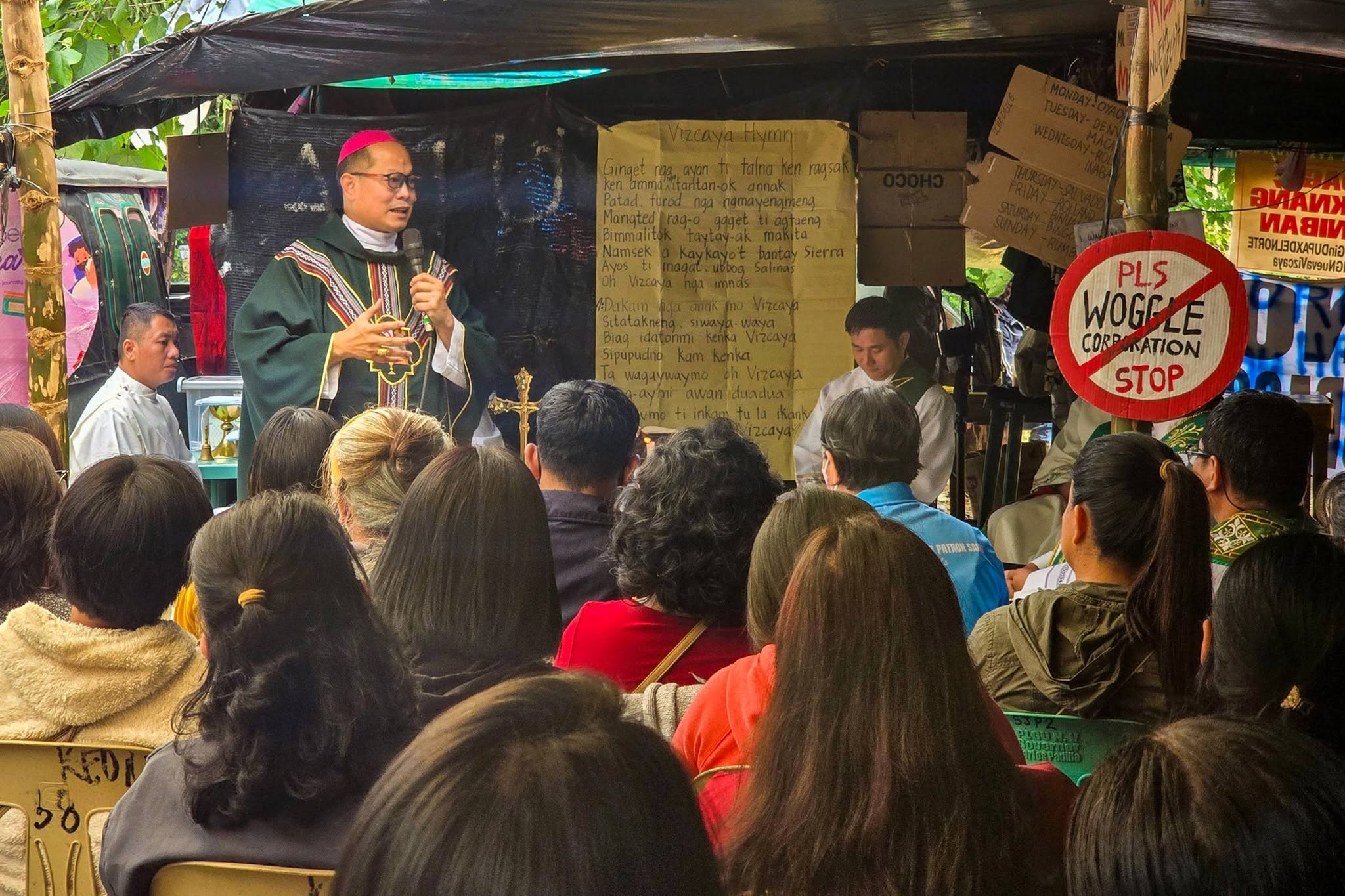
“As Bishop of this Diocese, I carry the responsibility given to me at ordination to stand with the poor.”
(1st UPDATE: July 1, 2026) MANILA – The Municipal Court of Kasibu, Nueva Vizcaya dismissed charges against Bayombong Bishop Jose Elmer Mangalinao and other anti-mining advocates.
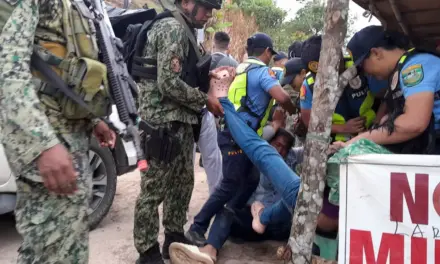
The civil case was a product of resistance to a mining exploration project in Kasibu where Indigenous groups peacefully barricaded and held prayer vigils to stop exploration activities that they said would damage their ancestral lands, watersheds and livelihoods.
Mangalinao, Fr. Christian Dumangeng and some community members involved in the barricades were charged with forcible entry with temporary restraining order (TRO) and writ of preliminary injunction. Mangalinao thanked supporters following the court’s ruling.
This court case follows tensions over the exploration efforts of North Luzon Minerals Resources Corporation (NLMRC). The company’s exploration permit covers about 4,456 hectares across the villages of Pao, Kakidugen, Pacquet, Dine and Catarawan – areas that indigenous residents identify as part of their ancestral domain and critical sources of water and livelihood.
Residents opposed the exploration by setting up community roadblocks and prayer camps, citing concerns about the potential consequences of mining for forests, agricultural fields, and water sources.
Throughout the dispute, Mangalinao stressed that his duty was pastoral, not political. He said that he visited the towns to offer mass, pray with people and accompany families requesting the Church’s help. “As Bishop of this Diocese, I carry the responsibility given to me at ordination to stand with the poor, defend the vulnerable, and be a voice for those whose voices are often unheard… I went to accompany, not to direct. I went to comfort, not to command.”
The residents of Kasibu said that their opposition to the exploration project is rooted in their responsibility to protect their ancestral lands for future generations. They called on government agencies to comply with the Indigenous Peoples’ Rights Act (IPRA) which recognizes the rights of Indigenous Peoples over their ancestral domains and demands Free, Prior and Informed Consent (FPIC) before any project that may affect these places can begin.
Catholic institutions across the country issued statements of support for Mangalinao, among them Caritas Pilipinas, Catholic Bishops’ Conference of the Philippines (CBCP) Episcopal Commission on Indigenous Peoples, Diocese of Bayombong, and Franciscan Communications, as well as various parish groups and youth ministries. They called for respect for the rights of Indigenous Peoples, care for creation, and support for communities peacefully preserving their environment.
Cardinal Pablo Virgilio David said Mangalinao showed the same courage in standing with vulnerable communities while recovering from quintuple bypass surgery.
For decades, Indigenous groups, church leaders and environmental advocates have raised concerns over the possible impact of large-scale mining on watersheds, biodiversity and ancestral lands. Mining proponents, on the other hand, insisted that under Philippine law, mineral exploration and development can continue provided that environmental rules and other legal requirements are satisfied.
Under Republic Act No. 8371 (Indigenous Peoples’ Rights Act of 1997), indigenous groups are entitled to rights over their ancestral domains, which includes the right to Free, Prior and Informed Consent before projects that impact such lands can be carried out. Republic Act No. 7942 (Mining Act of 1995) authorizes mining exploration and development subject to compliance with environmental laws and other applicable regulations.
Despite the court’s decision, community leaders said that they will still continue their peaceful watch over the watershed while calling for the protection of ancestral lands, respect for indigenous peoples’ rights and meaningful dialogue among all parties. (AMU, DAA)
Editor’s note: This article has been updated to correct the designation of Cardinal Pablo Virgilio David who was earlier referred to as the President of the CBCP. We regret the mistake.
 Save as PDF
0 Comments