
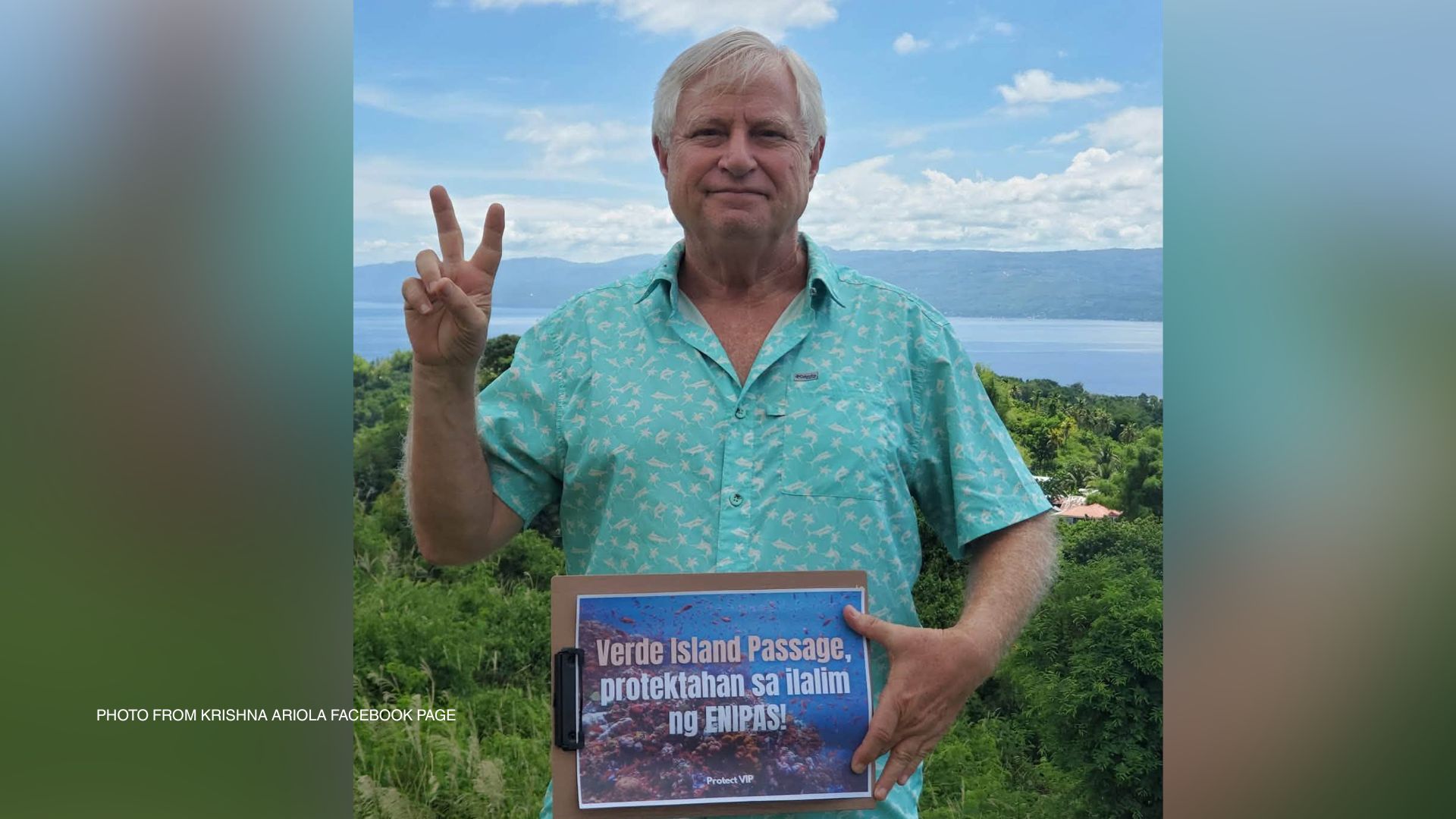
Dr. Kent Carpenter produced research that reshaped how scientists understand marine life in the Philippines.
BANGKOK, Thailand – A US marine biologist was shot to death at his residence on the night of July 12, 2026, Sunday, in Sibulan, Negros.
Dr. Kent Carpenter was also a professor and expert witness for the Philippines in its arbitration case against China over the South China Sea. He studied the Philippine marine fisheries for more than five decades.
On the night of his killing, three unidentified male suspects, wearing bonnets, reportedly entered the residence of Carpenter.
Carpenter was a research associate at Silliman University (SU) and professor emeritus of biological sciences at the Old Dominion University in Virginia, USA. Starting 1976, he collaborated with the university along with the late National Scientist Dr. Angel C. Alcala and fellow marine scientists in pioneering studies on the Philippines’ rich marine ecosystems.
“Through their partnership helped establish SU as an internationally respected center for marine and coastal research and contributed significantly to the scientific understanding of coral reef biodiversity, reef fish ecology, fisheries sustainability, and marine conservation,” the official statement of the Silliman University reads.
Shaping Philippine marine science
Carpenter produced research that reshaped how scientists understand marine life in the Philippines.
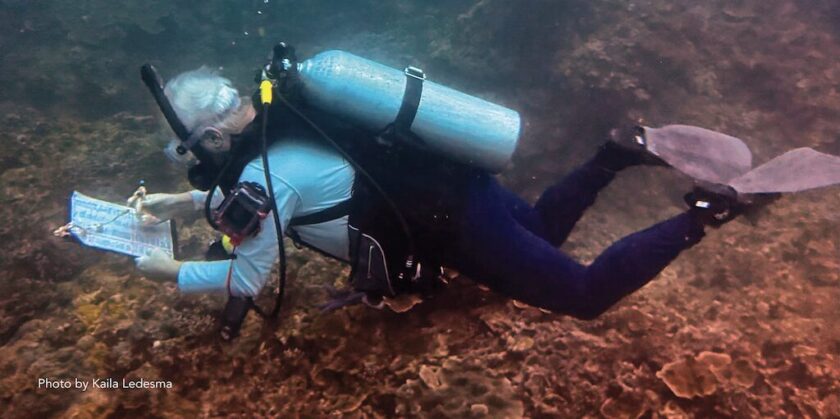
A member of the editorial board of The Philippine Journal of Fisheries since 2017, his most influential finding identified the central Philippines —especially the Verde Island Passage — as the world’s “Center of the Center” of marine shore fish diversity. This designation anchored the Philippines’ standing in international marine science and remains a reference point for conservation policy in the country.
His research also carried legal and geopolitical weight. Carpenter served as an expert witness for the Philippines in its arbitration case against China over the South China Sea, filed before the Permanent Court of Arbitration at the Hague in 2013.
In a 2016 journal article titled Environmental Atrocities in the South China Sea: The Science Behind Conservation Recourse, he documented the ecological damage caused by China’s island-building and the harvesting of endangered species in contested waters, evidence that became part of the scientific record underpinning the tribunal’s findings.
July 12 marks the 10th year of the tribunal’s 2016 ruling which upheld the Philippines’ sovereign rights in the West Philippine Sea and rejected China’s expansive claims as having no basis in international law.
Carpenter worked with Silliman-affiliated researchers on more immediate threats to Philippine fisheries. He co-authored a 2020 study in the Silliman Journal, alongside National Scientist Dr. Angel C. Alcala and researchers from the Angelo King Center, examining microplastic contamination in the mottled rabbitfish (Siganus fuscescens) sold locally as dried “danggit.”
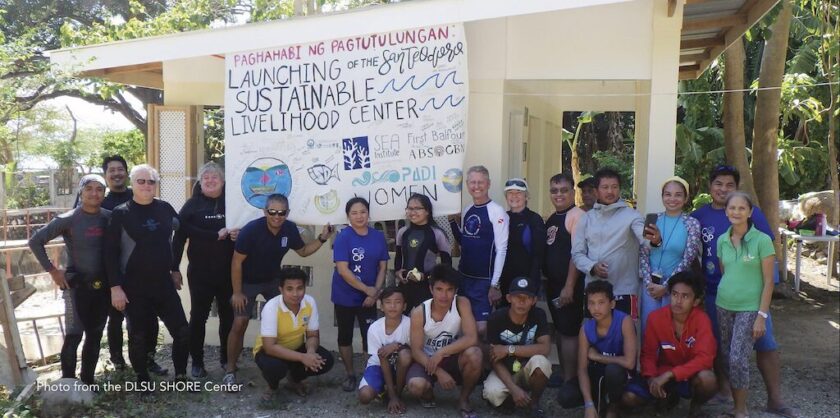
The study found that 30 percent of nearly 300 rabbitfish sampled across four sites in Negros Oriental ingested microplastics, with the highest rate (39 percent) recorded in Dumaguete City. It also found that rabbitfish in Bais and Dumaguete were reaching sexual maturity at smaller sizes and with reduced fecundity compared with data from 1979, a trend the authors attributed to decades of overfishing.
Colleagues remember Carpenter as a generous mentor who trained younger Filipino scientists and helped build local research capacity rather than simply extracting data for foreign institutions. In their statement, Silliman University said that the “culture of scientific excellence, international collaboration, and environmental stewardship” he cultivated continues to shape its marine research programs.
Calls for justice
News of his death drew condolences from environmentalists, marine scientists and academic institutions. Many frame his killing as a blow to the broader fight for environmental defenders’ safety.
Advocates of Science and Technology for the People-Negros (Agham-Negros) said that Carpenter’s killing was not only a criminal act but an “attack on science, on conservation, and on every Filipino community whose livelihood and future are tied to marine preservation and biodiversity.”
Agham-Negros said that Carpenter’s works earned the ire of enemies of marine conservation and plunderers of marine resources. “His killing is the ultimate price for being instrumental to the declaration of Verde Island Passage as the ‘Center of the Center of Marine Shorefish Biodiversity’ in the world, his firm and consistent stand against the exploration and construction of gas projects in conservation and protected areas, and his unrelenting support to fisherfolk communities affected by fossil fuel and destructive projects to protect the Passage under ENIPAS.”
ENIPAS or the Republic Act No. 11038 Expanded National Integrated Protected Areas System is a landmark environmental law enacted in 2018 which designated 94 additional critical habitats and ecosystems as legally protected areas. The law has expanded the total protected area network of the Philippines to more than 200 sites. Environmental groups have been pushing for the inclusion of Verde Island to ENIPAS.
“Dr. Carpenter was more than just a researcher. He was an educator that taught in our universities, worked with Filipino scholars and scientists, and servants of the earth. To him science must be public, accessible, and used to advance the interests of people and nature,” the group said.
Agham-Negros said that it is for this reason why Carpenter was one of their allies in the struggle for a pro-people and pro-environment science. “His killing happens at a time when environmental defenders are under fierce attacks, and worse, with the government enmeshed in bureaucratic corruption, and sidelined many issues, concerns and interests of the poor.” They called on local and national authorities to conduct an immediate independent, fair and transparent investigation to ensure accountability on Carpenter’s killing.
Meanwhile, the University of the Philippines (UP) Marine Science Institute in a statement, said that Carpenter had been “a great friend to the Institute” since its early years as a research center and remains an enduring influence on many other marine scientists, fisherfolk organizations, and conservation groups.
Sikat, Inc., a center for the development of indigenous science and technology, said that Carpenter “was a fierce champion of the oceans whose pioneering work helped fundamentally define the global significance of Philippine marine ecosystems.”
The group said that his research on the Coral Triangle gave “local communities, conservationists, and policymakers the empirical foundation needed to defend, manage, and cherish our municipal waters and coastal resources.”
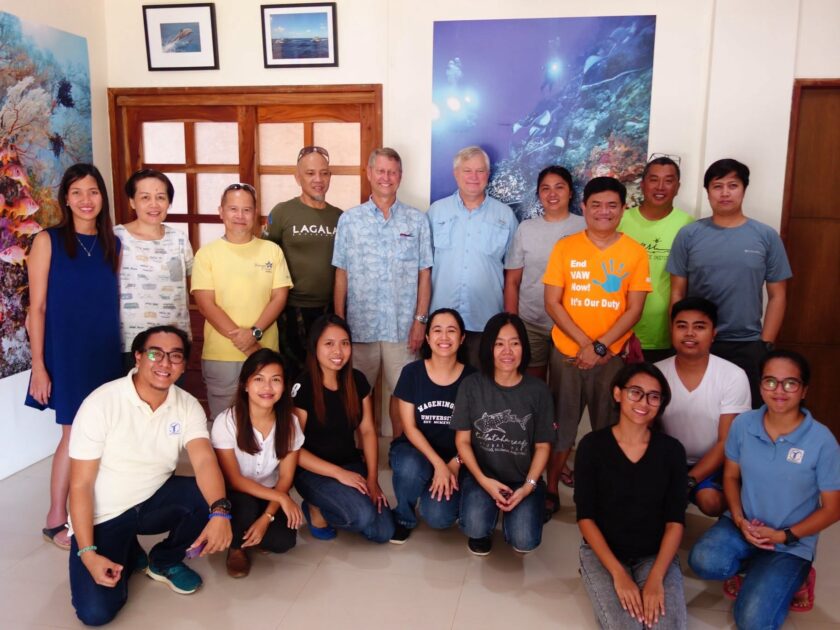
The Tubbataha Reefs Natural Park and World Heritage Site joined in mourning for the marine biologist. “Since 2018, Kent has given his time freely to the park, driven by a love for the reef. He was a brilliant scientist who helped us truly understand what we are protecting,” their official Facebook statement read.
“His legacy will continue to inspire future generations of Sillimanians committed to the advancement of science and the conservation of our marine environment,” the statement of Silliman University added.
Sikat, Inc. demanded justice and called on authorities to conduct an independent and thorough investigation for Carpenter’s killing. “To take the life of a man who dedicated so much of his own to understanding and protecting the lifelines of our planet is a horrific and unacceptable act of violence.”
Meanwhile Agham-Negros together with its national organization vowed to honor Carpenter by continuing the work he began. “Use science to defend the Verde Island Passage and all of the country’s biodiverse ecosystems, and demand no less for government support to marine research and development for the protection of scientists and advocates who risk their lives for justice, science knowledge and the environment.” (With reports from Anne Marxze Umil) (DAA)
 Save as PDF






0 Comments