

Marcos Jr. will likely boast in his next SONA about the administration’s campaign against corruption.

LEGAZPI CITY, Albay – “The administration remains without concrete steps to address the root causes of the crises,” progressive groups expressed their frustrations ahead of Ferdinand Marcos Jr.’s fifth State of the Nation Address (SONA).
During the Kapehang Bayan in Legazpi City on July 24, they said that the Marcos Jr. administration is lying to the people in the wake of the worsening poverty and human rights violations in the Bicol region.
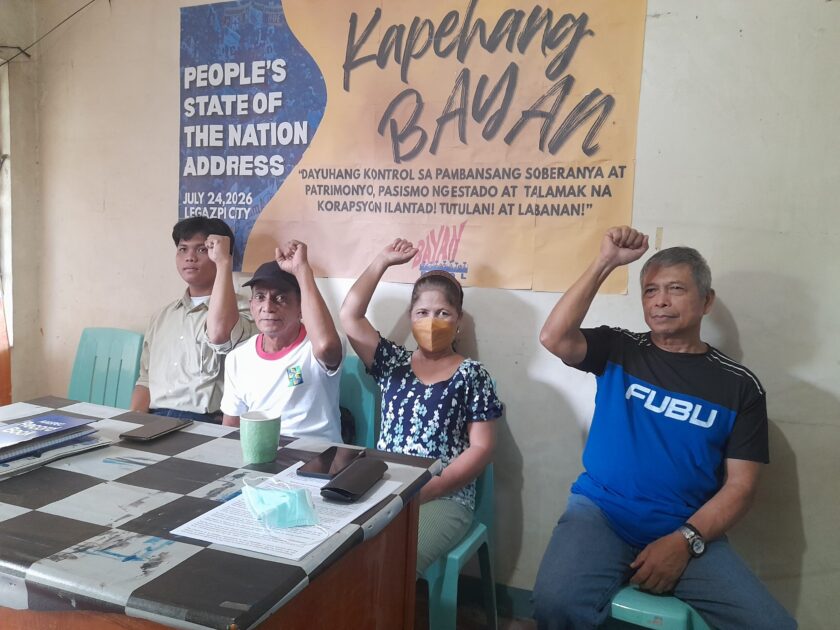
Marcos Jr. will likely boast in his next SONA about the administration’s campaign against corruption, according to Bayan Bicol. However, the group stressed that he should be held accountable for corruption and plunder; for poor economic policies, and rising prices of goods and services; for the increasing US presence in the form of military exercises, the Pax Silica project, and other military agreements with foreign countries; and the administration’s questionable campaign against corruption.
“No big fish involved in corruption have yet been held accountable. Those involved in flood control projects allied to the Marcos Administration appear to be “untouchable” and no investigation has been conducted,” Bayan Bicol Secretary General Dan Balucio said. “Even Marcos was implicated in the corruption because of the “P100 Billion insertion” in the 2025 General Appropriation Act in the national budget that went to the flood control project. All involved in the “budget insertions”, resigned from their respective positions but were not subjected to investigation.”
“The youth are enraged because we understand that every peso stolen is a peso lost in education, health services, livelihoods, and other basic needs of the people,” said Earnest Blanguera, Buenos Kontra Korapsyon (BKK) co-convenor.
Worsening poverty
“The government has remained blind, mute and deaf to the Filipino people,” Bayan Bicol said. The Filipinos, according to the group, are facing a severe poverty crisis exacerbated by neoliberal policies.
From 12.2 million in June 2022, the number of Filipinos who considered themselves poor increased to 14.5 million this year based on the Social Weather Stations (SWS) survey. The minimum daily wage in Bicol is pegged at P455.00 but a family of five needs P1,200 daily to survive.
“The price of goods continues to increase while they are nailed to a low daily wage. The bottom 30% income households in the Philippines have a higher inflation rate than the average of 8.4%. Aid to the poor is not enough except for the selected ones,” Balucio said.
Students also oppose any attempt to reduce the budget on State Universities and Colleges (SUCs). “Education is a right. It is not a political boon or a luxury for the wealthy. It is a provision of the Constitution that must be given freely and adequately to every Filipino youth,” Blanguera said.
There is a P6.88 billion budget cut for 26 SUCs including Central Bicol State University of Agriculture (CBSUA) and Camarines Norte State College (CNSC), according to Kabataan Partylist Bicol. “SUCs are forced to reduce the number of students they will accept due to lack of classrooms, laboratories, and funds,” the group said.
The Kilusang Magbubukid ng Bicol (KMB) said that the Marcos Jr. administration has no genuine agrarian reform program and only promotes policies that accelerate the commercialization, privatization, and land use conversion of agricultural lands.
“Thousands of hectares of fertile agricultural land are being lost to food production as the land available for farmers to cultivate continues to shrink [as] 1,356.83 hectares are included in the approved land use program in Bicol,” KMB Spokesperson Regina Barbacena said. “At the same time, there is a food crisis due to rising food prices and other basic commodities.”
According to KMB, the local production of rice, vegetables, coconuts and other agricultural products is declining due to government programs like the Rice Tarrification Law that favors importation instead of supporting local production.
“Many are forced to stop farming or take up other jobs because there is no more land to cultivate and there is no longer enough income. Instead of ensuring food security, it only plunges the country further into dependence on imported food and weakens the capacity of local production,” Barbacena said.
Human rights violations
“To suppress the resistance of the resisting masses, the state also continues to use counter-insurgency programs such as Executive Order No. 70, Memorandum Order No. 32, Enhanced Comprehensive Local Integration Program (E-CLIP), Whole-of-Nation Approach, and Regional Task Force to End Local Communist Armed Conflict (RTF-ELCAC),” KMB said.
“Under these programs, red-tagging, intimidation, militarization, trumped-up cases, illegal arrests, threats, and other human rights violations against farmers, fisherfolk, indigenous people, and organizations promoting genuine agrarian reform are rampant. Militarization is used as a tool to open up lands for big business while suppressing the democratic right of the people to fight for their land and livelihood,” Barbacena said.
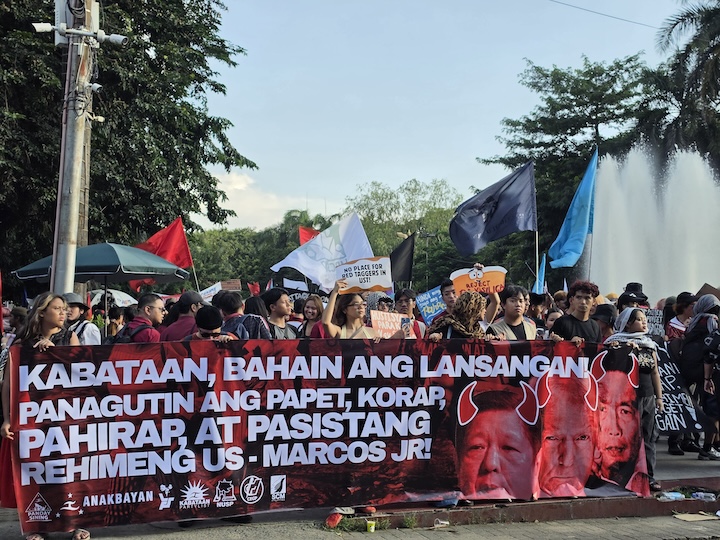
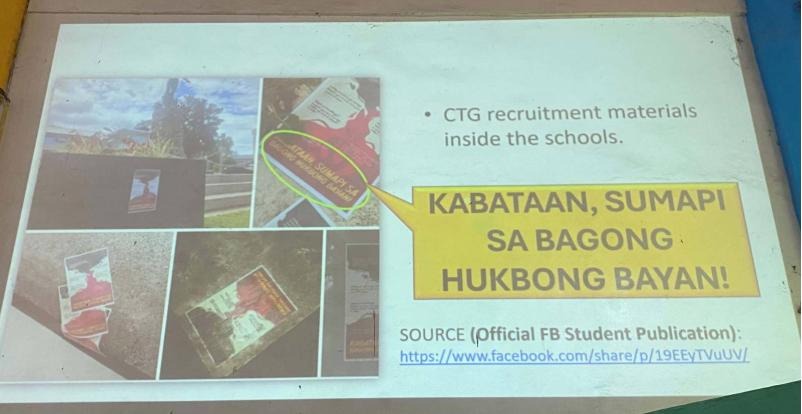
“This past year, we have seen various attacks on the youth. From harassment and intimidation during mobilizations, to red-tagging posters in the cities of Bicol,” Blanguera said. “There were widespread arrests of those who participated in last year’s anti-corruption rallies, who were sent subpoenas and filed with trumped-up cases.”
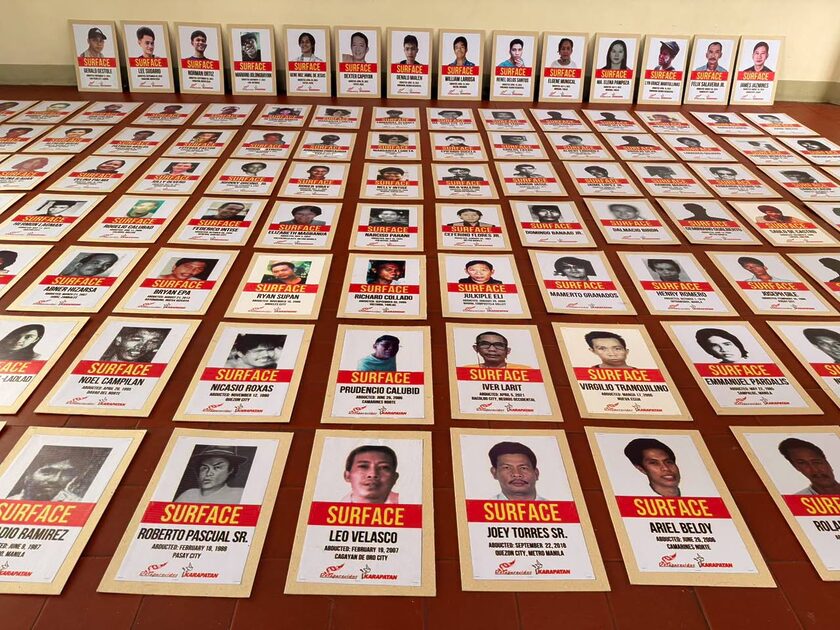
Karapatan Bicol recorded 322 documented cases of human rights violations from July 2022 to December 2025 in the region. There are 23 cases of extrajudicial killings, five cases of enforced disappearances, 82 cases of red-tagging, and 25 political detainees.
“The “localized peace” of the Marcos Jr. administration also resulted in focused military operations, the filing of trumped-up cases, and forced surrenders,” Balucio said.
“We must oppose and resist the imperialist control of the United States over the national economy and patrimony, national sovereignty and security,” Balucio said. “Let us unite to advance our rights, an independent foreign policy, genuine agrarian reform, national industrialization, and the protection of our country’s natural resources.” (DAA)
 Save as PDF



0 Comments