

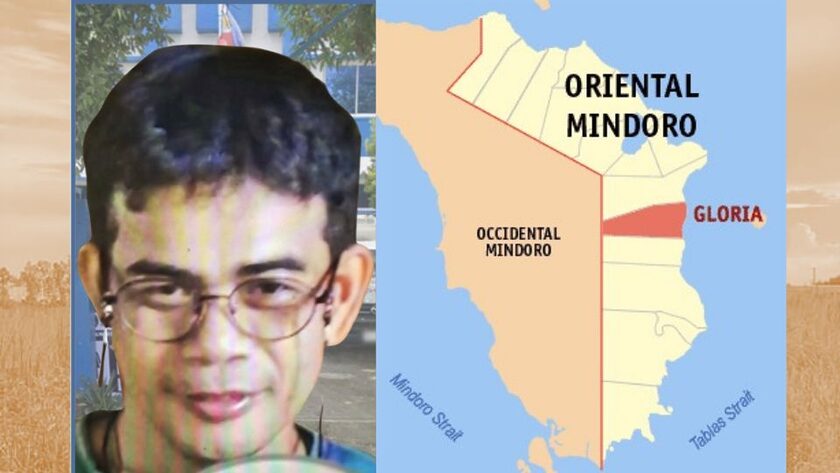
MANILA – It was not hard for the parents of Gene Roz Jamil De Jesus to accept him as an indigenous rights activist. He was Bazoo to his friends, but for their family he was Hadji. If anything, they saw his courageous decision to become an activist as an inevitable path amid the country’s dire human rights situation.
“He is a deep person. He is the kind who listens first before offering insights and opinion,” said Mercedita De Jesus, Bazoo’s mother, in an interview with Bulatlat. “In our family, he encourages openness, making space for questions and honest conversations.”
For more than 20 years, Mercedita and his husband, Generoso De Jesus, have been working in Italy. When they heard the news that their son had been forcibly disappeared, Mercedita returned to the Philippines to help in searching for their son.
Bazoo was abducted in the evening of April 28, 2023, together with his fellow indigenous rights activist Dexter Capuyan, in Taytay, Rizal, by individuals claiming to be members of the Criminal Investigation and Detection Group (CIDG) of the Philippine National Police (PNP).
More than two years later, the Court of Appeals granted the privilege of the writ of amparo to Dexter and Bazoo, and a permanent protection order for their immediate families. In a ruling penned by Associate Justice Jennifer Ong of the 16th Division on August 12, the CA found that state actors had shortcomings in investigating and in observing due diligence.
Read: Families hope court ruling can help find Dexter and Bazoo
“Through this writ, the enforced disappearance of our son is fully established and acknowledged by the court. It came out in the court hearing: the investigation showed clear negligence by the government and proper authorities. The evidence was poorly gathered, delayed, and they even kept the testimony hidden for two years,” Mercedita said.
But more than this, she said, they need concrete action from the government. They need justice and accountability for what happened to Bazoo, and for his immediate surfacing.

Hadji and his wisdom
For Mercedita and Generoso, memories of Bazoo are inseparable from the wisdom he carried. They remember him not just with fondness but also with a deep sense of gratitude for the calm guidance he brought into their lives. Misunderstandings were rare in their home as openness and discussion always took the lead.
“Bazoo was always serious in family conversations. At times, he was the one reminding us. We already experienced that before [as activists],” Mercedita said. “Should we really try to stop him? In the end, the decision still rested with him. Internal ang magpasya, he would always say.”
Generoso treasures their moments together. Every time that they went back to the Philippines, both Bazoo and his sister Idda De Jesus would always ask them to go around libraries. “Every time we asked them where they wanted to go when they were still young, they would always ask us to go to bookstores and book fairs.”
With the rise of the Internet, staying in touch abroad became more practical. They relied on Skype and quick messages to keep communication steady. “Whenever we go back to the country, there is no gap to mend for all of us,” they said.
Bazoo’s parents were also activists in college. His upbringing, they said, is also similar to them. While acceptance is easy for their family, Mercedita said that they would always remind Bazoo to take care. They knew that his decisions were on the right track. But they also knew what it costs to be an activist in the country.
In time for the commemoration of the International Humanitarian Law (IHL) month, Malaysia-based Pesticide Action Network Asia and the Pacific (PANAP) said in an upcoming report that the Philippines remains the deadliest country for farmers, indigenous peoples, and land rights activists in the Asia-Pacific region.

Fascination to arts
Bazoo who is a journalism graduate and Idda who finished mass communication both carried a deep fascination for arts and literature. According to their mother Mercedita, creativity is in their blood. Her children are drawn to writing, sketching, and painting.
She recalled one keepsake from Bazoo which is a copy of his unfinished novel. “It can be divided into seasons,” she said, describing how the story mirrors his journey as a student and activist. “If he were to resurface, he could still complete and publish the second part.”
Like her children, Mercedita used arts to be her outlet in the unrelenting search. She found her voice through poetry. Every 28th of the month, she releases a new piece on her social media accounts, a ritual of remembrance and resistance. Her poems take many forms: prayers for strength, demands for justice, and verses of protest. At times, when significant developments arise in Bazoo’s case, like the recent Court of Appeals decision, she is moved to write another, channeling her emotions into words that keep his story alive.
She will be one of the witnesses of the upcoming People’s Tribunal on Art for Resisting Oppression: Philippine Cases, in Berlin, Germany. She will talk about how her art has become an instrument, not just to cope with anxiety and depression but also to fight back.
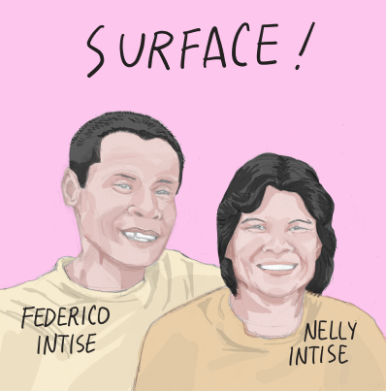
“What began as simple still life, florals, and objects has evolved into portraits of empowered women, clay sculptures bearing the faces of the disappeared, and deeply personal creations,” she writes in her briefer. “Through my paintings, handmade dresses, and spoken-word poetry, I tell stories that authorities try to silence. At my exhibits, I include a collage wall—images of my son Bazoo and others who have been forcibly disappeared. My art has become my protest, my prayer, and my demand: surface Bazoo, and surface all desaparecidos.”

Turbulent search
In front of the state security forces, in the police stations and military camps, Mercedita heard no empathy, assurance, and urgency to find Bazoo. “They said to me that it was my fault since I was working abroad. They even denied his disappearance and said that maybe he went to the mountains.”
Mercedita joined the search mission in the Philippines in May 2023. They also went to healthcare facilities because during their search, they found out that the IP address of Bazoo’s social media account was traced to a mental hospital in Quezon City and another from Makati Medical Center.
The words coming from the enforcers of the law themselves weighed heavily on Mercedita and Generoso. “It is as if society dictates that it was our fault that our son has disappeared, and it is a common sentiment for Filipino workers abroad, especially if something bad happened to their children in the Philippines,” Mercedita said.
More than the law enforcers’ aggressive treatment, they were also unwelcoming of the search and fact-finding team. Mercedita recalled that most police and military camps refused to sign the Enforced Disappearance/Desaparecido Form. This document is a declaration that Bazoo or any victim of enforced disappearance is not under their custody.
Section 8 of the Anti-Enforced Disappearance Law states that any police or military detention center, the PNP and Armed Forces of the Philippines (AFP) or any of its agencies, the National Bureau of Investigation or any other agency or instrumentality of the government, as well as any hospital or morgue, public or private, shall immediately issue a certification in writing to the inquiring person or entity on the presence or absence and/or information on the whereabouts of such disappeared person.
Both of them attended counseling sessions to process their longing to embrace their disappeared son and the guilt dictated on them. Their counselor told them that it was not their fault: They are victims too and the fault lies to those who abducted Bazoo.
“The counseling therapy helped us. So we remain firm in finding our son,” Mercedita said. “Our source of strength is our presence together and our community.”

Communities’ embrace
As leaders of organizations in Italy, they told Bulatlat that they were the first responders and service-providers for their fellow Filipinos. But this dynamic changed when their son disappeared. Mercedita said, “Before, we even provided counseling to our colleagues. Now, it is us who are now in need of help.”
Mercedita leads several organizations. She is the editor-in-chief of OFW Watch Italy and the president of Filipino Women’s League-Bologna, Italy. Generoso is the chairperson of Migrante Bologna.
“All our members have been offering support to help us,” Mercedita said. When she went to the Philippines to join the search mission, Generoso led the mobilizations and prayer rallies, and accommodate solidarity activities coming from various international organizations. They have been able to gather support not only from their fellow Filipinos but also to Italian individuals and organizations to help find their son.
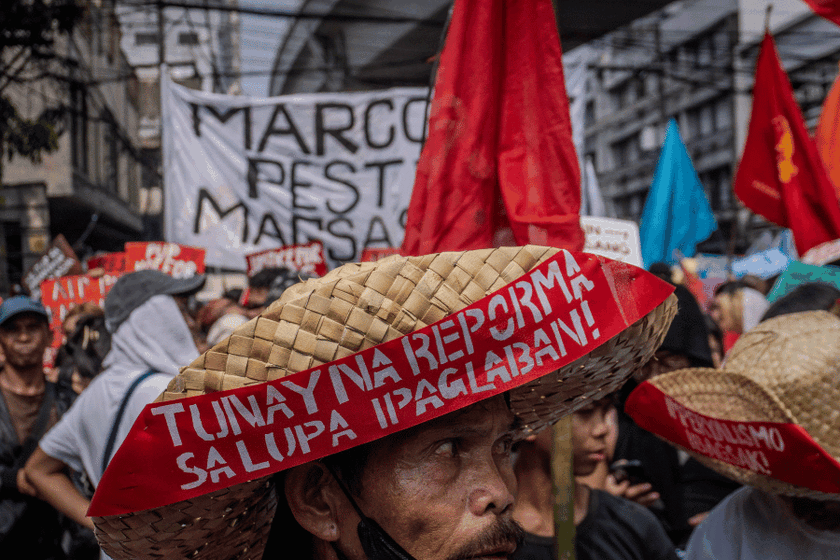
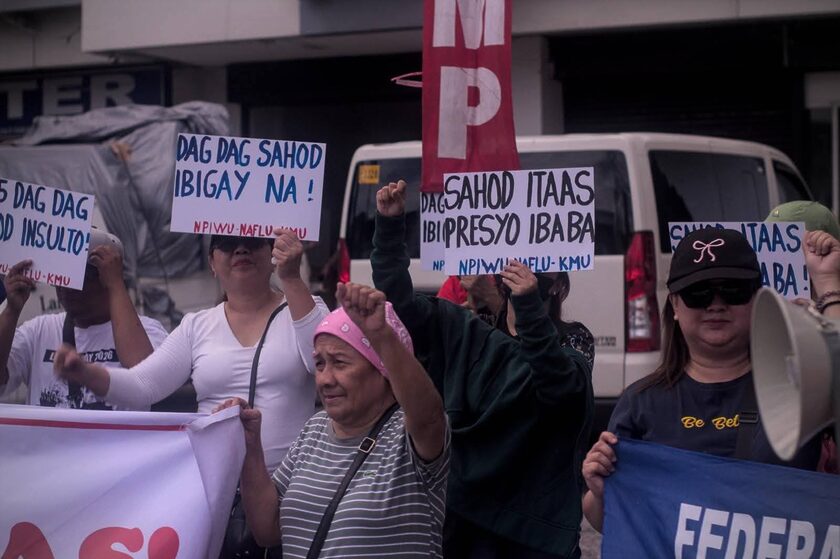
In the Philippines, human rights groups Karapatan and Kalipunan ng Katutubong Mamamayan ng Pilipinas (Katribu) are leading the search for Bazoo and Dexter. In a recent statement, Katribu stressed that the abduction of Dexter and Bazoo is not an isolated incident but is part of a “disturbing and intensifying pattern of attacks, harassment, and criminalization against indigenous leaders, rights defenders, and activists under the Marcos Jr. administration.”
Karapatan documented that there are still 15 victims of enforced disappearance who have not yet surfaced under the current administration. “We are deeply grateful to those who have remained steadfast, never letting go of us in search of justice. They are still there and we can feel them,” Mercedita said. (DAA)
 Save as PDF

0 Comments