

If Marcos Jr is sincere in fighting corruption, then he needs to explain the proposed P10.7-billion confidential funds of the Office of the President in the 2026 proposed budget.
By Aaron Ernest Cruz
Bulatlat.com
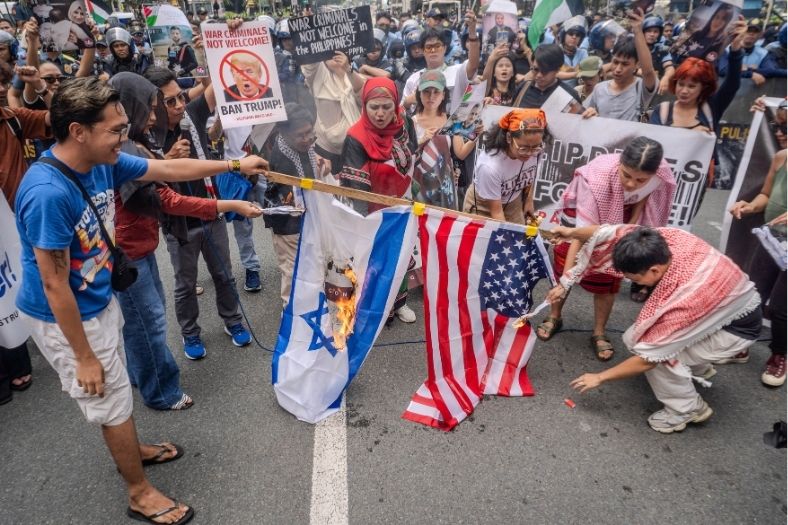
RODRIGUEZ, Rizal – Last week, Ferdinand Marcos Jr. expressed frustration over the scandalous multi-billion corruption under his administration. Prior to the Sept. 21 rally against corruption, he said that he would join the people if he were not the president.
But this was not welcomed by groups especially those who lived through Martial Law under the regime of his father, the late dictator Ferdinand Marcos Sr. For them, Marcos Jr and his sister Sen. Imee Marcos were not only the original “nepo babies.” They also continued the corrupt legacy of their father. Nepo babies is the term used to describe children of politicians who are perceived to use public funds to sustain their lavish lifestyle.
Kris Lacaba, convenor of Campaign Against the Return of the Marcoses and Martial Law (CARMMA), told Bulatlat that there is no difference between Marcos Jr. and the present nepo babies who have been called out by Gen Zs through social media platforms.
“Where their wealth came from is the same – from the people, from the public treasury. Their luxuries are all the same: Benz, Bentley, and BMW. So maybe the difference is the scale, because our original nepo baby’s [Marcos] family stole more wealth from the Filipinos,” Lacaba said.
Lacaba cited the Marcos family’s recorded world’s greatest government robbery by the Guinness World Record. The said record was deleted by Guiness World Record itself due to verification of records and did not intend to dispute it as historical fact.
Both Marcos Sr. and former Joseph Estrada were also recorded as the World’s All-Time corrupt leaders by the Forbes Magazine.
Lacaba said that if Marcos Jr is sincere in fighting corruption, then he needs to explain the proposed P10.7-billion confidential funds of the Office of the President in the 2026 proposed budget. “CARMMA’s call is to remove anomalous insertions and unprogrammed funds. Rechannel funds to education, health, and other social services.”
Lacaba’s father, award-winning writer Pete, was also imprisoned during Martial Law and suffered from torture for two years at military camp.
Orly Marcellana, member of Hustisya! (Victims United For Justice), recalled the tragic fate they experienced during Martial Law. They were abducted and imprisoned by the Philippine Constabulary with his father and two cousins.
“My two cousins didn’t make it back. My father and I were sent back by the soldiers. We heard that my two cousins were being tortured in the camp,” Marcellana recalled. “Because back then there were no human rights organizations, no churches that we could turn to, nothing happened to the victims of Martial Law.”
Marcellana doubted Marcos Jr’s sincerity in fighting corruption. He said that the Marcos family has not yet returned the ill-gotten wealth. Marcellana stressed that while they suffer from the brutal acts of the state, Marcos Jr. as well as his siblings enjoy a luxurious life using the people’s money.
“The Marcos family should be held accountable for the killings of Martial Law victims and victims of corruption today. The root of corruption today is Marcos, he shouldn’t pretend that he has nothing to do with it. If it’s true that he’s angry about corruption, impeach Sara Duterte, the queen of confidential funds,” Marcellana said. “Bongbong Marcos Jr. grew up in ill-gotten wealth, the children of Discaya and other DPWH contractors also grew up spending people’s money. They are all the same who benefited from corruption.”
As reported by the Philippine Center for Investigative Journalism (PCIJ), the systematization of corruption began in Marcos Sr’s administration. The report cited Macros Sr’s appointment of his war-time ally, fellow Ilocano and guerilla comrade Gen. Eulogio Balao in 1966, a year since he became president, as the head of the Philippine Reparations Mission in Japan. During his term, Balao “orchestrated an audacious scheme at the president’s behest: extracting 10-15% commissions from Japanese companies seeking contracts from the $550-million reparations fund meant to repair damages to infrastructure and services caused by the Japanese occupation.”
“This was the 1960s and offshore banking wasn’t as sophisticated as it is now but this method was as effective—Balao personally carried ‘two or three’ suitcases of cash under diplomatic seal to Hong Kong, where the stolen millions were deposited into a numbered Swiss account controlled by Marcos himself,” the report said.
In a statement, CARMMA said, “Filipino people deserve genuine systemic change in governance, not theatrics. And we will never forget the Marcoses’ long legacy of corruption and plunder, because accountability remains the urgent call of the people.” (With reports from Anne Marxze Umil) (DAA)
 Save as PDF


0 Comments