

By Dulce Amor Rodriguez
Bulatlat.com
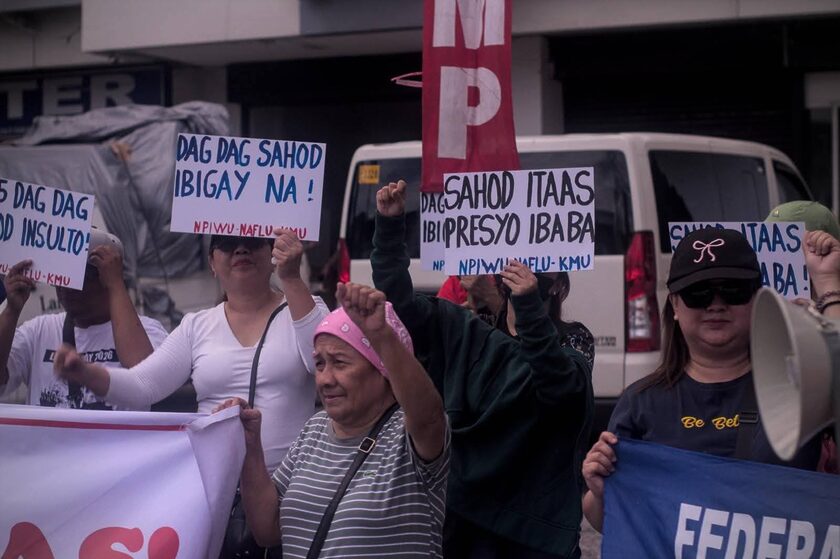
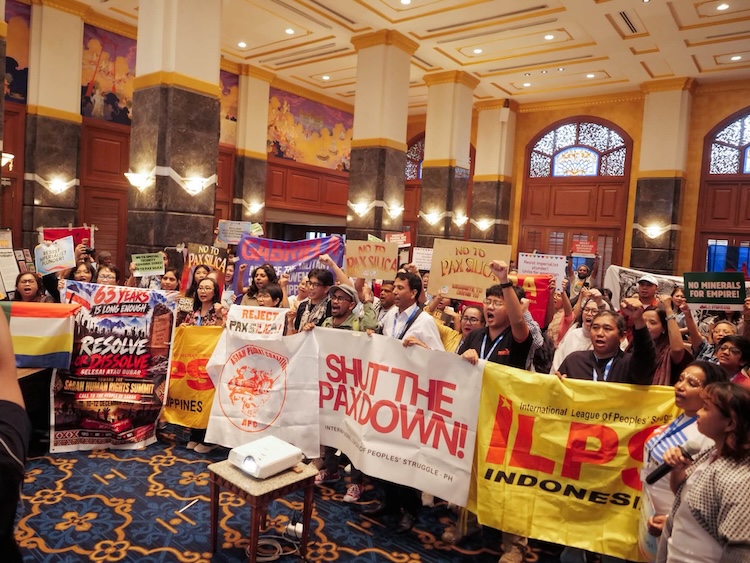
MANILA — Tobacco farmers from Ilocos gathered on October 8 outside the Great Eastern Hotel in Quezon City where the National Tobacco Tripartite Consultative Conference (NTTCC) is being held to demand that the National Tobacco Administration (NTA) grant them a just and fair price for their crop.
Led by the Solidarity of Peasants Against Exploitation (STOP Exploitation) and member groups of the Kilusang Magbubukid ng Pilipinas (KMP), the tobacco farmers called for an increase in the floor price of tobacco, citing the surging costs of production and basic goods.
The current price of tobacco varies significantly by type and grade, ranging from P39 ($0.67) to P97 ($1.66) per kilo, as of October 2025.
“The price of tobacco is too low, so we’re asking for an increase because it’s difficult to grow,” Cristina Sablay, a farmer from Ilocos, told Bulatlat in an interview. She described the painstaking labor behind tobacco cultivation: “From the seeds, we have to water them every day for more than a month. If the well is far, we really have to carry huge water sprinklers ourselves.”
Farmers also criticized the classification system that drives down tobacco prices. “They classify which ones are good and which are bad, and once they see any flaw, the price drops drastically. What we’re asking for is P128 ($2) per kilo with no classifications,” said Zen Soriano of the Amihan National Federation of Peasant Women.
She added that despite the hefty taxes and profits enjoyed by the industry, farmers remain burdened with debt and receive little to no government support.

Lack of genuine consultation
For years, tobacco farmers have lamented the NTTCC’s lack of genuine consultation, as they are often excluded from discussions that determine the official floor price of tobacco—set every two years by government officials, local executives, and business representatives.
“There was no clear invitation to the farmers in the first place. The ones they included are only local officials who don’t genuinely serve us,” Soriano said. “Farmers should truly have a place in it, not just the government and the businessmen.”
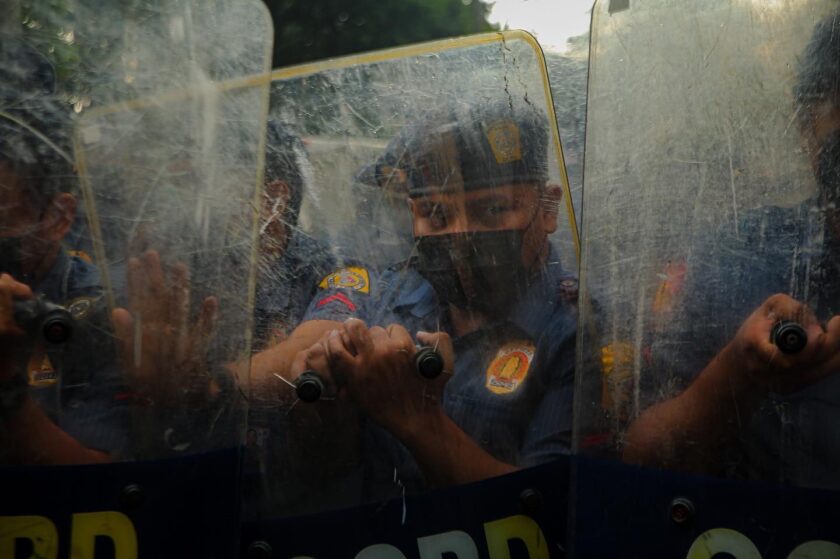
The protesters attempted to get inside the venue of the NTTCC to assert their right to join the discussions. But they were blocked by hotel security, staff, and police, who quickly shut the doors to prevent them from entering.
A few NTA officials then went outside to speak with the farmers, asking them to move away from the hotel entrance and return to their original position on the sidewalk. The farmers stood their ground, saying they would only return if five of their leaders were allowed to participate in the conference discussions.
After a series of negotiations, NTA officials said that only three representatives could enter due to “limited capacity.” The farmers eventually agreed, allowing their three representatives—two from STOP Exploitation and one from an Ilocos farmers’ group—to take part in the meeting.
‘Economic justice and rural rights’
The farmers emphasized that their struggle is not only about fair pricing but also about economic justice and rural rights. “There also needs to be genuine land reform because most of them are only tenant farmers who still have to pay rent to landowners. The excise tax should be removed if it does not benefit the farmers, and the government must provide real subsidies and support to producers,” Soriano said.
According to STOP Exploitation, Michael Tan, a representative of Continental Leaf and part of the private sector delegation, declared a “status quo” on the current floor price, claiming that the companies still have “around one million kilos of backlog” of unsold tobacco to buy from farmers. The group challenged that claim immediately, urging Tan to present data showing a declining income and a decreasing number of manufacturers buying from them. However, Tan failed to provide supporting evidence and later said he had “nothing more to say.”
As the NTTCC continues, STOP Exploitation said farmers will keep asserting their demand for a P128 per kilo floor price and genuine participation in policy-making. (AMU, RVO)
 Save as PDF

0 Comments