

Pamalakaya-Philippines and allied organizations called on the administration to ensure meaningful representation in the drafting of programs and laws affecting small fishers.
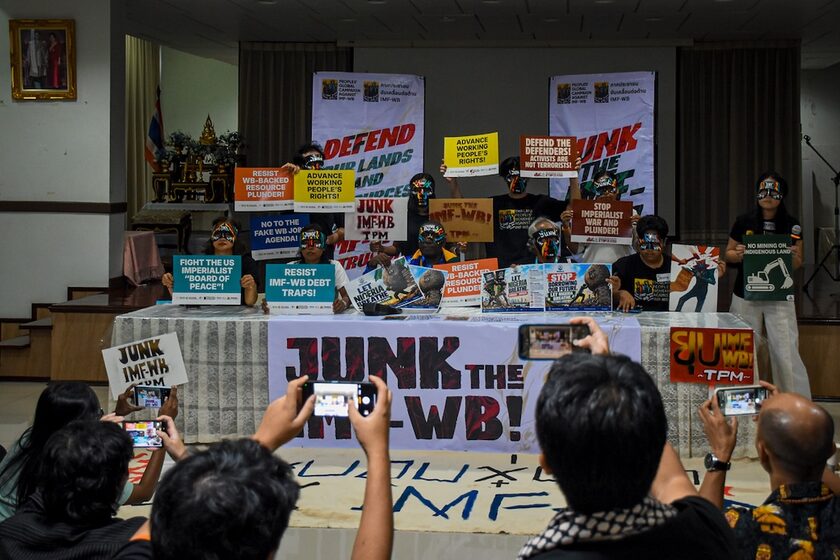
MANILA – National federation of small fisherfolk group Pamalakaya-Panay chapter, along with other groups, denounced the “imperialist and neoliberal” blue economy framework during the Blue Economy Convening held in Negombo, Sri Lanka, on Sept. 2 to 5.
Pamalakaya-Panay said that it further impoverishes small Filipino fisherfolk and promotes destructive projects that threaten marine ecosystems and livelihoods.
The blue economy is a framework promoted by many international agencies, governments, and development banks that seeks to align ocean-based industries such as fisheries, aquaculture, marine energy, coastal tourism, shipping, and seabed mining with the goals of sustainable development. Advocates said that it offers a path to economic growth that is compatible with marine conservation. Critics, however, warned that it often privileges large-scale, capital-intensive ventures at the expense of equity, local sovereignty, and ecological integrity.
As part of the Aton ang Kinse Panay Coalition, Pamalaya-Panay and Pamalakaya-Navotas chapters attended the international convening to bring the demands and insights of small-scale Filipino fisherfolk to global forums. Regional chapters of the group stressed that the framework promoted by bureaucrat-capitalists and powerful nations presents a misleading image of progress. Rather than lifting coastal communities, they said, it deepens poverty by prioritizing extractive industries over sustainable and inclusive marine governance.
In a statement, Pamalakaya said, “This economic model is based on the large-scale extraction of raw materials and resources from oppressed nations for the benefit of giant foreign industries.”
“In the name of conservation, it compels governments to incur debts from the private sector and invest in infrastructure projects that disregard the environment, the homes, and the livelihoods of indigenous peoples and coastal communities,” they said.
The group pointed out that under the blue economy rubric, sectors such as offshore gas exploration, deep-sea mining, high-risk renewable energy (wind, solar, wave), industrial shipbuilding, dredging, underwater cables, and maritime weapons are prioritized.
In the Philippine context, this agenda manifests through the commodification and privatization of coastal areas for tourism zones, port cities, mega-dams, airports, and other large-scale land use conversions. Many of these projects, the group said, bypass independent environmental impact assessments (EIA) and exacerbate flooding, debt burdens, and displacement of coastal communities. They also criticized how the global carbon regime shifts burdens of emission reduction to developing countries, even though much of the carbon debt stems from industrialized nations.
According to Pamalakaya, instead of treating the nation’s seas as “commons” accessible to all Filipinos, blue economy policies restrict access for marginalized coastal communities, those most affected by illegal, unreported, and unregulated fishing (IUUF) by large commercial fleets. IUUF refers to fishing operations that evade regulation, go unreported, or violate existing laws, often contributing to overfishing and resource degradation.
“The blue economy limits the access of small fisherfolk to the very waters that sustain their lives, while allowing large commercial interests to exploit marine resources unchecked,” Pamalakaya said.
The group also criticized what it called legal manipulations of the Fisheries Code (Republic Act 8550) that they say allow corporations to penetrate the first 15 kilometers of municipal waters, a zone intended to safeguard small-scale fishers’ rights. They cited the Supreme Court-affirmed ruling in favor of Mercidar Fishing Corporation (MFC), which was based on a technicality involving the seven-fathom depth condition, and which they say effectively nullifies protection over 90 percent of possible fishing grounds. According to Pamalakaya, this judgment overlooks its immense consequences on the livelihoods of over two million municipal fisherfolk and on fish stock conservation.
In October 2023, Mercidar challenged restrictions in municipal zones under the Fisheries Code. Two months later (December 2023), the Malabon Regional Trial Court declared key provisions of RA 8550 unconstitutional, opening municipal waters to commercial operations. The Supreme Court affirmed that decision in August 2024, after rejecting appeals over procedural issues and arguments over reversible errors. Meanwhile, the Department of Agriculture filed a motion for reconsideration, seeking to reverse the decision and restore what it sees as protections for small-scale fishers.
Instead of heeding the outcry of fisherfolk who have long criticized the Fisheries Code, the government has imposed more fines through its amendments to the law. Pamalakaya stressed that the IUUF Framework will never address the fisheries crisis as long as the root cause of poverty among fisherfolk remains unaddressed and power continues to rest in the hands of a few bureaucrat-capitalists.
The group also turned its critique outward, toward global trade regimes. “The dictates of international trade organizations such as the World Trade Organization (WTO) spell the death of local fish and agricultural production,” Pamalakaya declared. “Because of their push for liberalization, privatization, and deregulation of trade, capitalist profits continue to grow at the expense of the people and the environment.”
One policy of concern is the WTO’s Agreement on Fisheries Subsidies (AFS), which aims to curtail harmful subsidies that contribute to overfishing and IUUF. However, critics argue the current draft exempts many subsidies and focuses only on “overfished stocks” rather than preventing overfishing itself, leaving loopholes that could perpetuate harmful practices. The agreement also includes a Fisheries Funding Mechanism to support technical assistance in developing countries.
“Our primary demands are clear: Scrap the Fisheries Code and withdraw from the World Trade Organization (WTO),” Pamalakaya-Panay said. “We also reject Senate Bill 2450 or the Blue Economy Framework Act, the anti-fisherfolk IUUF Framework, and the Agreement on Fisheries Subsidies that threaten our livelihoods and sovereignty.”
The organization said that the national government should recognize the crucial leadership role of municipal fisherfolk in crafting a genuinely people-centered fisheries industry. Pamalakaya-Philippines and allied organizations called on the administration to ensure meaningful representation in the drafting of programs and laws affecting small fishers. They stressed that true fisheries reform can only come through inclusive and democratic participation of small-scale fisherfolk, the largest yet most marginalized population in the sector. (RTS, DAA)
 Save as PDF




0 Comments