
“Children do not get exposed to violence separate from their environment.”
By Elisha Beatrice Umali
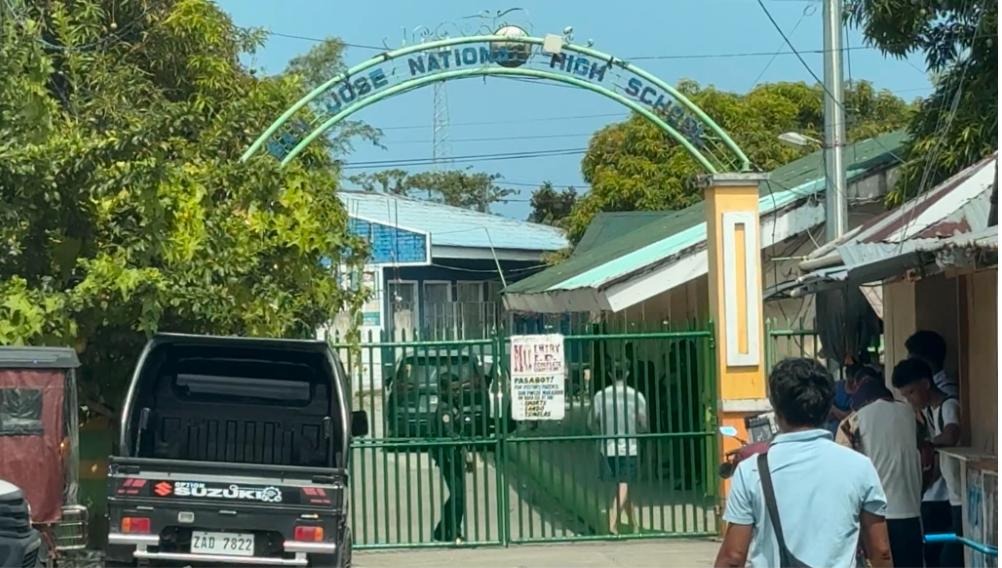
LAGUNA – Local and international human rights groups opposed plans to lower the age of criminal responsibility following three students’ deaths due to a school shooting at San Jose National High School, Tacloban City on June 22.
Two students, both minors, were identified as suspects.
In a statement, Amnesty International Philippines said that lowering the age of criminal responsibility does not address children’s exposure to violence and the possibility of these children having access to arms. “When governments respond to social harm only through punishment, only the poor and vulnerable children are affected in most cases.”
Gabriela Women’s Party Rep. Sarah Elago also denounced the proposal of lowering the age of criminal responsibility. “There is no evidence showing lowering the age of criminal responsibility will prevent these incidents. What will only happen is that many children will face punishment instead of addressing the root of the problems they face,” she said in Filipino.
Kabataan Partylist Rep. Renee Co called for a comprehensive investigation on the shooting. “Answers should be provided as to where the children got the guns, how they brought the guns to school undetected and what urged them to do the shooting,” Co said in Filipino.
For his part, Sen. Robin Padilla pushed for lowering the age of criminal responsibility to 10 years old, amending the Juvenile Justice and Welfare Act. The Philippine National Police (PNP) is also considering lowering the age of criminal responsibility to 12 years old.
The Juvenile Justice and Welfare Act of 2006 states a child aged 15 and under shall be exempt from criminal liability. A child above 15 but below 18 is also exempted from criminal liability, unless they acted with “discernment.”
Both age groups require intervention programs under the act.
The League of Filipino Students (LFS) denounced Padilla’s proposal. “If the real criminals that stole public funds and killed thousands of children are not taken accountable by senators, why would they persecute 10-year-old children?” asked LFS Chairperson Gabriel Magtibay in Filipino.
Salinlahi Alliance for Children’s Concerns questioned society’s role in condoning murders, violence, and bullying. “Children do not get exposed to violence separate from their environment. Filipino children grow up in a society with rampant violence, discrimination, and impunity from high-ranking officials without accountability for their sins to the citizenry, especially the youth,” said the alliance in Filipino.
Salinlahi said that “it is not impossible for children to manifest violent behavior if there is a normalized view of violence in society.”
Better support systems
Child Rights Network, an alliance pushing for child-centered legislation in the country, stressed that guns have “no place in schools,” urging concerned parties to make schools safer, prevent violence on school grounds and ensure children’s access to mental health support.
The Alliance of Concerned Teachers (ACT) stressed that the educational crisis is also a student support crisis. “Thousands of schools remain without adequate guidance counselors, nurses, librarians, and psychosocial support personnel.”
ACT Chairperson Ruby Bernardo said that investing for safe learning environments, every school should ensure having guidance counselors, nurses, and student support personnel.
Co said that immediate psychosocial support should be provided to the victim’s loved ones and the youth that witnessed the shooting. “The mental health crisis is already prevalent among the Filipino youth and this traumatic incident will only exacerbate it for the students in particular.”
In less than a month after the opening of classes, the June 22 Tacloban City school shooting is the third recorded case of school violence. This followed the June 16 knife attack in General Trias and the June 19 stabbing incident in Cavite City, both in Cavite. (AMU, DAA)
 Save as PDF





0 Comments