
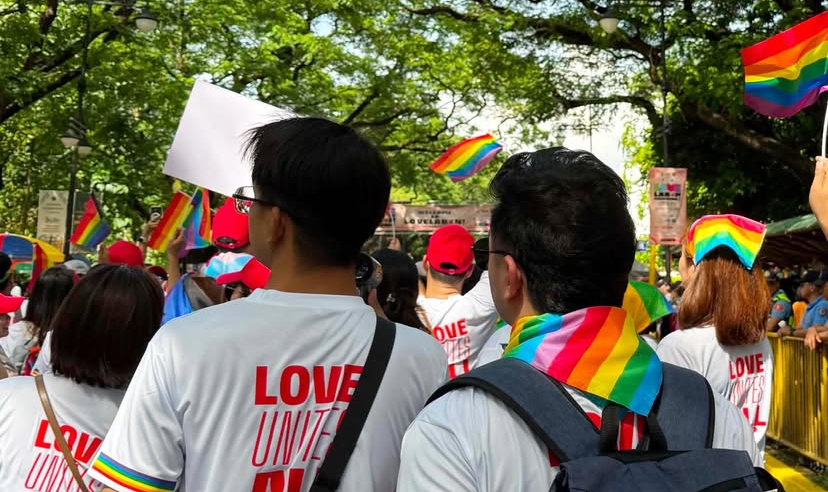
After eight years together, one LGBTQIA+ couple discovered that the law still did not recognize their relationship when it mattered most, exposing the legal gaps that continue to leave same-sex partners unprotected.
By Kasheena Camacho
Bulatlat.com
MANILA — When Vince’s partner, Mac, underwent surgery earlier this year, hospital staff asked for a legally recognized next of kin to authorize medical decisions if complications arise. Despite eight years together, Vince could not fill that role because Philippine law does not recognize their relationship, exposing a legal gap that leaves many long-term LGBTQIA+ couples without legal standing in medical emergencies.
Hospital staff accommodated Vince whenever they could, but institutional procedures still followed existing law. If Mac had become unable to make medical decisions, that authority would have gone to a legally recognized family member—not to the person who had shared his life for eight years
“I was hurt. I was angry at the system. I felt helpless,” Vince said. “At that moment, it felt like our relationship was being invalidated. The eight years we spent building a life together meant nothing to the state simply because we’re a same-sex couple. It was painful and discouraging. The number of years we had been together didn’t matter in that situation. “
The couple met eight years ago and gradually built a life together. They shared a home, managed their finances, and planned for the future. To each other, they were already family. But when the surgery tested that bond, the law said otherwise.
Vince and Mac’s experience reflects a broader legal gap affecting long-term LGBTQIA+ couples across the Philippines. Years—or even decades—of living together do not automatically give same-sex partners the legal authority to make medical decisions for one another during emergencies.
After the surgery
The surgery ended without complications, but the experience left Vince and his partner confronting a reality they had never fully prepared for.
Vince said he knew there could be legal complications because their relationship was not recognized by law. But like many uncertainties that feel distant until they happen, he never imagined they would face one inside a hospital.
“I had an idea,” he said. “We just weren’t prepared for it. I never thought we’d end up in that situation.”
During their years together, Vince and Mac moved into Vince’s family home in 2022 before buying their own house the following year. Nothing in those milestones suggested that the law would treat them as strangers once a medical emergency arises.
It was only when hospital staff explained that only a legally recognized next of kin could sign waivers or make medical decisions during surgery that they realized the limits of what their years together meant under Philippine law.
Under the Philippine Patient’s Bill of Rights, medical consent follows a legal hierarchy beginning with a spouse, followed by children, parents, and siblings. Unmarried partners—including same-sex partners—are not included, regardless of how long they have lived together.
Beyond hospital walls
The uncertainty does not end with medical decision-making.
Although Vince and Mac have not faced a property dispute, they now recognize that the legal uncertainty extends beyond hospitals. The home they built together and other assets they share could become legally contested if one of them dies without the necessary legal documents.
Over the years, they built a shared life together and planned their future jointly. Yet without legal recognition of their partnership, questions remain about what would happen to their shared assets if one of them died unexpectedly.
Earlier this year, the Supreme Court recognized that same-sex couples may establish co-ownership over property under existing civil law. Rights advocates welcomed the ruling but stressed that owning property together is not the same as legal recognition.
Without a valid will or other legal instruments, Philippine intestate succession laws generally distribute a deceased person’s estate to legally recognized heirs, leaving unmarried partners without automatic inheritance rights.
Read: Co-ownership rights of same-sex couples recognized, signals need for equality
Local solutions
Some local governments have already acted where Congress has not.
Quezon City launched the Right to Care Card in 2023, allowing qualified LGBTQIA+ couples to designate each other as healthcare representatives in city-run hospitals. Since then, San Juan City and other local governments have introduced similar initiatives, while advocates in Cagayan de Oro continue to push for their own ordinance.
Read: Groups push for LGBTQIA+ couples’ medical rights in Cagayan de Oro
The expansion of the Right to Care Card beyond Quezon City marks a growing local effort to recognize LGBTQIA+ partners in healthcare settings.
The program has expanded access to medical representation for LGBTQIA+ couples in participating local governments. However, its protection remains limited. The program applies only in participating local governments and does not automatically bind private hospitals outside those jurisdictions. It also addresses only medical representation. It does not create inheritance rights, recognize civil partnerships, or provide broader legal protections for same-sex couples.
A bill still waiting
Vince’s experience underscores the human cost of a legislative debate that has remained unresolved for more than two decades.
The SOGIESC Equality Bill, first filed during the 14th Congress, seeks to prohibit discrimination based on sexual orientation, gender identity, gender expression, and sex characteristics. Although the measure advanced through committee deliberations in both the Senate and the House during previous Congresses, lawmakers have yet to pass it into law.
Despite repeated refiling and growing public support, the measure continues to stall in Congress while LGBTQIA+ Filipinos remain without comprehensive legal protection.
Read: After 25 years, SOGIESC Bill still awaits passage
Local ordinances have shown that recognizing LGBTQIA+ partners in healthcare settings is possible. The challenge now is whether those local initiatives can be translated into national policy.
Looking beyond temporary solutions
Since the surgery, Vince and his partner have begun discussing legal documents they never imagined they would need.
They have considered preparing wills, executing special powers of attorney, and exploring other legal arrangements that may offer some protection in the event of another emergency.
However, they recognize that these documents cannot fully replace legal recognition.
“It would mean we’re no longer treated as second-class citizens in this country. Imagine building a life with someone, then having the state refuse to recognize you as partners simply because you’re queer. We’re fighting for rights that straight couples automatically get. We’re humans, too. We just love, too,” Vince said.
For Vince, the issue goes beyond hospital consent forms or legal paperwork. He said he and his partner are not asking for privileges unavailable to others but for the same recognition and protection that heterosexual couples already receive under the law.
“We’re not requesting for any special right. What we’re demanding is basic human rights,” he said. “Please don’t let unequal laws convince you that your love is unequal. Keep loving boldly. We will keep demanding for a future where no one has to fight just to have their existence to be acknowledged…We all deserve to bask in sunshine.”
For Vince and Mac, the hope extends beyond hospital rooms. It is the hope that one day, the law will recognize the family they have already built—not only in moments of crisis, but in everyday life. (RTS, RVO)
 Save as PDF



0 Comments