
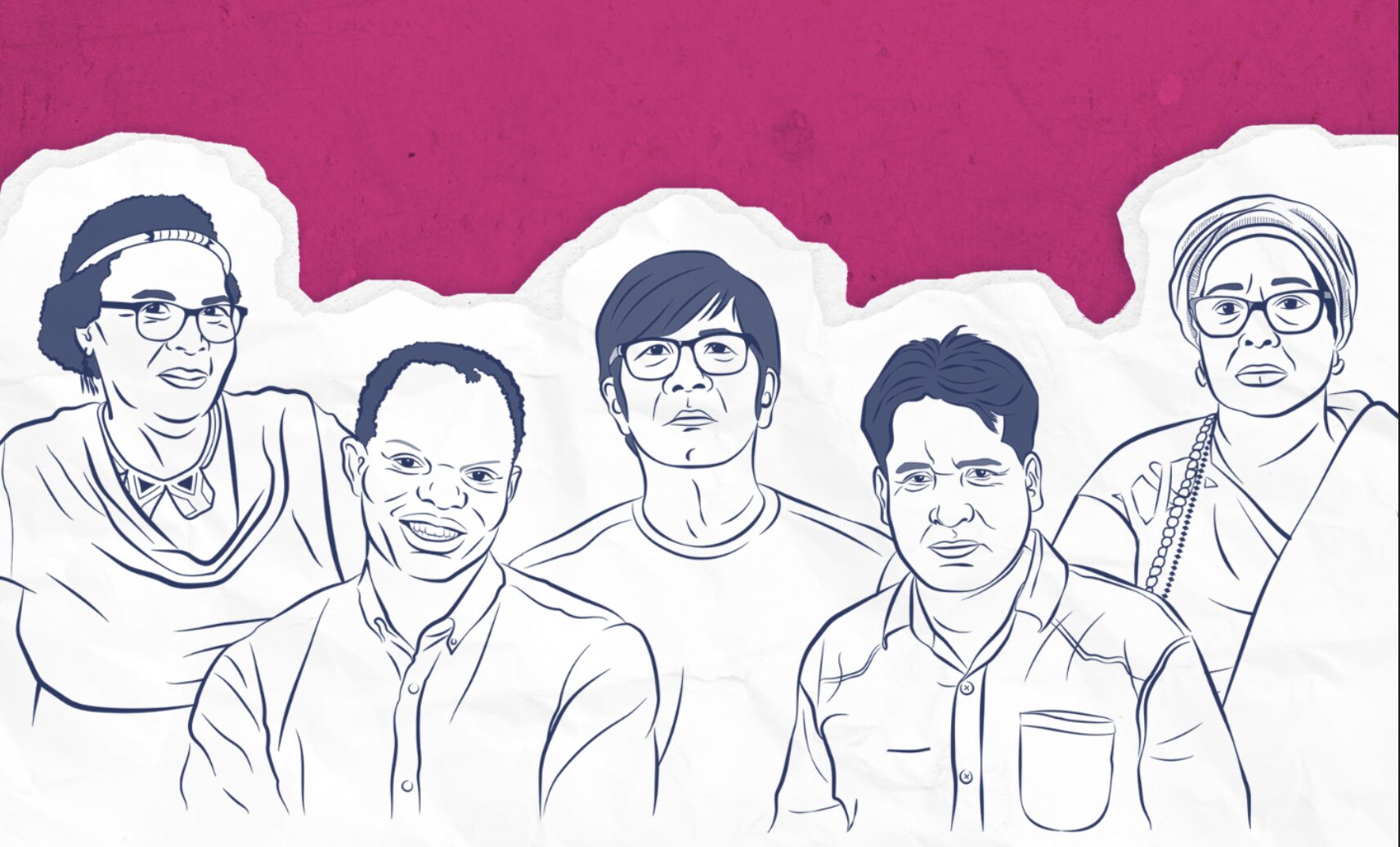
UN Special Rapporteur on human rights defender Mary Lawlor urged the Philippine government to reopen the investigation, stressing that the documentary evidence tends to support wrongful death litigation.
MANILA — The killing of labor organizer Jude Thaddeus Fernandez was cited by former United Nations Special Rapporteur on human rights defender Mary Lawlor in her report released on July 14.
“The Philippine National Police (PNP)’s failure to properly investigate the circumstances of Jude’s killing is evident in its shoddy and possibly wilfully poor investigative practice and through its conflicted and falsifiable narrative around the victim’s identity,” the report noted.
Fernandez was killed on September 29, 2023 by elements of the Philippine National Police Criminal Investigation and Detection Group (PNP-CIDG). He joined the Kilusang Mayo Uno (KMU) in 1989.
State forces claimed that Fernandez fought back (nanlaban), a common narrative to justify extrajudicial killings in the Philippines. However, independent fact-finding led by KMU, human rights organizations, and progressive lawmakers found that there were “no signs of resistance on the part of Fernandez when he was gunned down.”
Read: Labor organizer killed in Rizal province
Dubious police evidence
Based on the commissioned firearms expert review of the Scene of the Crime Operative (SOCO) file of the UN expert, there was no proof that Fernandez fired a weapon.
The paraffin gunpowder-residue test– considered an outdated method by the Supreme Court since 1995– showed gunpowder residue only on Fernandez’s left hand. He was right-handed. Moreover, the firearms expert stated that the Colt pistol allegedly used by Fernandez appeared to have been manipulated in the crime scene photos.
“After the gun was placed on the floor it was photographed close-up, then ‘made safe’ by removing the magazine and one cartridge, rephotographed, then two more cartridges were removed, and the final photograph taken,” the report noted.
It added, “While explaining that the removal of cartridges would be part of a ‘making safe procedure,’ the ballistics expert consulted for this report stated that the handling of the evidence should normally have been documented.”
DNA and fingerprint tests on the pistol were requested but not included in the file given to the human rights investigators of the Commission on Human Rights (CHR). The CHR concluded that a human rights violation was committed against Fernandez.
The police also did not trace the ownership of the Colt pistol allegedly used by Fernandez. The arresting officers failed to record the arrest as required by the law through bodycam which could have been the single most important piece of evidence surrounding the killing of Fernandez. Moreover, a police colonel reportedly misled CHR investigators by claiming that recording equipment had been used.
The report also identified shifting police narratives as a major concern. The police and even the Philippine UN mission failed to acknowledge the existence of Fernandez. The police stated that the victim was not Fernandez but a certain Oscar Dizon.
The police allowed the morgue to release Fernandez’s body to his family on October 10, 2023. “The release of Jude’s body serves as an informal admission that he was in fact the victim, while the PNP maintained a public narrative that Jude did not exist.”
Despite these denials, it was the Presidential office that recognized that the victim was Fernandez. Then Executive Secretary Lucas Bersamin said on October 6, 2023, that they will take concrete steps to mobilize all relevant government agencies to conduct a thorough and impartial investigation.
“We offer our deepest condolences to the family of Jude Thaddeus Fernandez, a veteran defender of labor rights and a dedicated trade union organizer. We also extend our condolences to the labor groups and unions whom he has helped,” Bersamin said.
However, almost three years later, not one has been held accountable.
Pattern
KMU Chairperson Jerome Adonis said that the killing of Fernandez is part of the nationwide counterinsurgency campaign that targets activists, human rights defenders, and trade union leaders.
“Jude was not only an organizer. He was our consultant and adviser on advancing the plight of Filipino workers,” Adonis said. “He started from the administration of Ferdinand Marcos Sr., the father of the current president Ferdinand Marcos Jr. He survived many administrations.”
Adonis was involved in the independent missions and investigations to unearth the cause of death of Fernandez. He recalled that it was hard for them to recover the remains since the police insisted on a different identity. “We gathered all the information. We filed a complaint with the Commission on Human Rights. We filed a case in the local court of Rizal only for its prosecutor to reject it.”
Nine months prior to the killing of Fernandez, the International Labor Organization (ILO) sent a high-level mission to the Philippines which recommended “the establishment of a single presidentially mandated body to comprehensively identify and address all outstanding cases of alleged labour-related extrajudicial killings and abductions with priority emphasis on criminal investigation and prompt prosecution and accountability.”
It was a result of long-standing concerns over the assasination of activists and individuals deemed opposed to the Philippine government’s interest. Adonis linked it to the exacerbation of killings under Executive Order No. 70 (series of 2018) that created the National Task Force to End Local Communist Armed Conflict (NTF-ELCAC).
This anti-insurgency arm has repeatedly red-tagged activists and human rights defenders which became precursor to grave human rights violations like extrajudicial killings, enforced disappearance, and torture. This still continues despite the 2023 ruling of the Supreme Court declaring that red-tagging is a threat to peoples’ right to life, liberty, and security.
“The NTF-ELCAC, the Anti-Terrorism Law, and the counterinsurgency campaign are all instrumental to target Filipino activists and trade union activists. In the previous administration alone, there had been 70 trade unionists killed. No justice was given until now,” Adonis said.
In April 2026, Lawlor contacted the Philippine government for a response, prior to the conclusion of her mandate. Until now, no substantive response had been received aside from acknowledging receipt of the request.
Lawlor urged the Philippine government to reopen the investigation, stressing that the documentary evidence tends to support wrongful death litigation.
Fernandez’s case is one of the five profiles in her report. The report analyzes the failure of governments to protect other human rights defenders like Joyce Fikile Ntshangase (South Africa), Thulani Maseko (Eswatini), Quinto Inuma Alvarado (Peru), and Maria Bernadete Pacífico (Brazil).
Data from Front Line Defenders showed that almost 1,000 human rights defenders were killed in the last three years alone. Only a handful of cases succeed in prosecution like Alvarado’s and Pacifico’s.
Lawlor stressed that the conditions that gave rise to the threats against them remain and their communities, families, and colleagues remain vulnerable to violence. “While prosecution for defenders’ killings is a necessary step, it is never enough. To truly honour the legacy of the five defenders profiled in this report and the hundreds annually who die for their work, violence against human rights defenders must be prevented in the first place, before it turns lethal.” (RTS, DAA)
 Save as PDF



0 Comments