Indigenous peoples’ groups call for independent probe of the human rights situation in PH
"The visit of Special Rapporteur Ian Fry marks a critical moment in bringing our fight for climate justice and human rights to the international level."
ADVERTISEMENT
"The visit of Special Rapporteur Ian Fry marks a critical moment in bringing our fight for climate justice and human rights to the international level."
The Cordillera region, with 5.5 million hectares of drainage area, is considered the "water cradle" of Northern Luzon. Its watersheds feed six major river systems, and have an estimated generation potential of 3,600 megawatts, according to the Department of Energy. With this substantial potential, the Cordillera region is again in the spotlight regarding dam-related conflicts more than five decades since the proposed Chico River Dams ignited popular resistance.
The innovation of raising crablets in Gubat, Sorsogon is caught in the middle of a government ban, serving as a litmus test for local officials on how to support community-based ventures.
Environmental group said the Aerotropolis project has "resulted in the displacement of coastal communities, the loss of their livelihood, the deforestation of their mangrove forest, and numerous cases of harassment from police and military agents."
The vog carries acidic gasses like sulfur dioxide (SO2), which can cause eye, throat, and skin irritation, breathing difficulties, chest tightness, headaches, sore throats, nausea, and fatigue. It can also worsen pre-existing health conditions such as asthma, lung problems, and heart disease.
“Officials from the PRA should be educated that it's the mangrove trees, not the destructive reclamation, that shield coastal communities from intense flooding."
“Over the years, the DENR has been complicit with big corporations involved in reclamation and other forms of conversion in Manila Bay, putting the livelihood and other socio-economic rights of fishers at stake."
Science and development should consider the actual conditions experienced on the ground and prioritize projects that genuinely benefit communities. The situation in Baseco is not an isolated incident but rather a problem prevalent in various parts of the country.
Seagrass is often a casualty of mangrove rehabilitation programs in the Philippines. This coastal town in Sorsogon province is no exception. It has the Bicol region's largest mangrove ecosystem at 1,034 hectares as a result of decades of community management backed by its local governments and other agencies.
For communities living around Mayon Volcano’s six-kilometer danger zone, evacuation is part of their life.
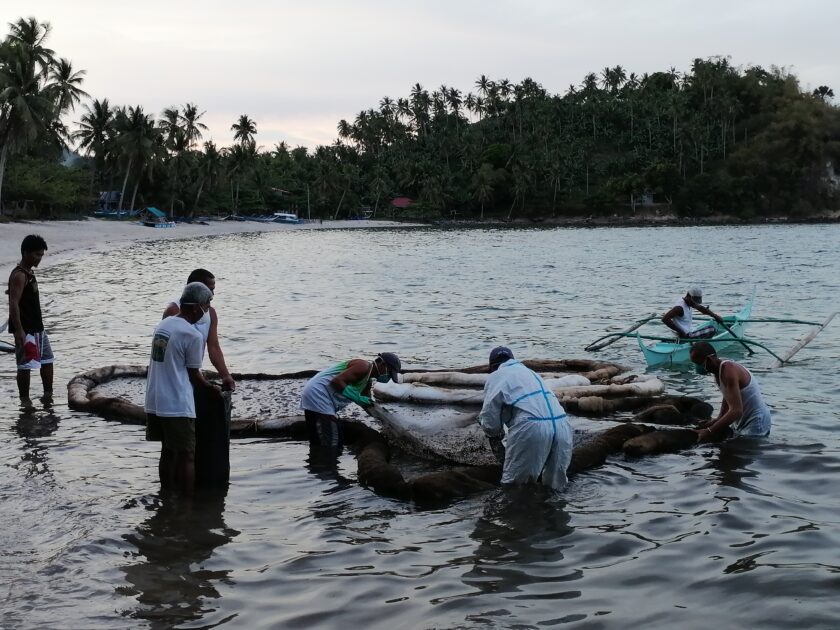
Three months since the Mindoro oil spill, residents and environmental advocates are appealing for more urgent solutions and assistance as its impacts on their lives and livelihoods persist.
“The theme for this year's Earth Day is 'Invest in Our Planet'. Concurrently, the business sector should also divest in environmentally damaging projects."
"On top of environmental issues, residents are having to deal with little to no income these past few weeks, causing trickle-down effects on their health and education. The impacts of the oil spill and fishing ban are also long-term, so it is not enough to just give one-time assistance."
Over 300 farmers and indigenous people from General Nakar in Quezon province are marching towards Malacañang as they continue to oppose the government plans to build the controversial Kaliwa Dam.
The 11-day barricade of Sibuyan folk has forced the government's environment agency to temporarily stop mining exploration activities in the island.
"He left the safety of our supportive and loving hometown to serve the Lumad and their struggles for self-determination and to protect their ancestral lands from mining companies."
"A just transition to jeepney modernization entails putting critical infrastructure in place and empowering small cooperatives while developing renewable energy sources."
The people rising for climate justice necessitates the struggle to dismantle corporate monopoly control over land and resources and give humanity a fighting chance to survive and reverse the climate crisis.
As more cooperatives registered to meet the program's final extended deadline of March 2023, implementation barriers and shortcomings hampered momentum and mirrored the reasons for the program's reluctance among the most affected stakeholders, the jeepney drivers.
“That means no more coal-fired power plants, no major mining operations without the free prior and informed consent of indigenous peoples and local communities. (And it means) Zero tolerance for harassment, intimidation and acts of violence against environment, land and human rights defenders."
A community of readers and supporters that help us sustain our operations through microdonations for as low as $1.