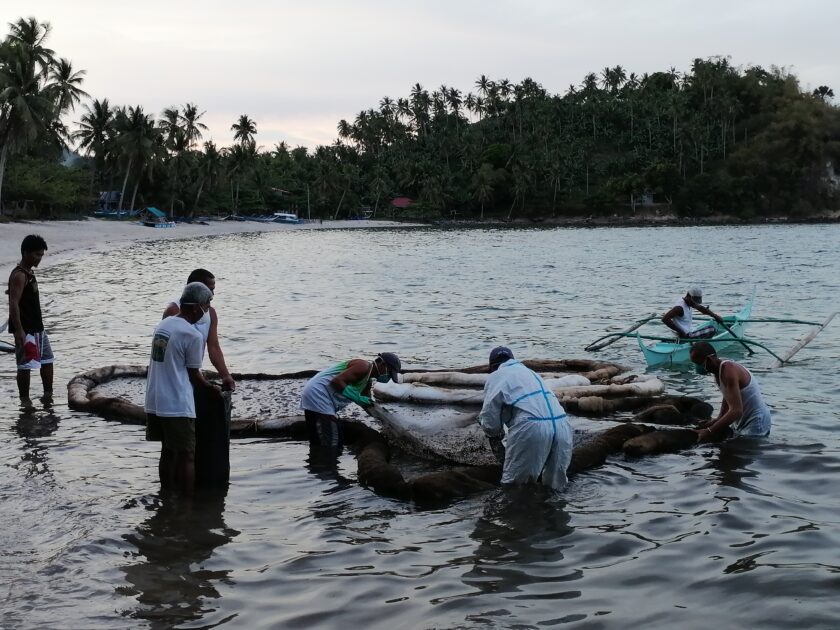
Sibuyan folk score initial win against mining company
The 11-day barricade of Sibuyan folk has forced the government's environment agency to temporarily stop mining exploration activities in the island.
ADVERTISEMENT
The 11-day barricade of Sibuyan folk has forced the government's environment agency to temporarily stop mining exploration activities in the island.
"He left the safety of our supportive and loving hometown to serve the Lumad and their struggles for self-determination and to protect their ancestral lands from mining companies."
"A just transition to jeepney modernization entails putting critical infrastructure in place and empowering small cooperatives while developing renewable energy sources."
The people rising for climate justice necessitates the struggle to dismantle corporate monopoly control over land and resources and give humanity a fighting chance to survive and reverse the climate crisis.
As more cooperatives registered to meet the program's final extended deadline of March 2023, implementation barriers and shortcomings hampered momentum and mirrored the reasons for the program's reluctance among the most affected stakeholders, the jeepney drivers.
“That means no more coal-fired power plants, no major mining operations without the free prior and informed consent of indigenous peoples and local communities. (And it means) Zero tolerance for harassment, intimidation and acts of violence against environment, land and human rights defenders."
“This bike ride is in response to the many issues confronting the planned revival of the BNPP, the calls for clean energy, and how the government should respond to the impacts of climate change."
“We can hardly sleep at night. We don’t know where to ask for help.”
"With the increasing threats of climate change President Marcos Jr. said that this is included in his top priorities. Yet he cuts the budget on departments that address this issue, we are slapped on our face by the inutility of this regime to increase their intelligence and confidential funds," scientists group AGHAM said.
“We are worried that if this will not be addressed, the outbreak will also spread to nearby communities in the Sierra Madre. We also hope that this will be disseminated to private citizens and other non-government organizations who can help the Dumagats."
"It has been long proven by many scientists, experts, and fisherfolk that reclamation is catastrophic to marine and aquatic ecosystems. On top of its environmental impacts, reclamation entails massive displacement of fisherfolk and a consequent threat to local fish supply."
Given how political and business interests have aligned themselves with the current administration, it is uncertain how long proverbial faucets will have to be left running to reach clarity on the issue of water privatization.
Townsfolk fear loss of ‘nurturing, healing spring water’ from nearby mountains.
Upper Katablangan in Conner, Kalinga enjoys 20 years of nearly uninterrupted power supply from the community’s micro-hydro project this year. This remote community located 20 kilometers from its nearest neighboring barangay could be reached with an eight-hour trek up a perilous foot trail when it is rainy or two hours on expertly-driven motorcycles when the road is dry enough. It is one of the first barangays in Abra, Kalinga and Apayao provinces to build a micro-hydro power plant for electricity, a vital service often taken for granted in lowland communities.
"Environmental rights are of utmost importance in the face of the climate crisis."
It took the community four years to construct the dam and the canal towards the power station. Aside from their labor, the community cut trees for lumber as their contribution to the project. They built a cement platform for the machinery and a small building for the power station. The community’s remoteness prevented them from bringing motorized machines to help them; everything had to be done by hand.
“Our fight for the environment is a fight for the next generation not only for the citizens of Pakil, but also its surrounding area."
Will opening up natural resources to foreign-owned and large-scale mining boost the Philippine economy? For the government, the answer is yes. For environmental defenders, the answer is no.
A community of readers and supporters that help us sustain our operations through microdonations for as low as $1.