
Foreign investment =development?
Foreign investment is potentially useful, but a government seeking real development must set the terms for this because there is a conflict between the profits of transnational corporations (TNCs) and national development. National development priorities require monitoring, guidance and control of FDI. TNCs, on the other hand, want government intervention curtailed to give them freest play in the economy to extract and repatriate their profits.
FDI can have benefits and has costs. Theoretically, the benefits include the immediate jobs created, inflow of foreign capital, increased export earnings, increased production of goods and services, and technology transfer. The costs on the other hand are job losses from the displacement of local firms and stunted local industry, the outflow or domestic speculation of profits, royalties, stunted domestic accumulation, increased imports of capital, intermediate and consumer goods, loss of natural resources, and monopoly pricing of utilities and services for profit. The benefits would not be realized spontaneously while the costs are inevitable and intrinsic to TNC operations. Without intervention by a responsible state, the results will be overwhelmingly negative.
Economic sovereignty is critical to economic development. The unambiguous historical experience is that FDI must be strategically restricted and strictly controlled. This includes regulating TNC entry, establishment and their right to operate through equity and ownership restrictions, joint ventures, requiring local content and domestic reinvestment, demanding technology transfer, and others. These are vital policy tools to create linkages and benefits for the domestic economy. Sovereignty means “liberalizing” when ready to do so and on terms beneficial to the domestic economy.
This is the unambiguous lesson from the long historical experience of countries as diverse as: the United States (US), Germany and Japan in the 1900s-1950; South Korea and Taiwan in the 1960s-1980s; and China, Russia and Cuba during their periods of revolutionary change. An economy will only get net benefits if the state exercises its sovereignty over FDI and requires real technology transfers, controls the use and repatriation of profits, and applies local content and other performance requirements. Moreover, strict limits on foreign equity ownership are among the most important FDI-related measures.
FDI in the Philippines
The Philippine experience, on the other hand, provides a clear negative example. FDI has over the last two decades been granted extraordinary privileges and fiscal incentives by the Ramos, Estrada and Arroyo administrations. The net result is that foreign investors have been able to make their profits without any real contribution to domestic social and economic development.
The economic facts are straightforward. Increasing FDI has actually been accompanied by increasing unemployment, increasing labor export, falling real wages, shrinking manufacturing and more volatile growth. There have also not been any real increases in domestic capital formation or in government revenues which have increasingly relied on regressive taxes on personal consumption.
The cumulative stock of FDI has doubled from some US$10 billion in 1995 to US$19 billion in 2007. Inward FDI flows increased from being equivalent to less than one percent of gross fixed capital formation in the early 1980s to between 15 percent-18 percent in the last few years. FDI accounted for 56 percent of total approved investments in 2007 or P215.2 billion ($4,663,257,345 at the 2007 average exchange rate of $1=P46.148) in FDI out of total approved investments worth P385.8 billion ($8,360,058,940).
FDI supposedly goes towards building a strong productive economic base. However, there is nothing to indicate that all that FDI has contributed to creating a strong domestic economy able to create jobs on a sustainable basis. On the contrary, the number of jobless Filipinos has continued to rise, and the 2001-2008 period is already the worst eight-year period of recorded unemployment in the country’s history. While jobs in export processing zones or special economic zones have been increasing, these have not been able to offset job losses and stunted industrial development elsewhere in the economy.
In short, foreign investment has been coming into the country but the supposed gains for economy and the people – such as jobs, poverty reduction and industrialization– are just not there. There are certainly other factors operating to explain these poor economic outcomes. But that is precisely the point: increasing foreign investment is not an end in itself. The country’s stunted development is not due to the lack of foreign investment but because of the lack of real policies to strengthen the domestic economy.
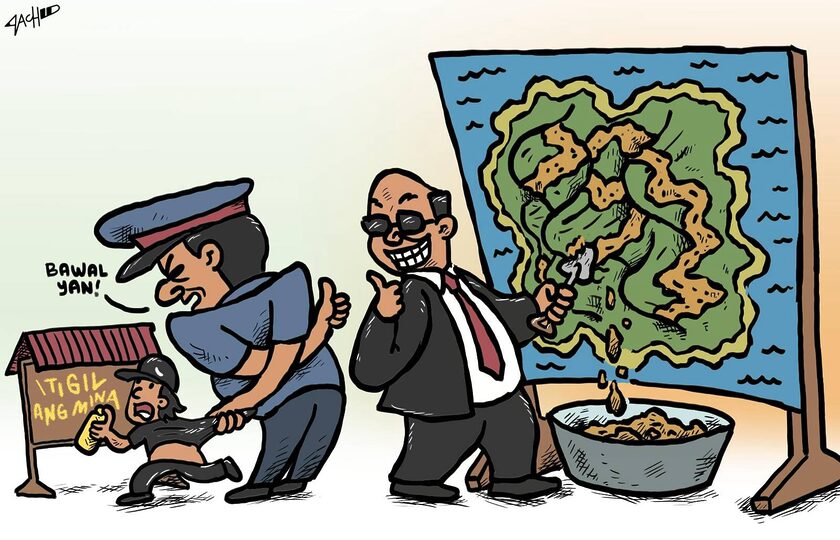
Moreover, the losses to the economy from unrestrained foreign investor domination will be immense. Local enterprises and businesses, already reeling from decades of globalization, will be weakened further. The country’s scarce mineral, forestry and fishery resources will be exploited with scant benefits for the local economy, while local communities will be dislocated.
The economic provisions of the charter should not and need not be changed to start developing the economy. They are tried and tested economic measures for development even if they have remained largely underused and even systematically subverted. At the same time, the country’s experience with its liberal approach to foreign investment is clear: it has poured in but the domestic economy is still unable to generate substantial capital, job creation has been stunted, natural resources have been lost and no technology has been transferred. The Cha-cha effort, among other things, is about surrendering the last remaining legal barriers to foreign exploitation of the country’s human and natural resources. IBON Features / Posted byBulatlat.com
 Save as PDF




Hello, yeah this paragraph is actually nice and I have learned lot of things from it about blogging.
thanks.