
“Taliwas ito maging sa kasalukuyang batas sa Pilipinas kung saan kinakailangan pa ng pahintulot ng korte bago labagin ang privacy ng isang indibidwal, pamilya o organisasyon,” Umaksyon said. (“This is a violation even of the existing laws in the Philippines, where the permission of the court is required before the privacy of an individual, family or group could be violated.”)
Vague provisions, grave punishments
The new code also prohibits activities or actions that will cause a “breach of peace and serious disturbance,” “threatening behavior” and “disrespect towards persons of authority.”
“Kung ipapatupad ito, maging ang mga lehitimong kilos-protesta ay maaaring ituring na misconduct katulad ng malawakang pagkilos ng mga estudyante noong December 2006 laban sa pagtaas ng matrikula,” Umaksyon said. (“If this will be implemented, even legitimate protest actions can be considered as misconduct, like the mass demonstrations of students opposing tuition hike in 2006.”)
Article VI of the code, meanwhile, punishes disobedience to orders issued by the chancellor, vice-chancellor, deans, directors of academic units, college secretaries, student affairs director and members of disciplinary bodies.
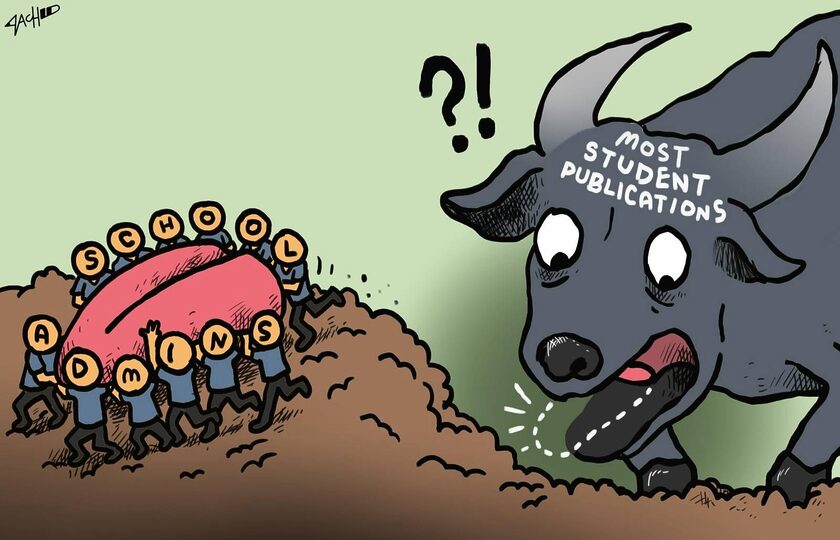
Student organizations said such provisions give the administration so much power that they can require students to follow even repressive policies.
The penalty for violations ranges from community service to suspension and even expulsion from the university.
Students facing disciplinary charges, under the new code should defend themselves in the tribunal. Counsel or lawyers will not be allowed to present evidence or argue with the disciplinary committee.
“Nililimitahan ng code ang karapatang ito [na irepresenta at ipagtanggol ang nakakasuhan] na maging ang lahat ng korte sa buong mundo ay kinikilala,” Umaksyon explained. (“This code limits the right be represented in court by a legal counsel, which all courts worldwide recognize.”)
Commercial and private education
Newly selected student regent Charisse Bañez said this code, plus the high tuition and other fees, makes UP comparable to private universities in the country.
She mentioned some rules in private universities that were as repressive as those found in the new code. In the University of the East, Bañez said, students can get expelled for loitering. Students wearing printed bras, meanwhile, are not allowed to enter St. Scholastica’s College.
“Hindi tunay na kahilingan ng mga estudyante ang ipinatutupad ng administrayon,” Bañez said. (“It is not the real interests of students that the administration upholds.”)
She explained that the new rules actually help the administration in gearing the university toward commercialization and privatization as they build a “culture of apathy” among students. “Inii-specify nila kung sinu-sino lang ang gagawaran ng karapatan sa pag-oorganisa.”
(“They specify who among the students can be given the right to organize.”)
A call to Iskolars ng Bayan
The University Student Council asked UP students to be vigilant and to act against the passage of the code.
“Ang susi sa [pagkakamit ng student demands] ay malawakang pagkilos ng mga estudyante at suporta ng mga progresibong guro at organisasyon,” faculty regent Judy Taguiwalo said, using as an example their successful February 1969 protest when she was just a student. (“The key to achieving student demands is the mass mobilization of students with the support of progressive faculty and organizations.”)
“Ang ibang mga gains natin 40 years ago ay binawi na. Imbis na lumawak lalong sumisikip,” she added. (“Some of our gains 40 years ago have been taken away. Instead of being expanded, they are being reduced.”)
Student organizations have expressed their opposition to the code and extended their support to Umaksyon. They have also requested a dialogue with the administration. (Bulatlat.com)
 Save as PDF



0 Comments