Workers begin 10-day countdown to wage increase
"Increasing the national minimum wage is possible and not something that will burden the businesses.

ADVERTISEMENT

"Increasing the national minimum wage is possible and not something that will burden the businesses.

The Philippines has now embarked on import liberalization of its staple – a dangerous path not just for the country’s food security, but more importantly, for that elusive economic development.

Focusing on just Manila Water diverts the issue away from privatization as the central issue in, and underlying reason behind, the artificial shortage. As such, it also has the effect of absolving government of responsibility when in fact, the biggest accountability in all this lies with government for abandoning its duty to ensure water for the people.

“The Duterte administration is exploiting the vulnerability of Metro Manila residents who are justly demanding accessible and efficient water services.”
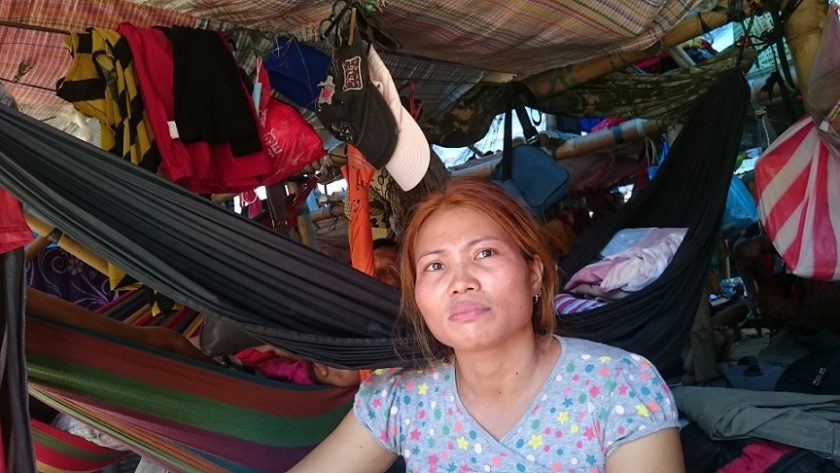
Unionists have defended their protest camp from at least four instances of forced demolition while in Manila.

“San Miguel’s P1-billion rehab is highly suspicious because it comes alongside its push for its Aerotropolis and Expressway-Dike reclamation projects across Northern Manila Bay." -- KAlikasan PNE

“If anyone had rights over the Manila Bay, it is the Filipino people, and if it is to serve any purpose, it should be for the benefit of the general population, and not an elite few.”

What is common in the stories of the residents in various coastal sitios of Bulacan is that the “news” about their impending displacement is coming to them in trickles of information packaged in a threat.

While the government is riding on the popular call for cleanup of Manila Bay, harnessing free labor of volunteers for fishing out thrash in Manila Bay, it is, on the other hand, disproportionately blaming the poor and seeking their demolition in favor of reclamation plans and other real estate development.

“The latest round of price hikes will definitely hurt consumers including low to middle-income earners and especially poor sectors like farmers, fisherfolk and urban poor.”

“It's the beginning of the end of the local rice industry. Even with the rice industry enhancement fund, the local rice industry do not stand a chance with massive rice imports.”

Farmers and advocates warn of the negative impacts of rice tariffication.

“The Rice Industry Development Act (RIDA) bill seeks to lift our rice industry from a multi-dimensional crisis that wasted away its productive capability, stunted its development and forestalled the country’s attainment of food security."

"This situation may lead to chaos and further manipulation of the supply and price of the staple by unscrupulous traders."

While not a guarantee to lower prices in the long run, opening up the rice sector to unbridled imports leaves the country’s rice security at the mercy of an unpredictable and increasingly unreliable world market. This happens as 95 percent of Philippine rice imports come from just two countries whose own domestic production is either slowing down or declining. Globally, rice production has been steadily decelerating in the past four decades.
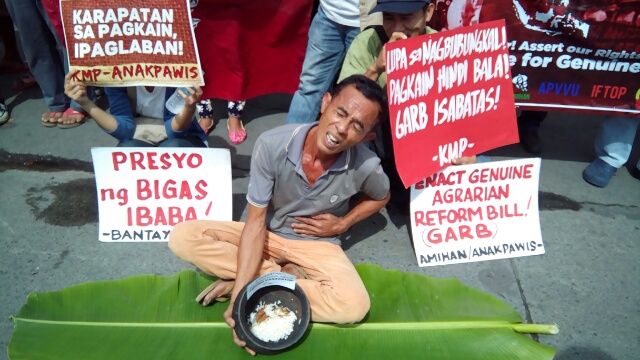
Price increases are to be expected as the country’s staple food will be solely at the hands of the profit-oriented private sector.

'There is no real rehabilitation if the Manila Bay ends up with profit-driven corporations.'
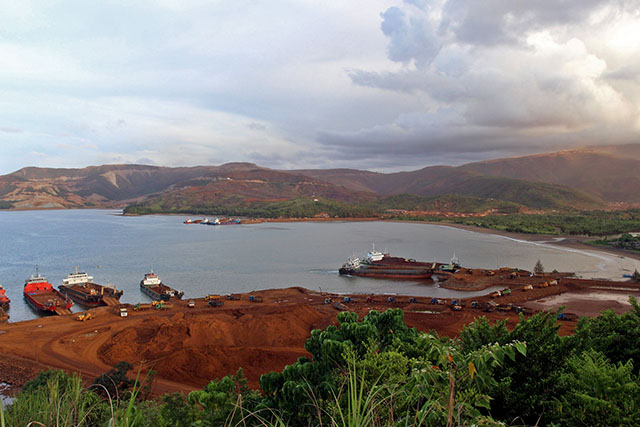
Without a domestic industry processing our mining products to make our own metals, only the large corporations exporting it reap the most benefit, at the expense of the poor and the environment.

“The birds’ habitat, the people’s source of livelihood and protection from storm surges are being turned into just another concrete jungle for the profit of the very few.”
TRAIN-2 worsens the regressiveness of the tax system on top of what TRAIN-1 has done by reducing corporate income tax collections to increase corporate profits ... The fiscal incentives scheme should most of all be grounded in a strategic vision of national industrialization.
A community of readers and supporters that help us sustain our operations through microdonations for as low as $1.