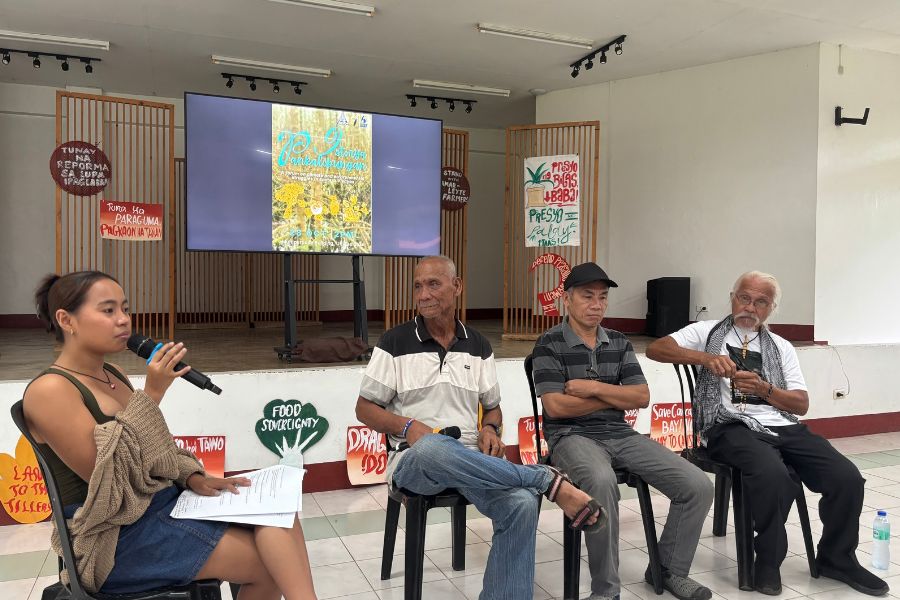
Eastern Visayas farmers suffer from El Niño
“We have irrigation canals but there is little to no water due to drought so our crops end up dying.”

“We have irrigation canals but there is little to no water due to drought so our crops end up dying.”

By GILL H. BOEHRINGER
By seeking to convince its readers that the effects of Ondoy were “felt equally by rich and poor” and that it was a “great equalizer,” the Philippine Daily Inquirer, the most influential newspaper in the Philippines, was attempting to bolster the view that the Filipino class system had nothing to do with the disaster, and that the lives of all Filipinos are shaped by the same forces of nature, even by fate or by God.
Energy Secretary Angelo Reyes, House Speaker Prospero Nograles and Congressman Mikey Arroyo seemed to have their roles down pat by now. When the big three oil companies raised oil prices yet again this Oct. 20, despite the disaster-wracked times and despite charges of persistent overpricing thrown their way, these three government officials just continued their role – speak like they want to change the situation but allow the oil companies to have their own profitable way in the end.

By CHERYLL D. FIEL
Like the Moro in many parts of Mindanao, evacuation has become a way of life for the Lumads . They would rather sleep in schools, at village halls or town gymnasiums than stay in their villages and bear the brunt of military operations.
Barely a month after the Manobos went back to their homes in Lianga, the soldiers are back again, recruiting them to the Task Force Gantangan, a paramilitary group to fight the government’s war against the insurgents.
In one of their stories of long ago, the Mansaka, an indigenous tribe from the provinces of Davao del Norte and Compostela Valley, once possessed a golden guitar, which they played when they sang their songs of longing, aspirations and victory.

By MARYA SALAMAT
While the government bears down on small businesses and producers, warning them against profiteering in the wake of typhoons Ondoy and Pepeng, it has allowed Shell, Caltex and Petron to increase oil prices at will.
Reporters Without Borders today released its Press Freedom Index for 2009. In it, the Philippines ranks 122, compared to last year's 139. This suggests that press freedom in the Philippines has improved, regardless of the many killings, attacks and intimidation being faced by Filipino journalists. But over the years, the country's rankings in the index indicate a worsening of press freedom.
 Save as PDF