On The Fringes | Mentally surviving the rotten healthcare system
I spent more hours in the waiting area than in my consultations. Most of my conversations with the doctor took only 15 to 30 minutes.

I spent more hours in the waiting area than in my consultations. Most of my conversations with the doctor took only 15 to 30 minutes.
On September 23, 1972, the day Martial Law was announced, Ferdinand Marcos was certain — or, at the very least, he was determined to sound like it.


“Withdrawal from the Rome Statute does not discharge a state party from the obligations it has incurred as a member. Consequently, liability for the alleged summary killings and other atrocities committed in the course of the war on drugs [during the Duterte administration] is not nullified or negated.”

With the memorandum submitted last week before the Bulacan court, the case is now deemed up for resolution.
In his first Cabinet meeting last Tuesday, Ferdinand Marcos Jr. announced that economic recovery takes precedence over all concerns under his administration and that his economic managers would set the “central policy.”


The setting of the sun signals the time to come home, a time for rest from the daily toils. But for the poor workers in highly urbanized areas rest is a luxury. The none-stop rotation of work propagated by capitalism, rest is counter-productive.

I was blessed by children today. Two children, actually. A young girl, 10-year old Sophie, and a 3-month old baby boy, Matteo. Sometimes, one can’t contain oneself, by the joy these two pure souls may offer this poor, weak soul. Life can be so burdensome.

In the early 2000s, government soldiers brutally killed a couple, Expedito and Manuela Albarillo, in a surprise attack on their home in San Teodoro, Mindoro Oriental. Their bodies, mutilated by the intense gunfire, were dragged out of their house by the perpetrators, later identified as Philippine Army soldiers commanded by then Col. Jovito Palparan Jr.

The posts you requested could not be found. Try changing your module settings or create some new posts.

The posts you requested could not be found. Try changing your module settings or create some new posts.


 Save as PDF
 Save as PDF

Kung sakaling pinili niya ang buhay-aktibista, ito ay dahil pinili niyang maging solusyon sa problema. Ang inyong pansariling konsepto ng magandang kinabukasan, ginawa niyang pangmalawakang pagkilos para sa makatarungang kaayusan.

Ang patuloy na pagpapayaman at pagpapalakas ng kapangyarihan ng mga kapitalista ay nangyayari sa patuloy na pagpapahirap at pagpapahina ng mga manggagawa. Ang tanong sa puntong ito: Nagtatagumpay kaya sila? Hindi po.
Pansinin ang sunud-sunod na welga sa iba’t ibang lugar ng Pilipinas. Iisa ang mga panawagan, iba-iba lang ang pangalan ng mga opisina’t pagawaan. Iisa rin ang solusyon ng kapitalista’t pamahalaan, iba-iba nga lang ang porma: Karahasan.
 Save as PDF
The posts you requested could not be found. Try changing your module settings or create some new posts.

The WHO should not expect at this time, while the pandemic is raging, to find published clinical and population-based studies specifically showing these negative effects in COVID-19 patients. Their main concern should be to protect COVID-19 patients from unnecessary risks because of irrational use of anti-fever drugs.

COVID-19 has laid bare the class contradictions in Philippine society. Not only has it exposed the private sector for what it is – a profiteering class of capitalists, but it has also exposed the government and its institutions for what they are – tools of the same profiteering class to ensure that they can continue profiting.

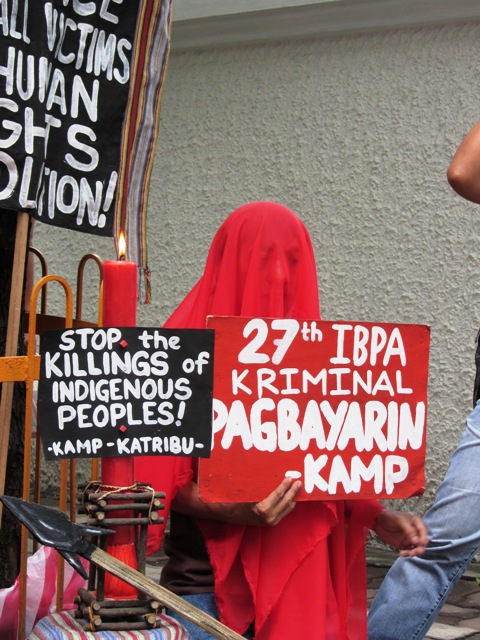
But in the Philippines, the links between environmental degradation and militarization are intimate. Government counterinsurgency campaigns have been most violent in the regions of the Philippines with natural and mineral resources that are largely untapped by extractive projects, whether it’s Mindanao in the south or the Cordilleras in the north. Brandon was shot because he opposed a hydropower project that would have displaced indigenous communities in the north, while to the south, indigenous Lumad leaders have been killed and schools dedicated to the teaching of sustainable agricultural practices occupied under the guise of anti-communism.


This new book proved how Lenin’s ideas on imperialism never became obsolete as these continue to serve as a guide to understanding the geopolitics of the world today.

Lakbayan ‘transports’ the struggle from the remote to the center.
 Save as PDF
The posts you requested could not be found. Try changing your module settings or create some new posts.