‘It’s hunger spell for Filipino transport drivers as oil prices continue to spike’
For Filipino transport drivers, the incessant oil price hikes may force them to stop operating. Worse, it keeps them from putting food on their table.

ADVERTISEMENT

For Filipino transport drivers, the incessant oil price hikes may force them to stop operating. Worse, it keeps them from putting food on their table.

According to the Organization of Petroleum Exporting Countries (OPEC), there is "no physical shortage" of oil. So, what is happening then? As in the case of major oil price volatilities this century, excessive speculation in the oil derivatives markets is pushing up prices, not the disruptions in oil's actual or physical trading.

Farmers and fisherfolk groups reiterated the need for aid as the incessant oil price hikes have significant impacts on their production and cost of living.

"DA stands for Department of Agriculture, not Department of Importation. The agency's primary focus should be the strengthening of the domestic agriculture and fisheries sectors."

For Filipinos running micro and small businesses, overworking has become the new norm as they confront the incessant rising of prices of oil and basic commodities.

The stinginess of the Philippine government’s COVID-19 response only reflects how thoroughly the state has internalized its role as prioritizing the interests of capital over the working classes. It is not spending what needs to be spent on COVID-19 containment, health measures, assistance to distressed families and small enterprises, and others.

The increasing prices of staple commodities are making access to food even more difficult, even for vendors themselves.
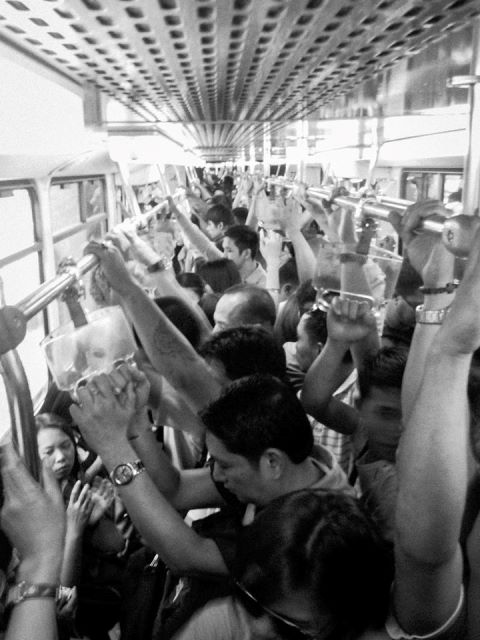
Filipino commuters have to wait 20 to 30 minutes to secure a ride and another one to 2.5 hours of travel time to reach their destination.

A 20-passenger jeepney usually has a full tank capacity of 60 liters, which means that the driver is spending ?1,107 ($21.83) more to fill up his tank. That is equivalent to about 29 kilos of rice - or two weeks’ worth of the regular consumption of a five- to six-member household.

Women peasant group Amihan called on the government to aid Typhoon Maring-hit farming and fishing communities in Northern Luzon provinces that have been battling very low farm gate prices due to massive importation.
Overpriced gasoline and diesel, for instance, gave oil firms an estimated P38.47 billion (US$757.13 million) in additional income, of which P4.62 billion ($90.93 million) went to the government as value-added tax (VAT).

“The Department of Agriculture never learns. Every time there is an alleged shortage, the default solution is to flood our market with imported fish. Yet this measure never addresses and resolves the crisis in our fisheries production that happens on a yearly basis."

“Substantial revenues can be raised by taxing the country’s super-rich who can well afford to contribute much more to COVID-19 response and other needs. This is aside from how the administration can realign funds from bloated infrastructure, military and police, and debt servicing items in the proposed 2022 budget.”

“The current regime is set to leave a more food-insecure Philippines. Duterte is the biggest typhoon, the worst pest for a Filipino farmer. One in four food products in the country is imported.”

The relatively high growth rate was seen because it is the first to be measured against the low base of when the lockdowns were at their worst last year, including a 17 percent contraction in the second quarter of 2020.

Data from DOST’s Food and Nutrition Institute also revealed that Vitamin A deficiency prevalence among children six months to five years old had dropped from 40.1 percent to 16.9 percent.
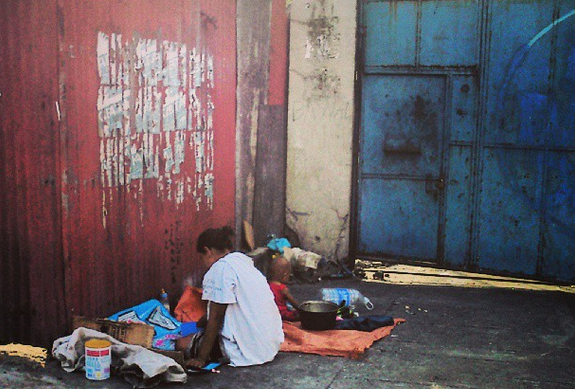
The Duterte regime may spin the narratives on the economy all they want. But all indicators show that the country is in a much worse shape today than when it took over in 2016.

Micro, small, and medium enterprise (MSME) owners are still trying to get back on their feet after enduring the burden of the world’s longest lockdown.

Data show that the policies and programs of Duterte continued and inflamed the structural crisis of our economy. To be sure, the pandemic made it more acute. But make no mistake - Duterte’s economic legacy is far worse than the pandemic.

What does it take to cook adobo? An ordinary worker's whole pay for a day.
A community of readers and supporters that help us sustain our operations through microdonations for as low as $1.