Video Sidebar: Hacienda Luisita Farmers Endure Military Harassment
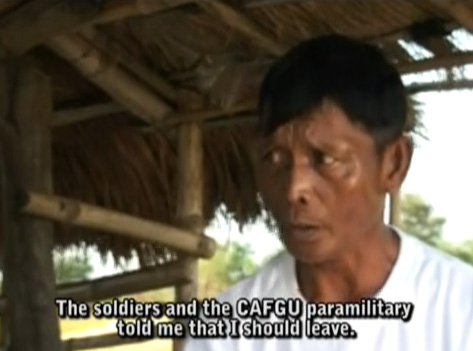
 Luisita Farmers Endure Harassment

ADVERTISEMENT
Luisita Farmers Endure Harassment

By RONALYN V. OLEA
Jobert Pahilga, lawyer of the farm workers’ group Alyansa ng Manggagawang Bukid sa Hacienda Luisita (Ambala), enumerates some of the provisions of the compromise agreement that are inimical to the interest of the farm workers.
By MARYA SALAMAT
Weeks before the management of Hacienda Luisita announced the signing of the controversial “compromise agreement” with farm workers, the villages in and around the sugar plantation owned by President Benigno S. Aquino III and his family were subjected to militarization, the kind that sowed fear among the residents, particularly those opposed to the stock distribution option. Video Sidebar: Military Tries to Intimidate Luisita Farmers

Jobert Ilarde Pahilga, the lawyer of Hacienda Luisita farmers challenging the stock distribution option (SDO) being implemented in the plantation owned by the family of President Benigno S. Aquino III, explains in this "video primer" the SDO, why the Cojuangco-Aquino family was hell-bent on it, why the lives of the farmers did not improve in spite of it, and why these farmers and peasants are opposed to it. Watch the video

By RONALYN V. OLEA
“We will definitely question in all forums available to us the standing of these individuals with whom HLI management negotiated and hold them accountable for their acts,” said Jobert Ilarde Pahilga, a lawyer for the farm workers.
Related Items
Sidebar: A History of Deception in Hacienda Luisita | Sidebar: President Aquino Can Be Held Equally Liable for ‘Grand Deception’ vs. Luisita Farmers | Previous story: ‘Breakthrough Deal’ Is a Lie Meant to Sway Supreme Court Decision on Hacienda Luisita, Say Farmers | Previous story: How Hacienda Luisita Stock Scheme Led to Farmers’ Misery | Read the compromise agreement | Full coverage: Hacienda Luisita
By DABET CASTAÑEDA
In 2004, Bulatlat.com published a two-part investigative report on Hacienda Luisita, its troubled history, and the struggle of the farmers and workers for land and justice. The first part, For Land and Wages: Half a Century of Peasant Struggle in Hacienda Luisita, talks about the lives of the farmers and the events that led to the strike and massacre. The second part, Poorly Paid Workers Lose Jobs — and Homes, Too, exposes the toll the conflict had on the peasants.
Click here for more Bulatlat stories and multimedia content on Hacienda Luisita.

By RONALYN V. OLEA
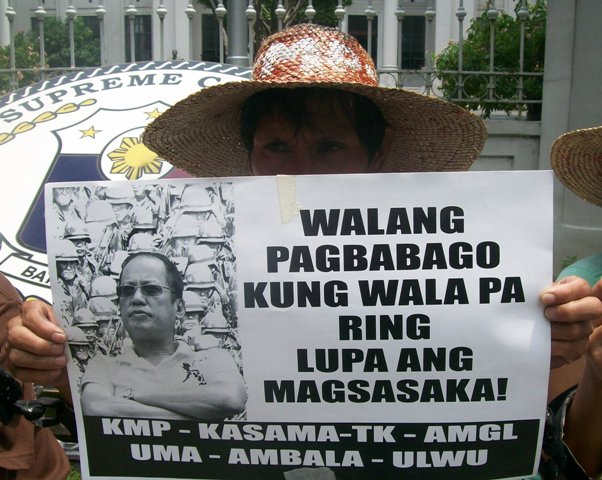
“We never had any dialogue [with HLI management],” said Lito Bais, a leader of the Luisita union, noting that the Inquirer report on the deal came two weeks before the scheduled oral arguments before the Supreme Court on Aug. 18. Bais said the supposed agreement is meant to send a message to the members of the high court. “They want to influence the outcome of the SC decision.”


By ARNOLD PADILLA
Malacañang is threatening to reimpose an oil price control if oil companies will not follow the conditions outlined by Mrs. Arroyo. Government, however, has given up the high ground with its lifting of EO 839 and continued adherence to the discredited deregulation policy.

By ARNOLD PADILLA
To a certain degree, Executive Order 839 questioned the lies long peddled by the oil companies and staunch defenders of neoliberalism about neoliberal free market economics. If left unchallenged, EO 839 could become a precedent in policy making: that the government, in the name of public good and welfare, could take decisive action against abusive corporations.

By MARYA SALAMAT
Even before they were rescued off their submerged villages, the government has blamed the approximately 80,000 poor families for the unprecedented flooding in Metro Manila.

By JANESS ANN J. ELLAO
As if the trauma of losing their homes and belongings were not enough, evacuees at the PhilSports Arena, formerly known as the Ultra, faced more problems as the government seemingly backtracked on its promise to relocate the displaced families. Worse, the Pasig government allegedly had to use underhanded means to force the refugees to leave.
By JANESS ANN J. ELLAO
With the flooding after Ondoy and the blaming of poor peasants and fisherfolks around the Laguna de Bay, many in Pila, Laguna, fear that the demolition of their homes is now just a matter of time.

By GILL H. BOEHRINGER
By seeking to convince its readers that the effects of Ondoy were “felt equally by rich and poor” and that it was a “great equalizer,” the Philippine Daily Inquirer, the most influential newspaper in the Philippines, was attempting to bolster the view that the Filipino class system had nothing to do with the disaster, and that the lives of all Filipinos are shaped by the same forces of nature, even by fate or by God.
A community of readers and supporters that help us sustain our operations through microdonations for as low as $1.
 Save as PDF
 Pepeng Unleashes Fury