Slideshow: Crisis in Sugarlandia

 Land Reform: Crisis in Sugarlandia

ADVERTISEMENT
By RITCHE T. SALGADO
Farmers and fisherfolk groups in Negros Occidental have been holding protests outside the capitol to denounce the mounting harassments experienced by Negrense farmers and farm workers. They also denounce a series of moves by landlords to file common and trivial offenses against peasants who demand land reform.
| View slideshow

By RONALYN V. OLEA
Two activists have complained that the Philippine military has been harassing them, the latest in a series of similar intimidations apparently aimed at forcing activists to spy against militant groups for the armed forces.

By ALEXANDER MARTIN REMOLLINO
“The general public, in a more sustained manner, now demands concrete economic platforms of governance from these candidate. Past elections have been about personality, machinery, and other non-issues.”
"Yes, I have chosen to seek refuge under the revolutionary movement, particularly with the Communist Party of the Philippines, New People’s Army and the National Democratic Front. This is the most logical choice on my part because these are the very organizations that can guarantee not only my protection from political killings but also, above all, freedom of the people from the oppressive grip of a reactionary fascist state. I am still breathing and fighting precisely because of this choice."

By GRACE S. UDDIN
Small farmers like Winifreda Cabisay have not benefited much from the government's agrarian-reform program. She was awarded land in 1996 but she has not been awarded a title to it and has had problems maintaining it. With the 10-day Lakbayan, Cabisay hopes that the issues that confront farmers like her will be heard.

By MARYA SALAMAT
The Supreme Court decision came just a month after the National Union of Peoples' Lawyers, representing progressive partylists Bayan Muna, Gabriela partylist and Anakpawis and transport group Piston, filed a petition questioning the RFID project of the LTO.
Majority of victims of human-rights violations in the Philippines are peasants. They are the ones most denied not just land but justice. So any candidate for president who claims to be for justice should, first and foremost, commit to the implementation of a genuine agrarian-reform program. This is why the Hacienda Luisita land problem is a defining issue for Noynoy Aquino.

By MARYA SALAMAT
Act, Migrante and Courage accuse the Arroyo administration of having a hand in the Comelec's decisions to bar them from the partylist race. The rulings were released quite late last year, thus not allowing enough time for the three partylist groups to challenge the decisions. The groups have been active in campaigns against the Arroyo administration's policies, corruption scandals and rights abuses.

By ALEXANDER MARTIN REMOLLINO
As the curtain was beginning to fall on 2009, the on-and-off peace negotiations between the Government of the Republic of the Philippines and the Moro Islamic Liberation Front (MILF) resumed in Kuala Lumpur, with both parties agreeing to begin talks on the drafting of a Comprehensive Peace Compact that would resolve the Moro question. The year, however, drew to a close without any far-reaching movement in the GRP-MILF peace process.
By REP. RAYMOND PALATINO
Manny Villar’s brave decision to openly embrace a platform-based unity with the Left has smashed the taboo in Philippine politics. From now on, the participation of the Left will be expected in future electoral contests for top political posts.
By MARYA SALAMAT
Human-rights violations in 2009 are “numerous and varied and no sector of society is exempted,” belying the Arroyo government’s claim that steps have been taken to improve the Philippine government’s human-rights record, according to Karapatan. And with Oplan Bantay Laya 2's deadline in 2010 fast approaching, more abuses are certain to occur, it said.
By RONALYN V. OLEA
In 2009, the landlord-dominated Philippine Congress extended the Comprehensive Agrarian Reform Program for another five years. Did the landed legislators, among them President Arroyo's close relatives, go against their interests in passing CARPER? Or did they simply lengthen the agony of Filipino peasants, given that the new program seems worse than the original?
By JANESS ANN J. ELLAO
While climate change is not a recent phenomenon and is a result of years of destructive practices, most Filipinos do not know much about it until recently. And it has been a hard lesson learned for many Filipinos as it took the destructive effects of typhoons Ondoy and Pepeng to drive home the point. The devastating effects of climate change are more intense in poor countries where majority of the people live in poverty.
By MARYA SALAMAT
The year 2009 began, ended and paved the way to 2010 with the festering problem of joblessness for millions of Filipinos. The global financial crisis only revealed the stark reality of President Gloria Macapagal-Arroyo’s inherently flawed job-generation strategies. The Arroyo regime fell short of its employment target. Worse, thousands of jobs, especially in the export industry, were "massacred" in 2009 even as unionists faced violence, intimidation and murder.
By JANESS ANN J. ELLAO
The regime of President Gloria Macapagal-Arroyo changed the face of labor migration in the Philippines. It pursued its labor-export policy aggressively, begging receiving countries to accept more overseas Filipino workers. In the meantime, it shirked its responsibilities toward OFWs in distress, in many instances even becoming complicit in the abuse of overseas workers.
By BENJIE OLIVEROS
While it would take more than a change in president to effectively address the worsening economic and political crisis, if Arroyo and her minions are able to get away with keeping themselves in power -- by declaring a failure of elections, martial law, or charter change -- the Filipino people would sink faster and deeper into the quagmire of backwardness and poverty.
By ALEXANDER MARTIN REMOLLINO
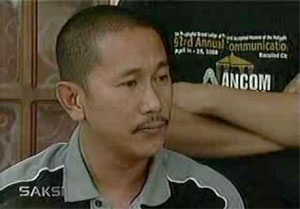
In this Q&A, Esmael Mangudadatu, vice mayor of Buluan town, Maguindanao, talks about the Ampatuan massacre and how the Ampatuans ruled the province. "They made business out of the votes. They extorted money out of the senatorial candidates who were campaigning in Maguindanao by selling votes to them," he said. He also wished that there would be no whitewash in the case against them.

By MARYA SALAMAT
Progressive solons and the members of Piston have asked the Supreme Court to declare as “unconstitutional and illegal” the Land Transportation Office's controversial radio frequency identification (RFID) project. They also asked the Supreme Court to issue a temporary restraining order and/or preliminary injunction to prevent the project's full implementation come January 10, 2010.
A community of readers and supporters that help us sustain our operations through microdonations for as low as $1.
