On liberal opportunism and the “purity” smear
Accusing leftists and activists of demanding a "useless politics of purity" is a classic liberal defense mechanism designed to shift the burden of moral failure onto the critic.

Accusing leftists and activists of demanding a "useless politics of purity" is a classic liberal defense mechanism designed to shift the burden of moral failure onto the critic.
Just like those banana trees, I know their resistance is as tough. Despite enduring a lot, it never stopped sustaining generations of families in Tungkong Mangga.


The Marcos Jr. administration appears to be “slowly but surely allowing the country to be dragged into the massive US-led military build-up against China, threatening to engulf the whole region in war.”

Engraved in golden letters on the granite Wall of Remembrance at the Bantayog Memorial Center in Quezon City are the names of the heroes and martyrs who fought with the people against the long Marcos dictatorship.

In an interview on Bloomberg TV last Wednesday, as reported in another national daily, he made two related comments that could represent important government policy stands. First, regarding China’s increasing aggressive moves against Philippine vessels in the West Philippine Sea; second, about the United States’ repeated assurance of its “iron-clad” defense commitment under the 1951 Mutual Defense Treaty.


Today, as we face an election that could shape our democracy, we must not remain passive observers. The call of Christ is to descend from our comfort zones and engage in the realities of the suffering and struggling masses. We cannot afford to be apathetic.

In the First Reading from Isaiah (6:1-8), the prophet Isaiah has a powerful vision of God’s holiness. He sees the Lord in all His glory and is overwhelmed by His presence. Isaiah realizes his own unworthiness and sins, but instead of being turned away, God purifies him and calls him to be His messenger. Isaiah’s response is simple yet profound: “Here am I, send me.”

I was walking with a colleague to the Surigao house we share and came to talk about her first foray into the city. A development worker, she had come from Iligan and had just been onboarded into a response team here in the aftermath of Super Typhoon Odette in 2021. Her work then must have been challenging, made even more difficult by the prevailing Covid. Being new here myself and getting a lot of help settling in, I was immediately reminded that I arrived at a better time.


Sa imahinasyon ng mga bayaning nakikipaglaban sa pananakop, mahalaga ang pagpapahayag na maituturing na vandalism na gumagambala sa kapanatagan ng mga naghaharing uri. Matatandaan na sa El Filibusterismo, mahalaga ang pangyayari ng pagkatuklas ng mga paskil na nagpapahayag ng paglaban sa pang-aabuso ng mga prayle at iba pang mga pinunong Espanyol na naging dahilan upang hulihin ang mga pinaghihinalaang mga estudyante at magkaroon ng panic ang mga pinuno ng bayan sa pinaghihinalaang kilusang konspiratoryal na magpapabagsak sa pamahalaan. Sa nobela ni Rizal, pinatalsik sa pamantasan ang mga pinaghihinalaang mga estudyante kahit na iyong wala namang kinalaman sa kilusan.
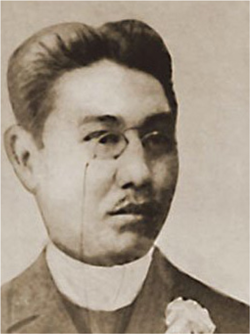
Isang balaraw na may dalawang matutulis na dulo ang Pan Asianismo. Maaari itong gawing inspirasyon sa pagpapalaya sa bayan. Subalit maaari din itong gamitin upang manakop ang malalakas na bayang Asyano at mawalan ng teritoryo ang mga mahihina at maliliit na bayan.

Kakaiba ang ganitong patakaran dahil kung ang ilang bayan ay nakasalalay sa pagpapahalaga sa kanyang manggagawa upang manatili para sa ikauunlad ng domestikong ekonomiya, institusyonal namang sinusuportahan ng pamahalaan na mangibang bayan ang kanyang mga manggagawa para magtrabaho sa ekonomiya ng ibang lipunan.


This latest terrorist designation on the NDFP is a fascistic act of casting the net so wide in order to tag the armed revolutionary group as a growing network. That it comes with the government’s inability to contain the probable spread of the much feared COVID-19 Delta variant is no longer a shocker.

Garcellano’s “The Philippines As Yugoslavia Revisited” wields academic freedom as a tool to crystallize the best aspects of so-called competing paradigms. But this is less an affirmation of the “marketplace of ideas,” a faux heterodoxy that has no other function but to fragment and marginalize in the name of pluralism than Garcellano’s thoughtful engagement with dialectical thought and totality.

Sa pagsulpot ng mga Community Pantry sa buong kapuluan, nagkaroon ng bagong hugpungan o pagkakatagpo-tagpo. Sa hugpungang ito, matingkad ang diwa ng kolektibismo na may potensyal na makipagtalaban sa gutom, karahasan at pandemya. Litaw rin ang materyal na pag-iral ng use value (laban sa exchange value) upang makamtan ng mamamayan ang kanilang mga pangangailangan.


And the life of Ka Oris, a lifetime of service to the revolutionary struggle where he sparkled as one of its brightest red stars, is the loudest testimony to this shared cause.

There is nothing farther from the truth, if we go by the sharpness of her poetry and the chronicles of her life: all inflected with a sense of purpose, survival, and integrity.

The worst illnesses of our country are the ones that make us believe that social change is impossible, and that the suffering of millions of Filipinos is inescapable. The worst living conditions is where med students and health workers believe that they have no role in campaigning and fighting for just and lasting peace.


Without a domestic industry processing our mining products to make our own metals, only the large corporations exporting it reap the most benefit, at the expense of the poor and the environment.

The challenge to build genuine solutions to flood risk factors should not have been new to the administration of Rodrigo Duterte. These proposals were outlined already in the 2016 People’s Agenda for Nationalist and Progressive Change, a comprehensive 100-day agenda document hand-delivered to Duterte himself.
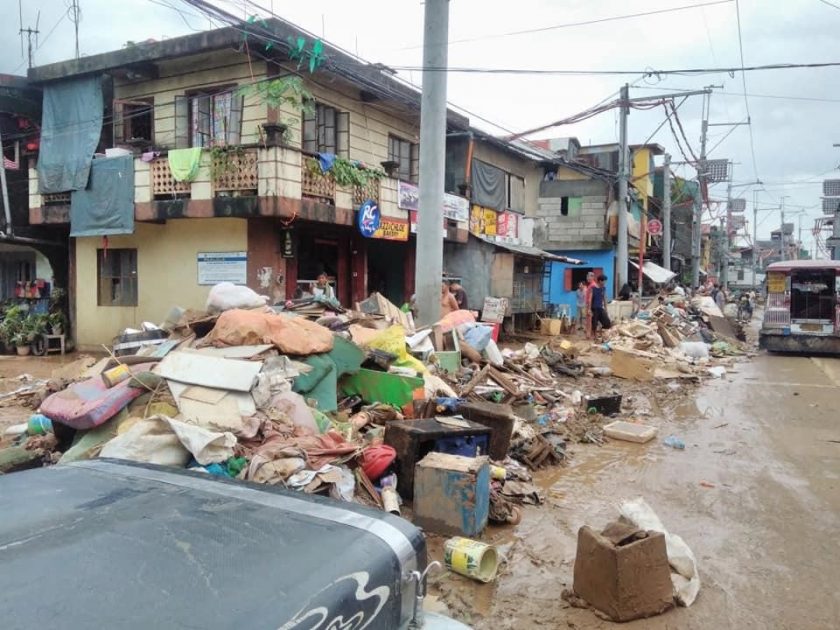
The recent deluge delivers a chilling warning about the climate crisis. Worse, 9 years after Ondoy, the capital region's perennial vulnerability to extreme rainfall remains.


Para sa mga kakampi ng pamilyang Duterte, malaking bagay ang mga sinabi ni Co kahit na sa ngayo’y wala pang ebidensyang ibinibigay sa mga paratang. Kung paniniwalaan ang ilang hyperpartisan vloggers, si Co ay “bayani” dahil sa diumanong matapang na paglalahad ng katotohanan.

Sadyang sinasadya. Sinusunog dahil may binabalak. Dahil nasa kapangyarihan, kayang pagtakpan ng retorika’t pera ang anumang ginagawang kontra sa interes ng mga nasa laylayan ng lipunan. Harap-harapan ang pagnanakaw, patalikod naman kung umasta para itago ang ebidensiya.

Tandaang hindi porke’t mura o libreng edukasyon ay puwede na ang “mababang” kalidad. Kung tutuusin, mas nararapat ang dekalidad na edukasyon kung mahirap ang estudyante!


Are the bills for free public wifi pending at the House of Representatives and Senate worth our support?

 Save as PDF

“The shrinking of civic spaces in the Asia-Pacific region is a dire warning of the broader challenges faced by civil society at the national level. It is a call to action for governments to respect, protect, and fulfill the rights of civil society and people's organizations to participate in decision-making processes.”

This atrocious prohibition is not at all new. Seventeen years ago in September of 2007, the Movie and Television Review and Classification Board under Consoliza Laguardia imposed an X rating on a short indie film titled “Rights”, made to press for the safe release of Jonas Burgos.

That is why I think this is a missed opportunity for a festival to demonstrate how it can protect, through its mandate, a work which, like the rest, claims to reveal truth in the face of power.

I understood that no matter how difficult the situation then, like the makeshift toilet and the few hours of sleep due to conventions, educational discussions as well as integration in picketlines, our parents had the best intentions.

Youth activists were stirred to chant louder as the rain fell harder: “Magpapatakot ba tayo sa ulan? Ang mga magsasaka nga, pinauulanan ng bala. Tubig lang ‘yan!”

How unfortunate, really, since there were only three journalists in the restaurant at that time – Marya, Zeng, and I. And all three of them happened to be holding a spoon on one hand and fork on the other and not a camera to capture the moment.

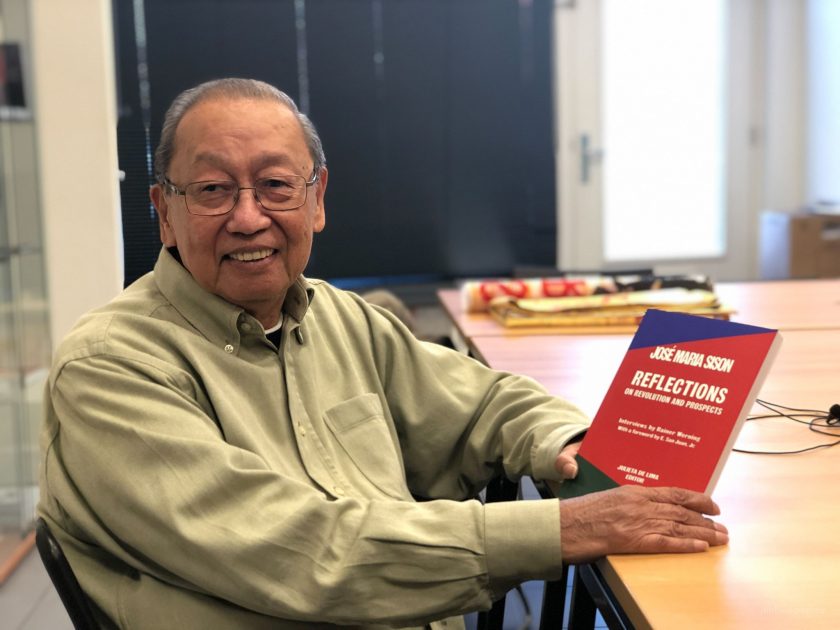
One does not need to subscribe to Sison’s political doctrines to see the ban as an act of censorship. If not challenged, the ban can be expanded and used as a tactic to enforce digital crackdowns. It gives tyrants the license to dictate who or what can be accessed or streamed on our networks. It is therefore a threat to our civic space.

A movement has already emerged which aims to counter the nefarious impact of disinformation. It reflects the clamor of the people to make elections and governance more transparent by ensuring that people can readily access accurate and credible information.

When disinformation is widely shared at a dizzying realtime speed by paid cyber mercenaries, can fact-checking stand a chance? There are short-term and long-term interventions that may require the enforcement of technical and regulatory mechanisms. For our part, we must not lose sight of the political solution because the roots of the information disorder are also linked to deeper structural infirmities in society.

The posts you requested could not be found. Try changing your module settings or create some new posts.
